Song Meaning
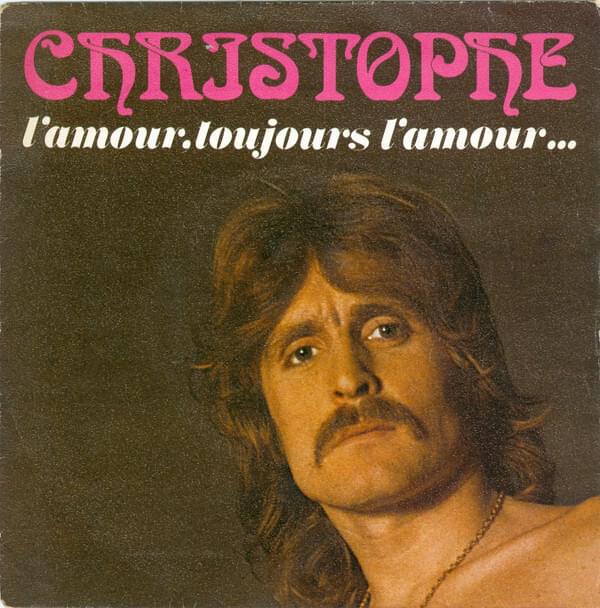
Christophe's "L'Amour, toujours l'amour" isn't just a song; it's a melancholic waltz through memory, a sonic photograph faded at the edges but saturated with feeling. The repetition of "L'amour, toujours l'amour" acts as a mantra, a constant reminder of love's enduring, if not always comforting, presence. The song's power lies in its exploration of how love, once vibrant and all-consuming, can become a ghost, haunting the spaces it once filled. The "piano noir" isn't just an instrument; it's the repository of lost moments, each key a memory of "grands soirs" now gone.
The lyrics paint a vivid picture of a past romance, a whirl of dancing in "salons délicats" and "lumières de gala." But even within these idyllic scenes, a subtle unease creeps in. "Je me demandais parfois / Oh, si c'était bien toi" suggests a nagging doubt, a questioning of the authenticity of the connection, even in its prime. This seed of uncertainty hints at the fragility of even the most seemingly perfect relationships. The joy is tempered by a sense of detachment, as if the narrator is already anticipating the inevitable decay.
Ultimately, "L'Amour, toujours l'amour" is a meditation on the bittersweet nature of memory and the way love shapes our perception of time. The image of love being "perdu au fond d'un manoir" evokes a sense of isolation and decay, while the line "qui fait briser les miroirs" suggests that love can distort our self-image, shattering our sense of identity. Yet, despite the pain and regret, there is also a sense of hope. Even in its absence, love retains the power to "fera rêver ta mémoire," suggesting that its influence, both positive and negative, endures long after the relationship has ended. The song is a poignant reminder that love, in all its complexity, remains a fundamental part of the human experience.
 View Artist