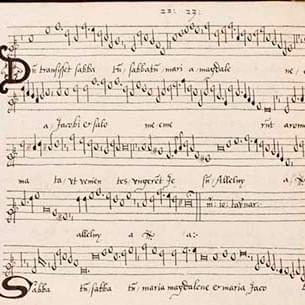
Dum transisset sabbatum
Song Meaning
The lyrics paint a stark, immediate picture of devotion and duty in the wake of a profound event. The scene is set just as the Sabbath has ended, signaling a transition from sacred rest to action. Three women—Mary Magdalene, Mary the mother of James, and Salome—are presented with a clear, urgent purpose: to purchase spices. This purchase isn't casual; it's explicitly for the act of anointing Jesus, a ritual of preparation and reverence. The simple declaration "Alleluia" at the end serves as a powerful, albeit brief, emotional anchor, suggesting a complex mix of sorrow, faith, and perhaps even anticipation. The central tension lies in the contrast between the somber, sacred context and the practical, almost mundane task at hand. The women are moving with purpose, driven by a need to fulfill a final act of care for Jesus. The timing, immediately after the Sabbath, emphasizes their commitment; their actions are immediate and unhesitating, driven by a deep-seated obligation or love. This juxtaposition of the quiet end of a holy day with the active pursuit of their task highlights their unwavering resolve. The effectiveness of these lyrics hinges on their economy and evocative imagery. The names themselves carry significant weight within their religious context, grounding the narrative in specific, recognizable figures. The phrase "Emerunt aromata" (they buy spices) is a concrete detail that anchors the abstract act of mourning or devotion in a tangible action. This focus on the physical act of purchasing spices for anointing creates a vivid, almost tactile sense of the women's dedication, making their grief and reverence feel deeply personal and immediate. Ultimately, the power of this short passage comes from its ability to convey a profound emotional and spiritual moment through precise, understated language. It captures a specific point in time, filled with both the weight of loss and the quiet strength of faithful action. The "Alleluia" acts as a resonant echo, a testament to the enduring significance of the event and the women's response to it, leaving the listener with a sense of solemn reflection.
 View Artist
Lyrics
Dum transisset Sabbatum Maria Magdalene et Maria Jacobi et Salome Emerunt aromata ut venientes ungerent Iesum Alleluia
Rate this song
0/5.0 - 0 Ratings
Loading comments...
Credits
- Writers
- John Taverner