Song Meaning
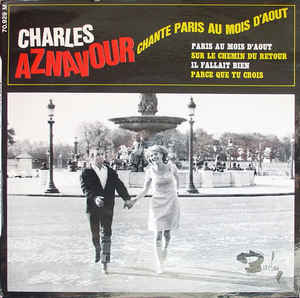
Charles Aznavour's "Il fallait bien" isn't just a lament; it's a post-mortem on love's inevitable collapse. The title phrase, which translates to "It had to be," acts as both a resignation and a bitter acceptance of love's inherent precarity. Aznavour doesn't wallow in simple heartbreak; instead, he dissects the anatomy of a relationship that was doomed from the start, exploring the dark underbelly of romantic expectation. The song's meaning lies in this tension between the initial belief in love's promise and the crushing realization of its ephemerality. It's the sound of a man picking through the emotional wreckage, not to assign blame, but to understand the flawed architecture that led to the fall. In essence, "Il fallait bien" accepts that love, despite its beauty, often carries the seeds of its own destruction.
Lyrically, Aznavour constructs a series of conditional clauses, each beginning with the titular phrase. "Il fallait bien / Que me vienne un jour / Ce mal soudain / Qu'on appelle l'amour" immediately frames love as a sudden malady, an affliction one inevitably succumbs to. This isn't a celebration of romance; it's an acknowledgment of its disruptive force. The lyrics then trace the familiar arc of infatuation, attachment, and disillusionment, but with a crucial difference: a sense of predestination. The pain isn't presented as an unforeseen consequence, but as an intrinsic part of the experience. The lines, "L'amour s'en vient, l'amour se meurt / A peine un rire et puis des pleurs," encapsulate this fleeting nature, emphasizing the speed with which joy turns to sorrow.
The second half of the song delves into the speaker's desperate attempts to salvage the relationship. "Il fallait bien / Te serrer très fort / Tenir tes mains / Pour te garder encore" reveals a clinging to a love that is already slipping away. This clinging, however, isn't portrayed as heroic or romantic, but as a futile act against an unstoppable force. The lyrics suggest a recognition of his own powerlessness, a sense that no amount of effort could have altered the inevitable outcome. The final verse, with its imagery of "feux de l'enfer" and the burden of regret, underscores the devastating cost of this doomed love. Ultimately, "Il fallait bien" is a sophisticated exploration of love's inherent contradictions: its capacity for both profound joy and profound suffering, and the often-unavoidable path from one to the other.
 View Artist