Song Meaning
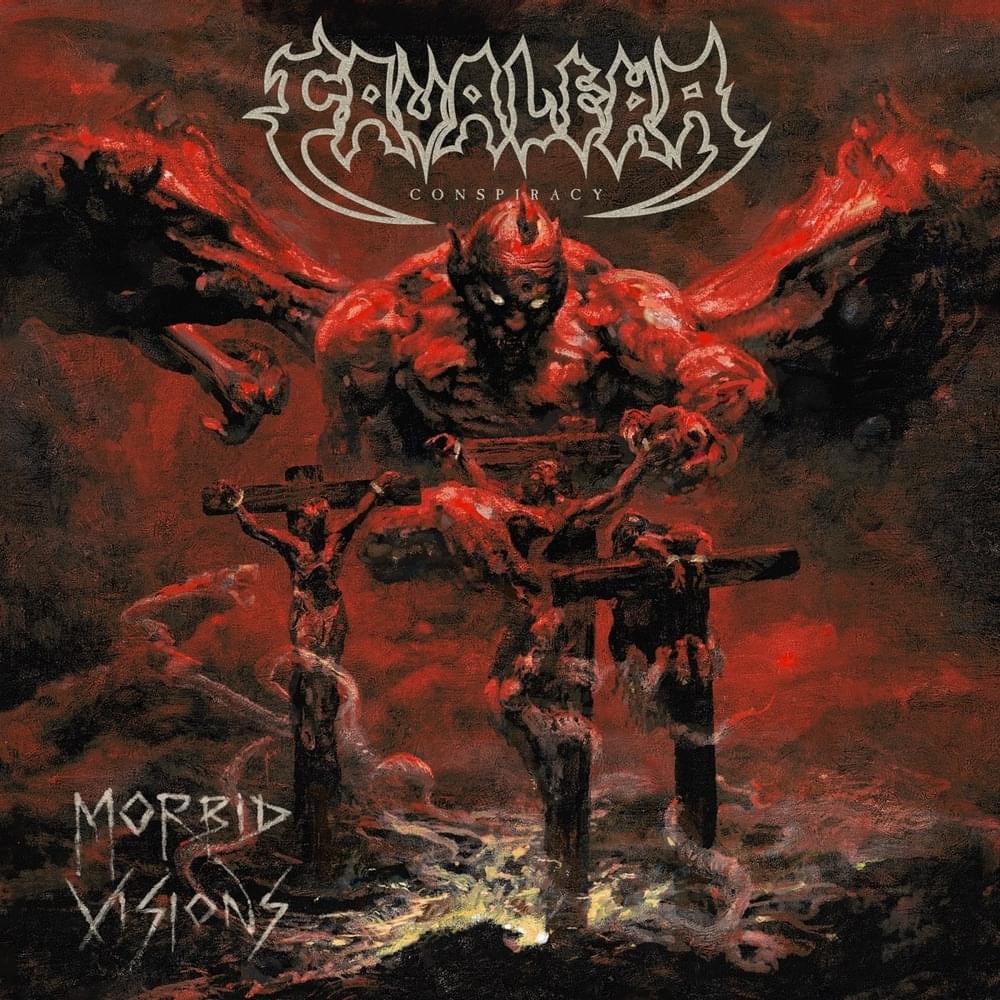
These lyrics paint a grim, almost apocalyptic picture, centering on the crucifixion of a messiah figure and its enduring, disturbing legacy. The opening lines immediately establish a historical and religious context, linking the Roman Empire's actions to a divine sacrifice. This sets a tone of profound suffering and foreboding, suggesting that the events of the past are not merely historical footnotes but carry a potent, destructive energy into the present. The repeated phrase "morbid visions" acts as a grim prophecy, hinting at the dark future the narrator perceives.
The central tension arises from a profound disillusionment with religious figures and their followers. The lyrics describe the messiah as "sacrificed fucking messiah" and the Christians as "bastards" who "adore images." This suggests a critique of organized religion, portraying it as corrupted or hollow, clinging to past trauma and superficial representations rather than genuine spiritual substance. The "rotting Christ, nailed to the cross" is a visceral image of decay and futility, emphasizing the perceived failure of this divine figure to offer true salvation or solace.
The most striking aspect of the craft is the stark, confrontational language and the juxtaposition of sacred imagery with vulgarity. Phrases like "semen of the mankind" and "fucking preachers" are deliberately provocative, designed to shock and dismantle reverence. This aggressive word choice, combined with the cyclical nature of the "morbid visions," creates a sense of inescapable doom. The lyrics seem to suggest a cycle of violence and spiritual decay that is perpetuated by humanity's adherence to flawed systems of belief.
Ultimately, the effectiveness of these lyrics lies in their unflinching nihilism and their raw, visceral imagery. They confront the listener with a bleak outlook, challenging conventional notions of faith and redemption. The repeated "morbid visions" serves as a powerful, unsettling refrain, leaving the reader with a sense of dread and a critical perspective on religious history and its modern manifestations.
 View Artist