Song Meaning
The lyrics paint a grim, visceral picture of consumption and destruction, framing it as a perverse form of sustenance. The opening lines immediately establish a scene of desperate pleading against an inevitable, violent end, where "hopes and dreams are kicked aside." The narrator's "knife" becomes a mirror, reflecting not just the victim but a broader "humanimal demise," blurring the lines between predator and prey, human and animal.
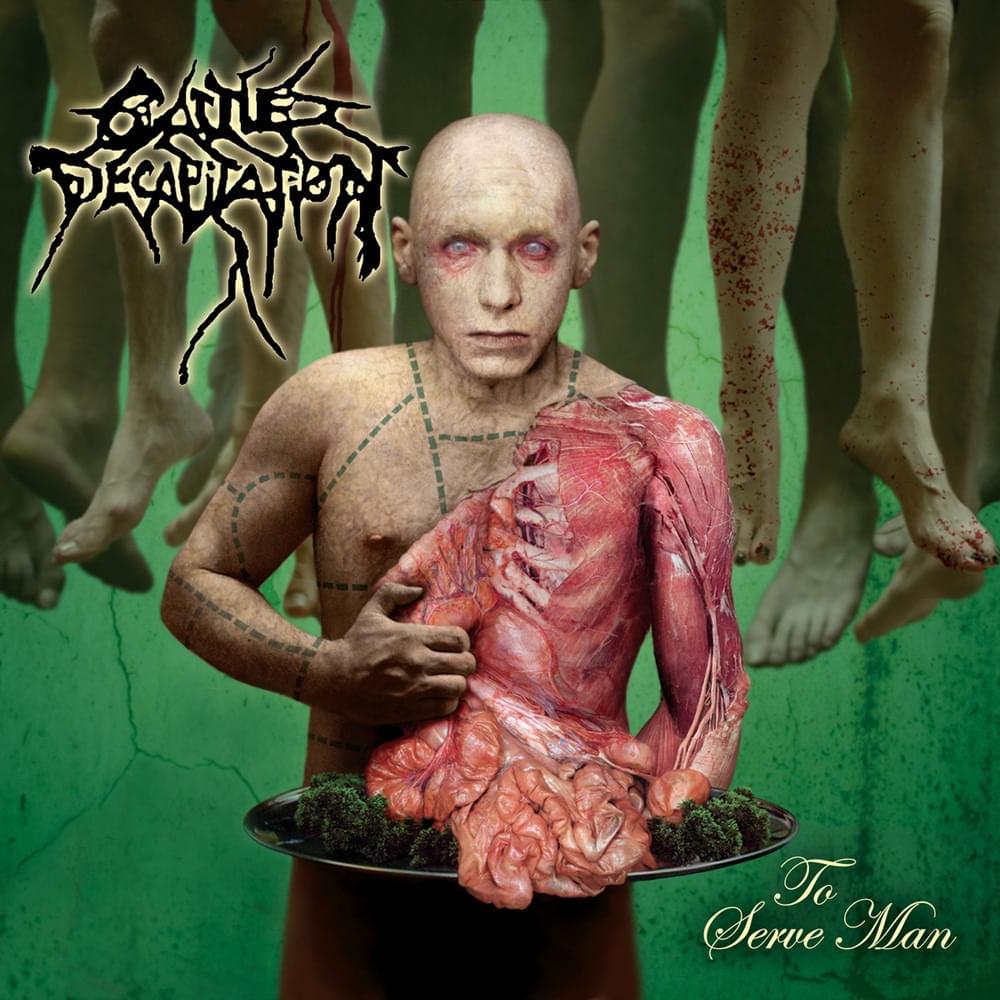
The core of the track seems to be a brutal commentary on the meat industry and its dehumanizing aspects. The stark repetition of "White meat / Dark meat / Red meat / Dead meat" strips away individuality, reducing beings to mere commodities. This is amplified by phrases like "ravenously consumed" and "bloodlust anxiety," suggesting a societal hunger that drives this "disassemblage." The lyrics then shift to a chilling depiction of processing: "Frozen alive and placed in scalding broth / To separate skeletal trash," highlighting the horrific methods involved in preparing this "meal."
The writing crafts a disturbing metaphor for how society consumes and discards lives, particularly within industrial systems. The line "It's in this industry / We find deeper meanings / For the human being" drips with dark irony, suggesting that the very mechanisms of mass production and consumption reveal a profound, albeit horrific, truth about our existence. The repeated assertion "You have long been a killer / You have long been dead" and the declaration of "This has all been a holocaust" push the critique towards a systemic indictment, implying a collective complicity in this cycle of death and consumption.
Ultimately, the lyrics achieve their unsettling power through extreme imagery and relentless, almost clinical, descriptions of violence as a form of consumption. The transformation of living beings into "Dead meal for the masses" with "Condiments of fluid and bile" is a stark, unforgettable image. The effectiveness lies in its refusal to shy away from the grotesque, forcing the listener to confront the brutal realities of industrial processes and the potential for dehumanization inherent in mass consumption.
 View Artist