Song Meaning
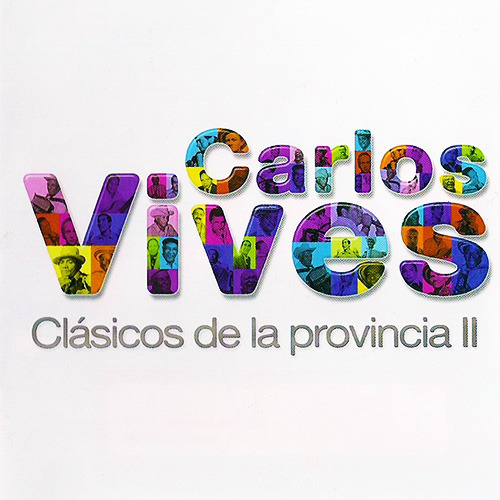
{"song_id": 11626167, "meaning": "Carlos Vives' \"La Muchachita\" pulsates with a simple, almost primal yearning, a sentiment that transcends its folksy Colombian roots. On the surface, it's a straightforward serenade – a man captivated by a beautiful girl ("Es una muchacha bella"). But the lyrical tension lies in the frustrating chasm between admiration and communication. He's smitten, yet paralyzed, unable to utter a single word to her directly. This inability to connect, despite his intense gaze and her reciprocal smile, speaks volumes about the anxieties of courtship. The repeated line, \"Pero a mí me mortifica, compadre / Que no puedo hablar con ella\" reveals vulnerability, a fear of rejection, or perhaps an internal struggle with expressing his feelings. This isn't just a love song; it’s a portrait of a man wrestling with his own inhibitions. \n\nThe repeated attempts at indirect communication – \"Yo le lanzo una mirada\" and his plan to \"mandá' una carta\" – highlight the awkward dance of early attraction. He seeks validation, relying on nonverbal cues and the hope of a written response. This reliance on indirect methods paints a picture of a man who is either shy, insecure, or perhaps constrained by social expectations of courtship. The lyrics never explicitly state *why* he can't speak to her, leaving room for interpretation. Is it fear? Is it respect? Is it a cultural barrier? This ambiguity is what gives \"La Muchachita\" its subtle psychological depth. \n\nUltimately, \"La Muchachita\" is a snapshot of a universal experience: the agonizing gap between desire and expression. Vives captures the bittersweet frustration of unrequited (or, at least, un-vocalized) longing. The song's charm lies not just in its catchy melody but in its honest portrayal of the vulnerability and awkwardness that often accompany the initial stages of attraction. It's a reminder that even in the age of instant communication, the most profound connections often begin with a simple, unspoken glance and the courage to bridge the divide."}
 View Artist