Song Meaning
The intro to "Autobiografia" immediately establishes a sense of mythic origin, opening with "Generalnie wszystko zaczęło się dawno, dawno temu." This sets a grand, almost fairy-tale tone, quickly juxtaposed with a surreal self-image: "Kiedy byłem jeszcze niczego nieświadomym krukiem." The narrator casts himself as an innocent, unaware creature at the outset of his story, hinting at a journey from naivety to a more complex existence.
The core tension emerges from a series of bizarre, almost allegorical trials. The narrator recounts a fight "z bestią o 8 rękach i 74 nogach," a fantastical adversary that feels like a stand-in for overwhelming challenges or inner demons. Despite this struggle, he claims to have had "styli milion," suggesting a natural flair or confidence that allowed him to potentially bask in victory. However, this is immediately undercut by the stark reality of isolation: "Zamknięty w czterech ścianach ciszy / Trochę zbyt długo tam zabalowałem," leading to "skrajnej depresji paranoidalnej."
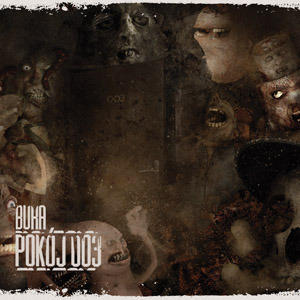
The lyrics employ a dreamlike, non-linear narrative structure to convey psychological states. The appearance of a "zombie" that leaves an "niezapomniane wrażenie" is a striking, absurd image that triggers a desire to learn Latin. This non-sequitur highlights how profound, even nonsensical, experiences can fundamentally alter one's path. The subsequent memory lapse and waking in an unfamiliar city, breaking a mirror and falling into "pokoju 003," further emphasizes a disorienting descent into an unknown reality, suggesting a loss of self and a fragmented perception of existence.
This intro's effectiveness lies in its audacious blend of epic storytelling and deeply personal, albeit surreal, psychological turmoil. By framing his past as an ancient tale and populating it with monstrous figures and bizarre events, the narrator creates a unique, almost mythic persona. The rapid shifts from potential triumph to profound despair, and from fantastical battles to introspective breakdown, make the listener question the nature of the narrator's reality and the internal struggles that shaped him, drawing us into a world that feels both deeply personal and strangely universal ineffable.
 View Artist