Song Meaning
{"song_id": 10377937, "meaning": "Buffy Sainte-Marie's \"CLASSIC (Instrumental)\" (though technically not *instrumental*, given its pointed lyrics) is a masterclass in self-deception, wrapped in the guise of self-preservation. It's a portrait of a heart desperately trying to convince itself of a truth it hasn't yet accepted: that the object of its affection is emotionally unavailable. The sewing machine, the black shirt emblazoned with \"Do not love,\" the ribbon tied around a finger – these aren't just crafts projects; they're psychological armor, meticulously constructed to deflect the pain of unrequited love. The repetition of \"To remind me that you're not the lovin' kind\" is a mantra, a desperate attempt at self-hypnosis.
The brilliance of Sainte-Marie’s songwriting lies in the subtle cracks in this facade. The speaker claims to have learned the secret to avoiding heartbreak – “Love for you is a matter of no deposit and no return.” But the very act of needing constant reminders betrays the depth of her feelings. If she were truly indifferent, such elaborate safeguards wouldn't be necessary. The line “Oh-h you're so heavy on my mind” is a raw, unguarded moment of vulnerability that cuts through the carefully constructed defenses. It's an admission that the attempt to intellectualize and control her emotions is failing.
The final verse introduces a powerful image: \"Rocks in my pillow.\" This isn't just sleeplessness; it's a metaphor for the constant, gnawing discomfort of unacknowledged feelings. The shift from \"rocks\" to \"blocks and boulders\" emphasizes the escalating emotional weight. The desire to hang a \"do not love\" sign around the object of her affection's shoulders is not an act of protection for herself, but a futile attempt to control *their* actions and, by extension, her own feelings. Ultimately, \"CLASSIC (Instrumental)\" reveals the futility of trying to logic one's way out of matters of the heart. It's a haunting exploration of the cognitive dissonance that arises when desire clashes with reality, and the lengths we go to in order to protect ourselves from emotional pain, even if it means building walls that ultimately imprison us."}
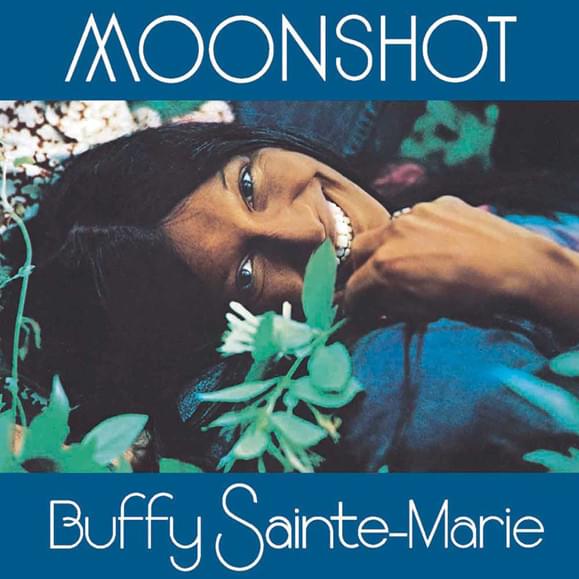
 View Artist