Song Meaning
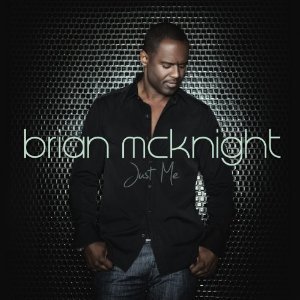
{"song_id": 12289624, "meaning": "Brian McKnight's \"Just Me\" isn't a sonic revolution, but rather a starkly honest self-portrait, sketched with the kind of weary acceptance that only comes from hard-won experience. It's a refreshingly unvarnished look at the man behind the velvet voice, acknowledging flaws and imperfections without apology. The song's meaning resides in its raw humility. McKnight isn't striving for sainthood; he's simply presenting himself as a work in progress, a collection of contradictions, and ultimately, just another human being navigating the messy terrain of life. He confesses to playing the game, albeit not well, hints at past indiscretions (\"I've done some things of which I'll never tell\"), and admits to occasional selfishness (\"When I give back, I take a little for myself\").
The core of \"Just Me\" lies in its repeated declaration of self-acceptance. It's a mantra of sorts, a refusal to be defined by others' expectations. McKnight acknowledges that he may not live up to someone's ideal, that he might \"come up short all over town,\" but there's a quiet defiance in his voice. This isn't resignation; it's a statement of ownership. He's not trying to be anyone other than himself. The psychological underpinnings here are profound. Self-acceptance is a cornerstone of mental well-being, and McKnight seems to be embracing this concept wholeheartedly. It's a powerful message, especially in an industry often built on manufactured perfection.
What elevates \"Just Me\" beyond a simple confessional is its universality. While McKnight is undoubtedly reflecting on his own journey, the themes of imperfection, self-doubt, and the struggle for authenticity resonate deeply. The line \"Of this I am sure, life can be shit, I wouldn't change one day a bit\" encapsulates this sentiment perfectly. It's an acknowledgement of life's inherent difficulties, coupled with a stubborn refusal to be defined by them. Brian McKnight's \"Just Me,\" therefore, is a testament to the power of self-acceptance and the enduring appeal of authentic expression. It's a reminder that it's okay to be flawed, to be imperfect, to simply be ourselves."}
 View Artist