Song Meaning
The narrator starts by emphatically denying the label "know it all." This direct negation sets up a contrast with what they *do* claim to know: their love for someone. The core of the song seems to hinge on this simple, yet profound, assertion of emotional certainty over intellectual omniscience. The repetition of "I only know I love you" acts as a mantra, reinforcing this singular, all-encompassing knowledge.
The central tension arises from the narrator's self-perception versus the perceived perception of the other person. While the narrator claims ignorance on all fronts save for their love, they simultaneously declare, "You know it all." This creates an interesting dynamic where the narrator positions themselves as someone whose entire world revolves around a single, powerful emotion directed at someone they see as possessing complete understanding or wisdom. It’s a declaration of devotion that frames intellectual capacity as secondary to emotional truth.
The most striking aspect of the craft here is the stark, almost childlike simplicity and extreme repetition. The phrase "I'm not a know it all" is immediately followed by "I only know I love you," a direct juxtaposition that simplifies complex human interaction into a binary of knowing facts versus knowing love. The repeated "You know it all" functions as both an acknowledgment of the other person's perceived completeness and, perhaps, a subtle plea or expression of awe, highlighting the narrator's own focused emotional state.
This lyrical approach is effective because it cuts through pretense and gets straight to a raw, emotional core. By stripping away any pretense of intellectual superiority and focusing solely on the overwhelming knowledge of love, the song creates an intimate and earnest confession. The insistent repetition makes the declaration of love feel both absolute and deeply personal, suggesting that for the narrator, this singular feeling is the only knowledge that truly matters.
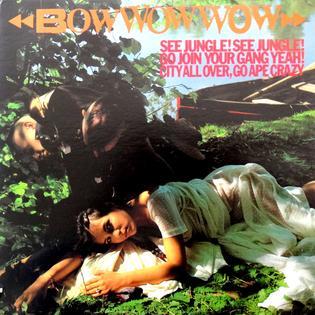
 View Artist