Song Meaning
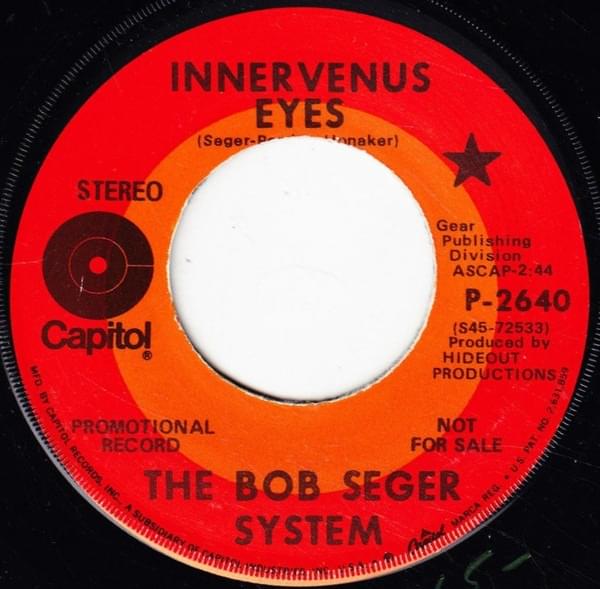
Bob Seger's "Innervenus Eyes" is a cryptic, almost hallucinatory exploration of desire, societal critique, and the elusive nature of truth. The recurring phrase "Innervenus," seemingly a play on "intravenous," suggests a direct injection of perception, bypassing the conventional filters of reality. This implies a world where appearances are deceiving, and genuine understanding is rare. The line "The fool performs disguised / 'Cause everybody's wise" speaks to the masks people wear, perhaps to navigate a world that demands conformity or feigned intelligence. Seger isn't necessarily celebrating wisdom; he seems to be highlighting the performance of it. The corporation's rent being due adds a layer of socio-economic anxiety, hinting at the pressures and compromises that fuel this charade.
The chorus, a seemingly simple repetition of "She looking, she looking, she looking so good," acts as both a grounding force and a point of tension. Is this admiration genuine, or is it another layer of the performance, an infatuation fueled by the "Innervenus" perspective? The post-chorus lines, "'Cause you see, yeah I'm free / When I'm swimmin' in her sea, oh," suggest a temporary escape from the suffocating atmosphere described in the verses. However, even this freedom seems laced with uncertainty, a fleeting moment of bliss within a larger context of disillusionment. The bridge, with its imagery of "double standard listeners" and a "mirror of her heart circling like a sister," delves deeper into the woman's internal world, hinting at a complex, self-aware individual navigating a hypocritical society.
The later verses introduce darker themes: "Innervenus chain / Pills won't ease the pain." This suggests an attempt to medicate the discomfort caused by this heightened, perhaps cynical, awareness. The line "Innervenus brain / 'Cause the universe is sane" is particularly intriguing. Is the "Innervenus brain" a source of madness within an ordered cosmos, or does it offer a glimpse into a deeper, perhaps uncomfortable, truth that the sane universe prefers to ignore? The outro, "She's all alone, she's on her own / The wind has blown, the heart has grown," leaves the listener with a sense of bittersweet resilience. Despite the disillusionment and the potential for escape, the individual remains, altered by experience but ultimately independent. "Innervenus Eyes," in its lyrical ambiguity, invites us to question the nature of perception, the cost of conformity, and the enduring power of the individual spirit.
 View Artist