Song Meaning
The lyrics paint a vivid picture of a deep, almost elemental connection to a specific land. The narrator identifies with the very earth itself, listing geological features like "basalto" (basalt) and "drago" (dragon tree), alongside flora such as "aulaga" (gorse) and "almendro en flor" (almond blossom). This isn't just a description of a place; it's an assertion of being intrinsically part of it, stating "Soy el viento y la sabina" (I am the wind and the juniper) and "Soy barranco, nube y sol" (I am ravine, cloud, and sun). The opening lines establish a powerful sense of rootedness, suggesting the narrator's identity is forged from the landscape.
The core tension arises from the narrator's dual heritage and expansive identity, bridging continents and histories. They declare, "Soy América y Europa" (I am America and Europe), immediately followed by a specific ancestral claim: "Mi raíz es bereber" (My root is Berber). This juxtaposition highlights a complex lineage, not confined by simple geography. The repetition of "Y en el río de mí sangre / Va el futuro y el ayer" (And in the river of my blood / Goes the future and the yesterday) powerfully conveys a sense of inherited history and forward-looking destiny flowing through their very being.
The most striking craft element is the consistent use of the first-person "Soy" (I am) to embody diverse elements, both natural and cultural. This rhetorical device transforms abstract concepts of belonging into tangible declarations of self. The lyrics also employ evocative sensory details, like "sal y miel" (salt and honey), suggesting a rich, perhaps bittersweet, experience of their homeland. The phrase "Con el Mundo por frontera" (With the World as a border) is particularly potent, framing their local identity within a global context, suggesting their Canarian identity is not isolated but expansive and defined by its unique position.
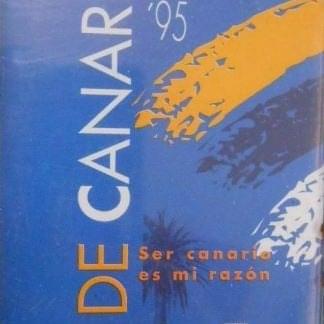
Ultimately, these lyrics resonate because they articulate a profound sense of belonging through a powerful, almost spiritual, identification with place and heritage. The narrator doesn't just live in a land; they *are* the land, its history, and its future. The declaration "Ser canario es mi razón" (To be Canarian is my reason) serves as a powerful, unifying thesis, grounding their entire existence in this specific, multifaceted identity. The imagery of finding the narrator through a "silbo" (whistle) or on "una estela del mar" (a wake of the sea) further emphasizes this unique, almost mythic, connection to their environment.
 View Artist