Song Meaning
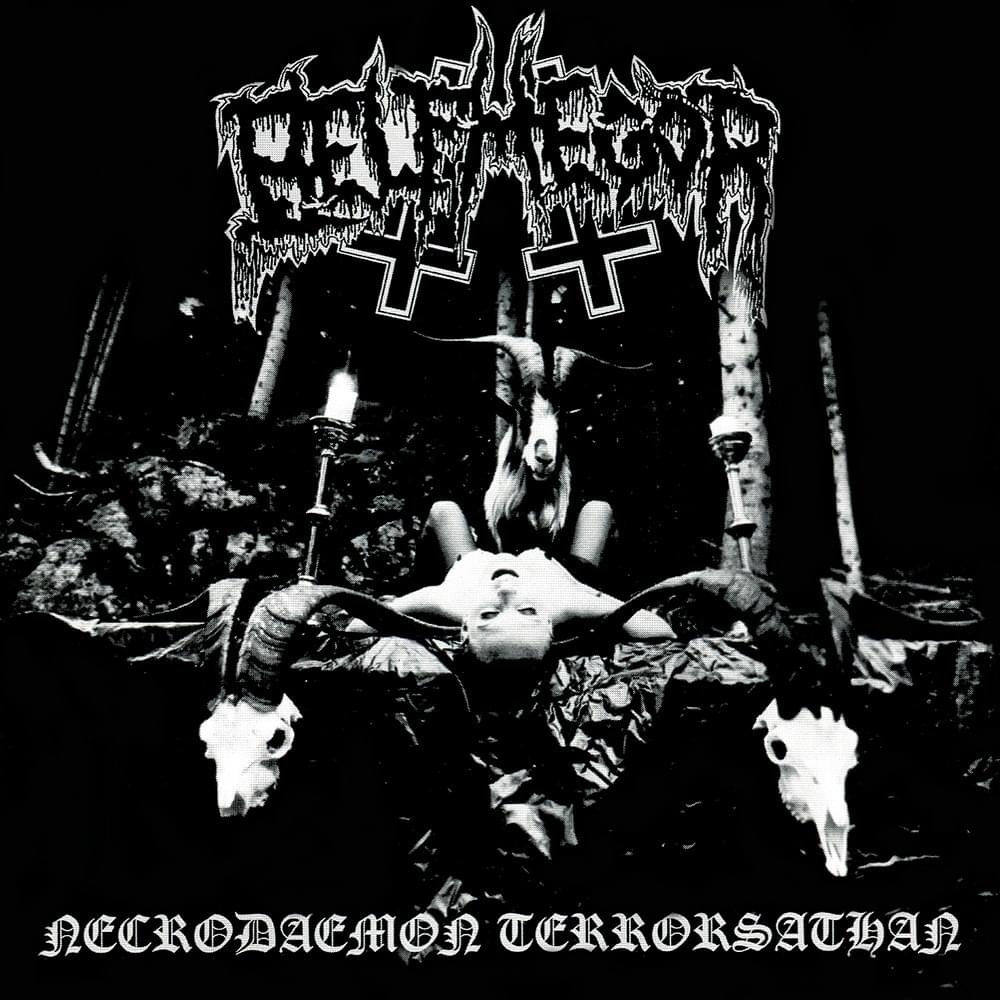
The lyrics paint a grim, ritualistic scene unfolding near a "black forest," where violence has clearly occurred, evidenced by "bloody dews." The narrator seems to be on a quest, nearing a significant goal, but this journey is marked by a profound spiritual decay. Faith is explicitly rejected, twisted into "blasphemy" with the desecration of a cross, suggesting a deliberate renunciation of established order and morality.
The core tension lies in the juxtaposition of violent action and a perverse sense of liberation. The phrase "we are free" is uttered after acts of extreme sacrilege, implying that freedom is found not in salvation but in utter damnation. This inversion is further amplified by the German phrases, which speak of "dismemberment and division of the corpse" and the "dance rage and death songs" reaching their peak. The imagery becomes increasingly visceral and disturbing with lines like "dance rage - kisses the corpse" and "death songs - licks the flesh."
The most striking aspect is the cyclical, almost ecstatic embrace of darkness and destruction. The arrival of night is welcomed as a divine event, with "darkness arise!" and following "the call of fire." This isn't just about defeat; it's a celebration of the abyss, a "reversal of the senses" where death and desecration are the ultimate expressions of freedom. The relentless repetition of the "Tanzwut - Totengesange" chorus hammers home this theme of morbid ecstasy.
What makes these lyrics so potent is their unflinching commitment to a nihilistic vision. The stark, brutal imagery, combined with the perversion of religious acts, creates a powerful sense of dread and transgression. The lyrics don't just describe a dark event; they immerse the listener in a mindset where destruction and blasphemy are the only paths to a twisted form of freedom, culminating in the chilling finality of "the night lasts forever."
 View Artist