Song Meaning
The lyrics present a dramatic invocation, a summoning of destructive forces personified as a "Zerstörer" (destroyer) and "Verwüster" (devastator). The speaker calls upon a "creature of fire," an "ancient serpent" with "razor scales" and a "devil's grin," explicitly linking this entity to "fallen angels, rebellious and proud." This establishes a tone of dark ritual and apocalyptic power, setting the stage for a confrontation with overwhelming, malevolent forces.
The central tension arises from the speaker's active role in bringing forth this destruction. They "conjure thee," "bring forth the spell," and declare "Damnation, I devour eyes," "hearts," and "souls." This isn't a passive observation of hell; it's an active participation, a willing embrace of "wickedness" and "visions of wrath." The repeated phrase "Der Höllensturz" (the fall of hell) underscores the magnitude of this descent or unleashing of infernal power.
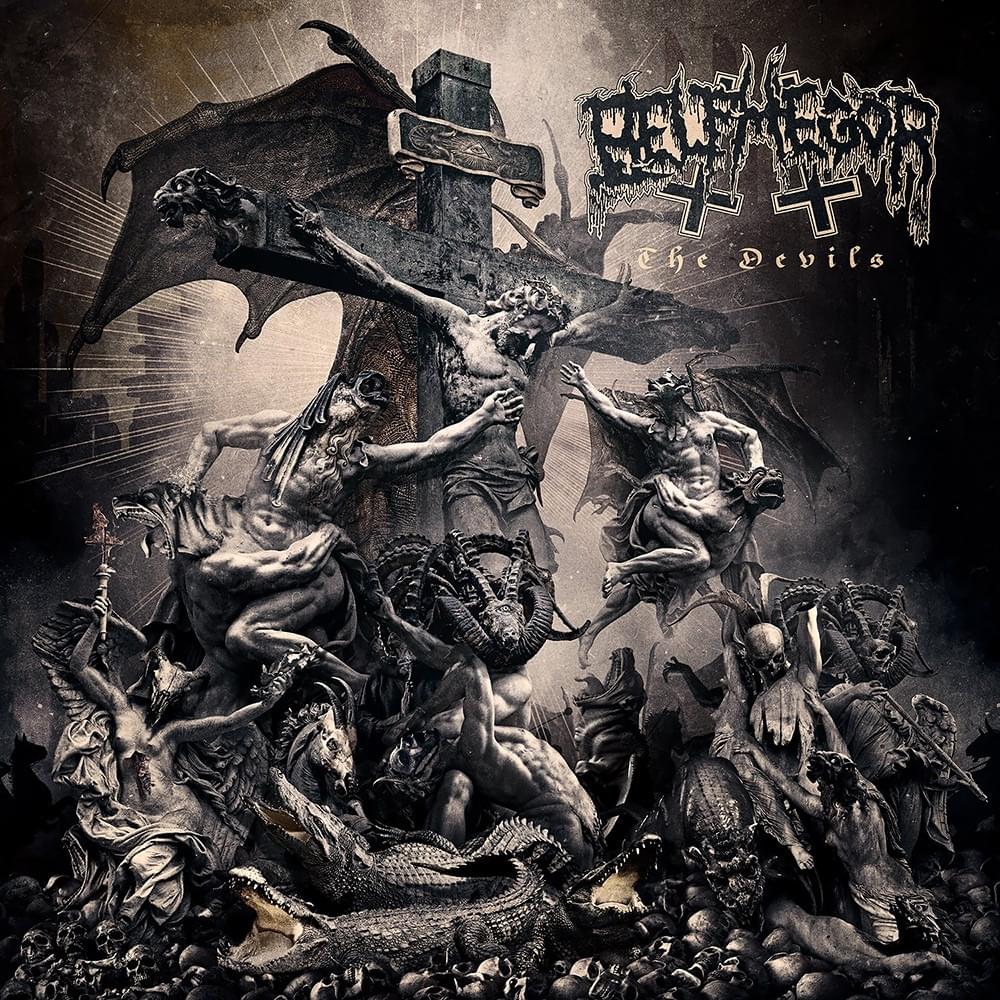
The imagery is stark and symbolic, drawing heavily from religious and occult iconography. The "goat of sin, sin with crown of skulls" and "blood soaked relics" paint a grim, violent tableau. The transformation of the "ancient serpent" shedding its skin suggests a cyclical, inevitable rebirth of this destructive force, amplified by the "apocalyptic enemy reborn in fire." The speaker's claim, "Your hell, I am visions of wrath," positions them not just as a summoner but as the embodiment of the very damnation they unleash.
This lyrical construction is effective through its relentless, aggressive invocation and its fusion of the speaker with the destructive entity. The direct address and declarative statements create an immediate sense of power and inevitability. The repetition of key phrases like "creature of fire" and "spell of wickedness," coupled with the escalating declarations of "devour eyes," "hearts," and "souls," builds a palpable sense of overwhelming, inescapable doom. The lyrics don't just describe hell; they perform its arrival.
 View Artist