Song Meaning
The lyrics construct a series of "churches" that represent personal belief systems, shifting from "disbelief" and "indifference" to more complex states of "liberation," "pain," and "hope." The opening lines establish a tone of resigned acceptance, where even negative change is an improvement, and imperfection is framed as a form of perfection. This sets the stage for a personal spiritual landscape where traditional religious structures are replaced by individual, often contradictory, internal states. The narrator seems to find solace not in external dogma, but in the very act of self-definition, even when that definition involves isolation.
The central tension emerges from the narrator's solitary stance against the world, particularly within the "church ov man" where divinity is confined to human form and prayer is absent. This isolation is amplified by the feeling of an unheard "monologue" in the "church ov pain," suggesting a profound sense of alienation despite the self-inflicted nature of the suffering. The repeated invocation of "church" as a personal sanctuary highlights a deliberate rejection of communal religious experience in favor of an intensely individual, and at times bleak, spiritual journey.
A striking craft element is the juxtaposition of mythological imagery with intensely personal declarations. Crossing "the waters ov Styx" in the "church ov sulphur rain" creates a vivid, hellish landscape, yet it's framed by the simple, almost childlike plea for "the brightest ov the days / The darkest ov the nights." This contrast between epic struggle and basic human desire underscores the personal stakes of the narrator's internal conflicts. The final lines introduce a cosmic perspective, where "unbroken flow ov awareness" and "inner divinity" suggest a transcendence of personal suffering through a broader, universal consciousness.
Ultimately, the lyrics resonate because they articulate a deeply personal struggle for meaning outside conventional frameworks. The power lies in the raw honesty of self-examination, the willingness to confront pain and isolation, and the eventual, albeit abstract, embrace of a larger, unifying awareness. The journey through these self-created "churches" offers a compelling portrait of spiritual resilience, finding divinity not in doctrine, but within the self and the vastness of existence.
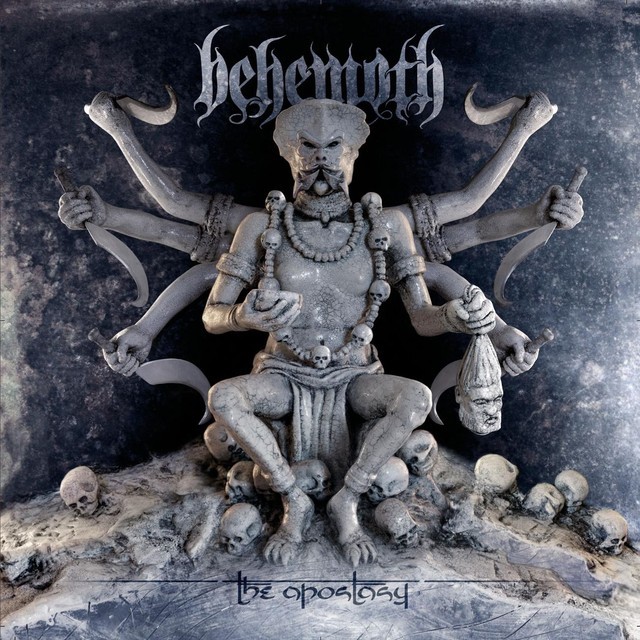
 View Artist