Song Meaning
The lyrics paint a picture of profound disillusionment, starting with a series of unmet expectations about fundamental pairings and completeness. The narrator initially believed in a world where every dance had a dancer, every singer a song, and every parent a child. These are simple, almost childlike assumptions about order and connection. The repeated phrase "Today, I thought" establishes a pattern of past certainty that is shattered by the stark realization, "But today, I learned that I was wrong" or "I found that I was wrong."
This disillusionment escalates from social and familial structures to the very nature of knowledge. The narrator’s belief that every question held an answer, and that each answer provided definitive proof, crumbles into the acceptance of a more complex, perhaps unknowable, truth. The shift from "learned that I was wrong" to "learned the truth" is a crucial pivot, suggesting that the truth isn't found in answers but in the acceptance of uncertainty itself. This implies a move from seeking concrete validation to embracing a more abstract, less defined reality.
The chorus introduces a philosophical layer, questioning the arbitrary nature of time and change. The lines "Don't ask me why the seasons change" and "Don't ask me why today's today" directly confront the human desire for explanation, dismissing it as futile. The contrast between "Yesterday is not tomorrow" is a simple yet powerful statement about the linear progression of time, yet the repetition of "Today - yesterday - yesterday" in the outro hints at a cyclical or perhaps a lingering sense of the past that continues to inform the present, even as the narrator tries to move beyond it.
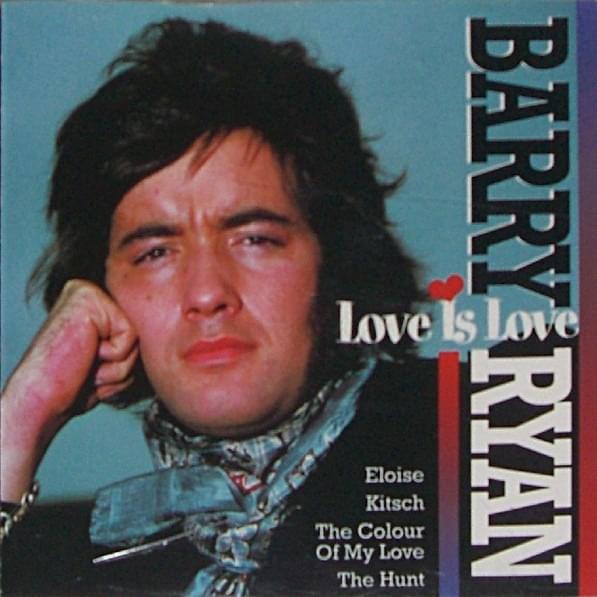
 View Artist