Song Meaning
The lyrics present a pantheon of death deities from various mythologies, establishing a powerful, almost reverent, tone. Figures like Kali, Hel, and Santa Muerte are invoked, immediately signaling a focus on the finality and diverse cultural interpretations of death. This collection of names sets the stage for a contemplation of mortality, moving beyond simple fear to a more complex acknowledgment of its pervasive presence across human belief systems. The opening lines are a stark invocation, a roll call of the ultimate end.
The central tension arises from the contrast between human desires for reincarnation and the stark reality of death's dominion. While legends speak of rebirth and an afterlife, the lyrics assert that the truth is revealed only in the presence of death itself, specifically 'in the shadows.' This suggests a perspective where human hopes for continuation are ultimately overshadowed by the undeniable power of demise. The narrator seems to argue that our focus on mourning the departed is misplaced, urging a shift in perspective towards self-preservation: 'We better cry for ourselves.'
The most striking aspect is the personification of Death as an 'immortal' force, an 'Empress of darkness, queen of shades.' This figure is depicted not just as an end, but as a powerful, almost benevolent entity. The lyrics describe Death as 'erasing all pain and misery' and offering 'everlasting peace' and 'eternal oblivion.' This portrayal reframes death as a release, a 'loving kiss' that brings 'the final bliss,' rather than a terrifying void. The imagery of 'yellow eyes weeping tears of blood' adds a layer of profound sorrow, suggesting empathy from this ultimate power.
This lyrical approach is effective because it demystifies death by personifying it as an all-powerful, yet ultimately peaceful, entity. By listing diverse mythological figures, the lyrics create a sense of universal inevitability. The shift from mourning the dead to fearing for the living is a sharp, unsettling turn that forces introspection. Ultimately, the lyrics offer a compelling vision of death as the great equalizer, a 'caring embrace' that provides the only true, unending peace.
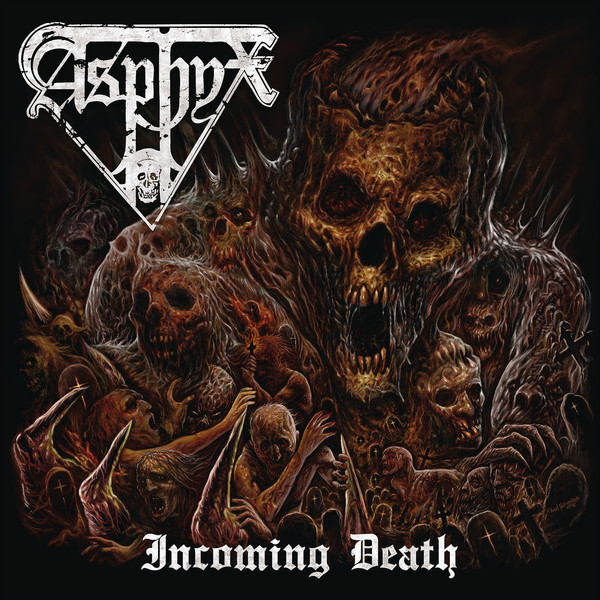
 View Artist