Song Meaning
The lyrics paint a stark picture of a life lived under intense pressure, a constant state of flight. The opening lines, "Hawks on the run with the sound of a pointed gun," immediately establish a tone of imminent danger and pursuit. This isn't a leisurely stroll; it's a desperate scramble, underscored by the internal rhythm of a "crooked heart that I must keep." The narrator feels adrift, disconnected from any guiding force, noting, "No sign of my name in God's will," which amplifies the sense of isolation and the weight of personal responsibility for survival.
The central tension arises from the conflict between this forced, precarious existence and a yearning for something more grounded or perhaps just a peaceful end. The phrase "Trying to get right with what's left" suggests a reckoning with a diminished reality, a life stripped down to its bare essentials. The narrator acknowledges the inevitability of change and departure, stating, "So much for surprise we all got to get off," hinting at a collective, yet perhaps unchosen, exodus. This feeling of being pushed along by external forces, rather than charting a course, is palpable.
There's a fascinating juxtaposition between the harsh imagery of pursuit and moments of almost surreal natural observation. The "Kites in the sun ribbon down creeks of solar blood" offers a fleeting, vibrant visual that contrasts sharply with the earlier sense of dread. Similarly, the lines "Waltz with the trees / Touch the pulsing drums on shoreline's feet" evoke a sense of organic connection and rhythm, a brief respite from the internal "crooked heart." These natural elements, however, are tinged with an underlying unease, as if even nature reflects the precariousness of the narrator's situation, with "Cracks in the eyelids of dawn" and "White capped with fear."
Ultimately, the effectiveness of these lyrics lies in their ability to convey a profound sense of existential dread and the struggle for agency within it. The imagery of natural elements being trapped or fractured – "islands move on," "lonesome the mountain will call," and "Ice trapped the future" – mirrors the narrator's own trapped state. The closing lines suggest a future that is not only uncertain but actively frozen, a chilling prospect for someone already "on the run."
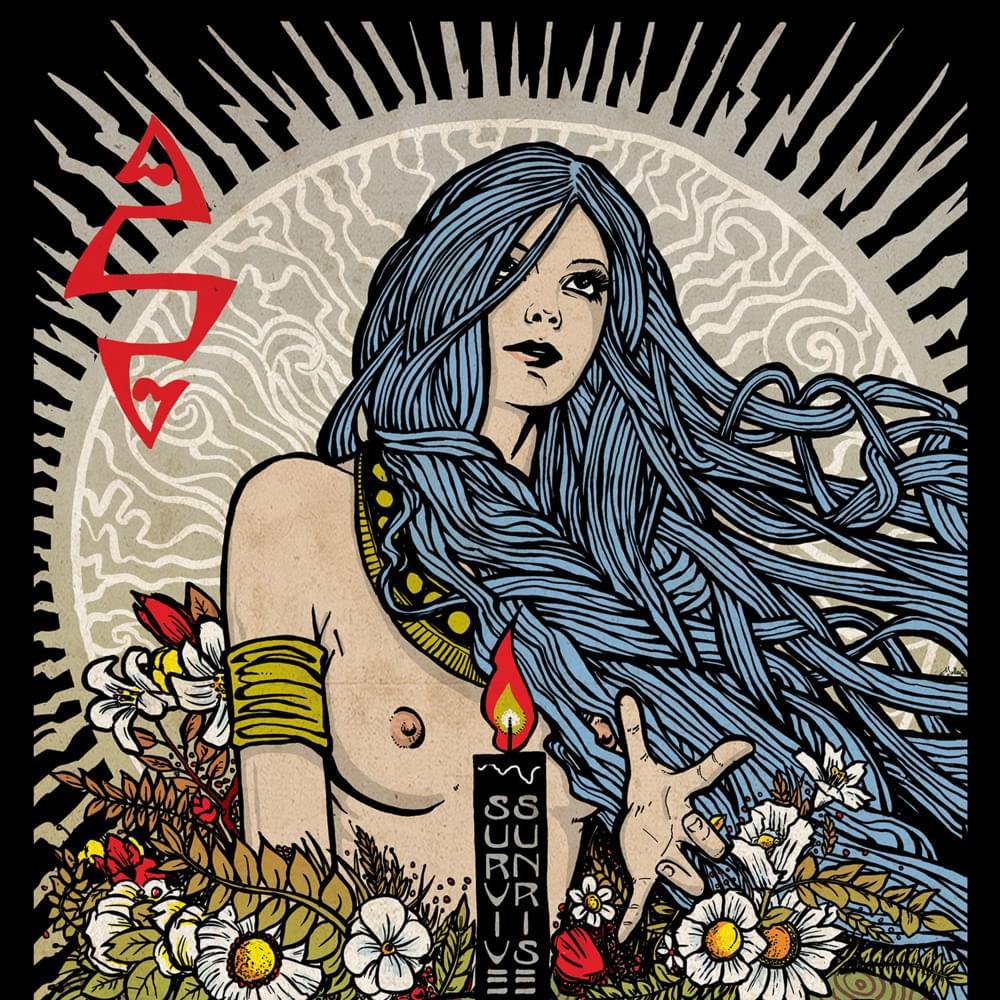
 View Artist