Song Meaning
The lyrics paint a picture of a world yearning for the clear-cut heroism of Capitán Trueno, a fictional character who embodies simple, unambiguous good. The narrator imagines his arrival as a force capable of shattering oppressive 'chains,' suggesting a deep dissatisfaction with the current state of affairs. This idealized past, where 'the good guy is the best,' is presented as a lost ideal, a stark contrast to the present where 'the world is upside down.' The repeated plea, 'Ven Capitán Trueno, haz que gane el bueno,' underscores this longing for a return to a time when morality was straightforward and justice prevailed.
The central tension arises from the disillusionment with reality versus the nostalgic memory of fictional certainty. The narrator acknowledges that the simple lessons learned from Capitán Trueno – that 'the good guy is the best' – are no longer understood as true over time. This implies a complex understanding that the real world doesn't operate on such clear moral lines, yet the desire for that simplicity persists. The imagery of 'giant monsters, enchanted princesses' and the predictable outcome where 'the bad guy always dies, the girl is saved' highlights the escapist fantasy that Capitán Trueno represented, a fantasy now desperately needed.
The most striking craft element is the persistent, almost desperate repetition of the titular character's name and the core wish. This refrain acts as an incantation, a plea for order in a chaotic world. The contrast between the imagined heroic actions – 'on his ship we would go, you and I,' fighting pirates with 'brooms of paper' – and the implied current struggles, 'chased by the years,' creates a poignant sense of helplessness. The 'oceans of teveo' (TV oceans) further grounds the fantasy in mediated experience, suggesting that even the memory of heroism is now a product of passive consumption rather than active participation.
Ultimately, these lyrics resonate because they tap into a universal feeling of wanting a simpler, more just world. The effectiveness lies in the direct, almost childlike appeal for a fictional hero to fix real-world problems. The writing doesn't shy away from the absurdity of wishing for a comic book character to solve complex issues, but it’s precisely this earnestness, coupled with the stark admission that 'the world is upside down,' that makes the longing so palpable and the desire for a clear moral compass so compelling.
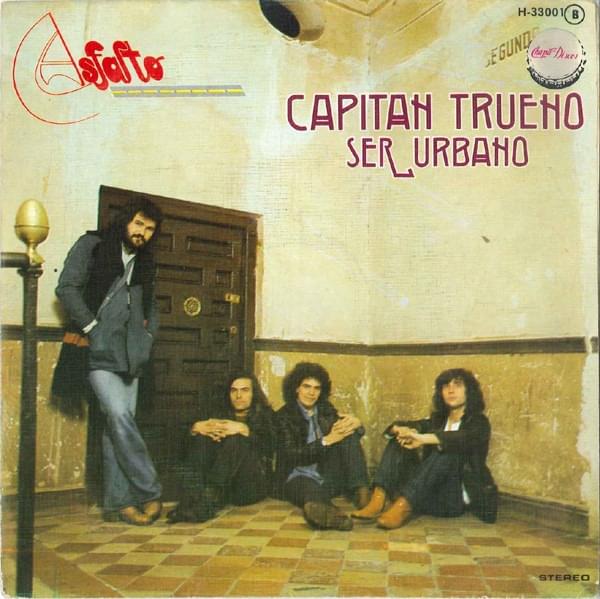
 View Artist