Song Meaning
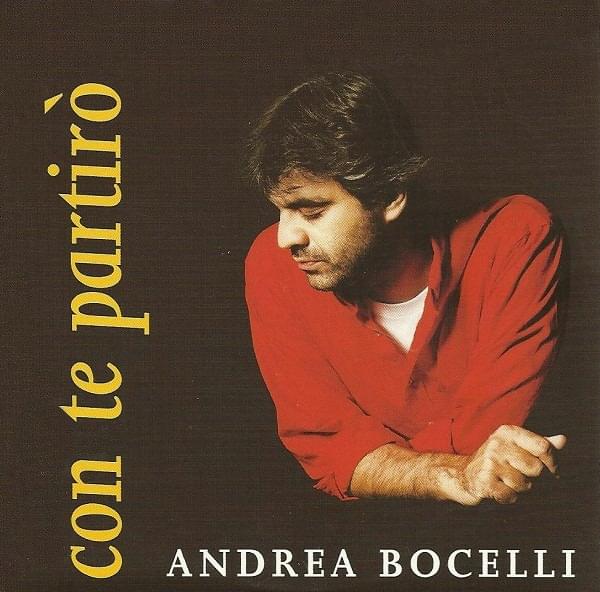
{"song_id": 13857166, "meaning": "Andrea Bocelli's \"Con Te Partirò\" isn't just a love song; it's a raw, operatic declaration of codependency, framed as liberation. The English translation, \"Time to Say Goodbye,\" undersells the song's core, which isn't about a neat farewell, but rather an almost desperate assertion that existence itself is contingent on the presence of the beloved. The lyrics paint a stark picture: \"Quando sono solo / Sogno all'orizzonte / E mancan le parole\" (\"When I am alone / I dream of the horizon / And words are lacking\"). This isn't mere loneliness; it's a void so profound that language itself dissolves. The singer isn't simply missing someone; his very ability to articulate thought, to dream, hinges on their presence. The repeated phrase \"Con te partirò\" (\"With you I will leave\") becomes less a promise of shared adventure and more a statement of existential necessity.
The imagery of light and darkness further underscores this dependence. Without the loved one, there is no light in the room, no sun. They are not merely a source of happiness; they are the *source* of light itself, illuminating a world that would otherwise be shrouded in darkness. The line \"Tu mia luna tu sei qui con me / Mio sole tu sei qui con me\" (\"You my moon, you are here with me / My sun, you are here with me\") elevates the beloved to celestial status, suggesting an almost divine role in the singer's life.
The potentially problematic aspect of “Con Te Partirò” lies in its subtle embrace of enmeshment. The singer doesn't just want to share experiences; he needs the other person to *validate* his experiences, his very existence. The \"paesi che non ho mai / Veduto e vissuto con te / Adesso, sì, li vivrò\" (\"countries that I have never / Seen and lived with you / Now, yes, I will live them\") suggests that life unexperienced with the beloved is not truly lived at all. The beauty of Bocelli's performance lies in the tension between the soaring melody and the potentially unsettling implications of the lyrics. Is it a celebration of love, or an admission of an unhealthy attachment? Perhaps it's both, a reminder that love, in its most intense forms, can blur the lines between devotion and dependency."}
 View Artist