Song Meaning
The lyrics paint a stark picture of stasis, where time itself seems to have frozen. The opening lines immediately question whether time is passing or has become "standing stillborn," setting a tone of profound temporal disorientation. This feeling is amplified by the recurring imagery of "sun and the moon" and "dark and the light," which represent the natural cycles of day and night, yet the crucial question arises: "who counts the days?" This suggests a detachment from conventional measures of time, a place where these cycles are observed but not registered in any meaningful way.
The central tension lies in the contrast between the external markers of time and the internal experience of timelessness. The narrator is "living on the minutes and by the seconds," a hyper-awareness of the present moment, yet this existence is juxtaposed with the "undying sea" and the perpetual "snow blank sky." This creates a sense of being trapped, acutely aware of each passing second within a landscape that offers no progression or change, an existence defined by its unchanging nature.
The most striking element is the persistent, almost haunting refrain asking "who counts the days / Where the snow lies forever?" This rhetorical question underscores the futility of measurement in a place where time has lost its conventional meaning. The "spiky hand on the undying sea" is a potent image, suggesting a clock mechanism that continues to tick, but its purpose is rendered obsolete by the eternal, unchanging environment. The "snow blank sky" where "sky meets the ground" further emphasizes this sense of infinite, unbroken sameness.
Ultimately, these lyrics resonate because they tap into a universal feeling of being stuck, of experiencing moments intensely without a sense of forward momentum. The meticulous focus on the mechanics of time – minutes, seconds, sun, moon – against the backdrop of an eternal, frozen landscape highlights the human need for progression and the profound unease that arises when that need is unmet. The writing crafts a powerful emotional landscape of existential stillness, making the reader question the very nature of time and memory.
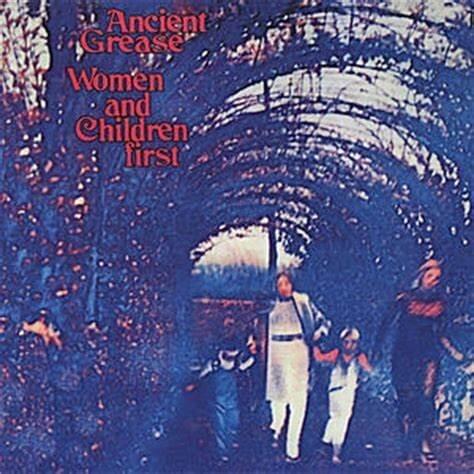
 View Artist