Song Meaning
The lyrics paint a stark picture of alienation and the struggle for individuality, beginning with the sensory details of a stifling environment. The "musty smell of urethane" in the gym and the "coat lines" that "clearly divide us" immediately establish a sense of confinement and rigid social structures. The image of a dead pigeon on the walkway and a textbook's "Akutagawa" (a reference to a writer known for exploring the darker aspects of human nature) suggest a pervasive sense of decay and unease beneath the surface of ordinary life.
The central tension arises from the narrator's yearning for freedom against societal pressures. The "street trees tied to posts, like a public crucifixion" and the uniform that feels "tight" highlight the suppression of natural growth and self-expression. The command to "look right, look right" is met with a glance left, and the desire to turn away from the "line up" reveals a deep-seated resistance to conformity. This resistance is framed as a plea for someone else to "never grow up," clinging to a perceived innocence as a form of salvation.
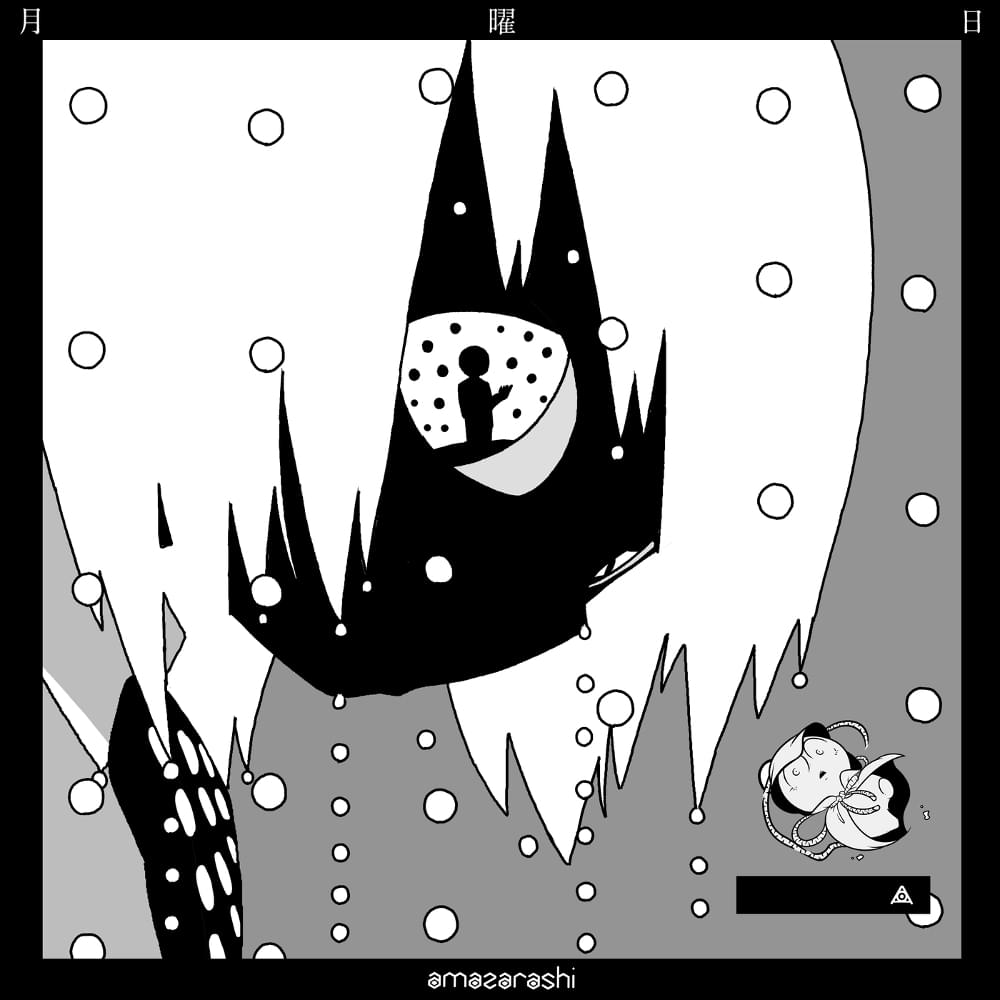
The repeated motif of "Monday" serves as a potent symbol for the oppressive start of the week and the return to these restrictive conditions. When kicked, Monday is rejected by the "trash can," rusts in the "sea breeze," and is eventually "burned up in the atmosphere," leaving a "crater" in the narrator's chest. This escalating destruction of Monday mirrors the narrator's own feelings of being an "extraterrestrial" or possessing "superpowers" – a sense of being fundamentally different and unable to connect easily. The difficulty in expressing simple desires like "liking what I like" or "disliking what I dislike" underscores this profound disconnect.
Ultimately, the lyrics articulate a profound need for connection in the face of this isolation. The narrator acknowledges being "ordinary" and "commonplace" but aspired to be "special." Failing that, the need for "someone to acknowledge each other" becomes paramount, identifying that person as "you." The realization that "you became special to me long ago" and the subsequent promise of "never parting" – even knowing "eternity doesn't exist" – reveal a desperate, yet deeply felt, commitment to this unique bond, suggesting that this connection, however imperfect, is the only thing that truly matters.
 View Artist