Song Meaning
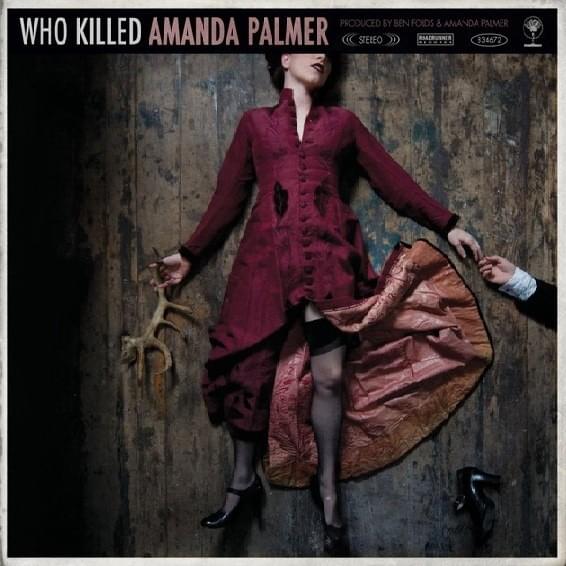
{"song_id": 11726499, "meaning": "Amanda Palmer's \"Have to Drive\" isn't just about escaping; it's a raw, almost primal scream against the soul-crushing weight of existence. The cyclical dread of \"suffering mornings\" becomes a metaphor for the daily battles against internal demons and societal pressures. It's a portrait of someone perpetually on the edge, fighting off the \"jury in my head\" – a powerful image of self-doubt and societal judgment. The repeated line highlights the struggle with mental health, the feeling of being overwhelmed by the simplest of tasks, and the constant battle to find purpose in a world that often feels indifferent. The references to deer act as a plea for empathy, a reminder of the shared vulnerability of living beings in a harsh environment. The deer represent innocence and fragility, aspects that are threatened by the coldness of the world. This is further emphasized by the lines \"We saw you lying in the road/We tried to dig a decent grave/But it's still no way to behave,\" suggesting a confrontation with death and the struggle to find meaning in the face of mortality. The song is a meditation on the human condition, the challenges of mental health, and the search for solace in a world that often feels hostile.
The chorus, \"I have to drive,\" takes on multiple layers. It's literal, yes, but also symbolic. The driving becomes a desperate act of self-preservation, a flight from something unnamed but deeply felt. The phrase \"It's only natural, deer\" hints at a learned behavior, a coping mechanism passed down through generations. Palmer suggests this urge to escape is ingrained, almost instinctual. The shift to \"We'll have to drive/They're getting closer/Just get inside/It's almost over\" injects a sense of urgency and paranoia, implying a threat, whether real or imagined. This threat could be interpreted as societal pressures, personal demons, or the overwhelming feeling of being trapped. The line \"We will save your brothers/We will save your cousins\" broadens the scope, turning the personal struggle into a collective one, a mission to protect others from the same darkness.
The bridge, with its unsettling imagery of \"Spin the bottle, pick the victim/Catch a tiger, switch directions,\" introduces an element of chaos and unpredictability. It speaks to the arbitrary nature of suffering and the desperate measures one might take to survive. The line \"If he hollers, break his ankles to protect him\" is particularly jarring, suggesting a willingness to inflict harm in order to prevent greater suffering. Ultimately, "Have to Drive" embodies a paradox. It's a song about running away, but also about protecting, about acknowledging the darkness while desperately searching for a way out. Amanda Palmer’s lyrics analysis reveals a complex and emotionally charged exploration of survival, mental health, and the shared human struggle against an often-uncaring world."}