Song Meaning
Alkinoos Ioannidis's "Δεν Είναι Φως (Den Einai Fos)" excavates the hollow ache of a love already long gone, a post-mortem on a relationship where the final departure is merely a formality. The lyrics paint a portrait of someone announcing an exit that happened imperceptibly, years prior. The recurring line, "Ήρθες μια νύχτα να πεις / Πως θα φύγεις" (You came one night to say / That you would leave), isn't about the act of leaving, but the belated acknowledgement of a void that's been present. The emotional core of the song lies not in the separation itself, but in the slow, agonizing fade that preceded it. The singer's lament focuses on how the beloved's presence used to bring a unique light, a dawn that no longer breaks the same way.
The song’s title, "Δεν Είναι Φως (Den Einai Fos)," meaning "It is not light," underscores the central theme. The love described isn't the illuminating, life-affirming kind, but something that thrives in the darkness. The lover's presence is compared to a flower that awakens the speaker at night, and a song that flutters and speaks of them in the dark. This isn’t a daytime, healthy love; it's something more nocturnal, perhaps even obsessive. The lyrics subtly suggest a dependency, a reliance on a love that exists outside the realm of everyday life.
The final verse, "Άλλη μια νύχτα χωρίς τ' όνομά σου / Χωρίς τ' άγγιγμά σου / Κι ο κόσμος μισός" (Another night without your name / Without your touch / And the world is half), emphasizes the profound sense of incompleteness. The world is fractured, diminished in the absence of the lover's touch and name. The remembered light is not just a memory of happiness, but a stark contrast to the present darkness, highlighting the extent of the loss. The song meaning centers on the melancholic acceptance that what was once a source of light and life has become a ghost, haunting the shadows of the singer's present.
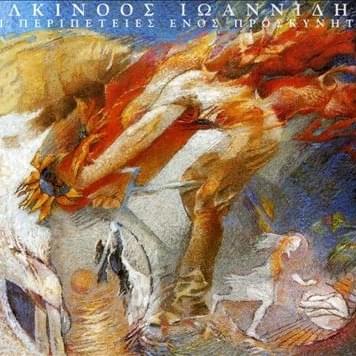
 View Artist