Song Meaning
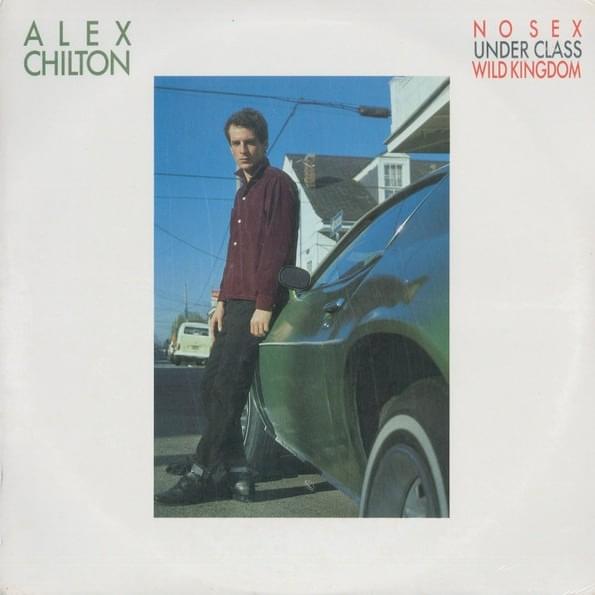
Alex Chilton's "Wild Kingdom" is less a celebration of untamed nature and more a sardonic commentary on the performance of freedom within societal constraints. The opening lines, "You were born free / In a wild kingdom," immediately establish a paradox. This 'wild kingdom' isn't a literal wilderness; it's the everyday street, a space already shaped by human artifice. Chilton suggests that even in the midst of supposed liberty—"walkin' down the street / You feel your freedom"—we are not truly free, but rather navigating a pre-determined terrain of social expectations and potential threats. The feeling of freedom is then immediately undercut by the sensing of danger and the stalking of a stranger, indicating a world where survival instincts and predatory behaviors lurk just beneath the surface of everyday interactions. Chilton isn't romanticizing this; he's exposing the tension.
The core of the song's meaning lies in the recurring lines: "Here in the civilized world / So extinct you are / That it is wonderful." This is where Chilton's irony cuts deepest. What does it mean to be 'extinct' in a 'civilized world'? It implies that authenticity, a genuine expression of self, has been systematically erased by the demands of conformity. The "savage primitive grace" is no longer valued, replaced by a need for "decorum". Yet, Chilton finds a twisted beauty in this near-extinction. The repetition of "You are beautiful" suggests a defiant appreciation for those who, despite societal pressures, retain some spark of their original, untamed selves.
Ultimately, "Wild Kingdom," isn't a straightforward anthem of rebellion. It's a complex meditation on the cost of civilization. The song's meaning hinges on the understanding that true freedom might be an illusion, and that the very act of existing within a 'civilized world' necessitates a degree of self-suppression. Chilton seems to both mourn the loss of this 'wildness' and admire those who manage to hold onto it, even in a diminished, 'extinct' form. The song's beauty lies in its melancholic acknowledgment of this inherent contradiction.
 View Artist