Song Meaning
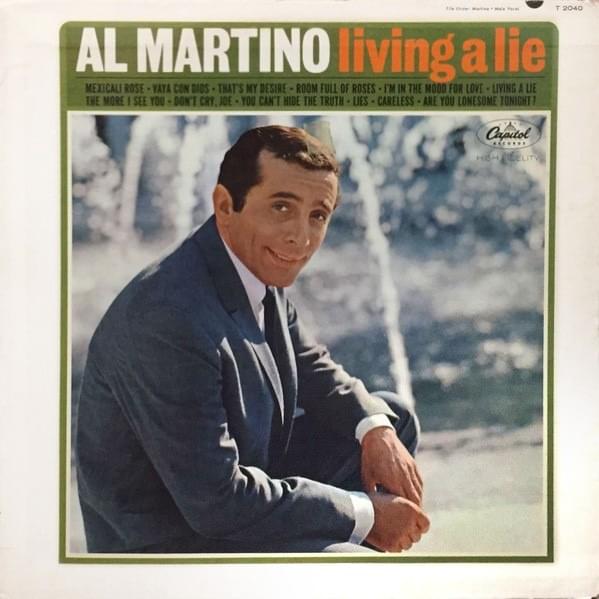
Al Martino's "Lies" isn't a complex lyrical labyrinth, but its stark simplicity cuts deep. It's a post-mortem on a relationship, dissecting the various falsehoods that sustained it, and ultimately, destroyed it. The opening lines establish a duality: lies that brought fleeting happiness alongside the inevitable heartbreak. This suggests a co-dependent dynamic, where the singer knowingly accepted comforting fictions, perhaps to avoid confronting a painful reality. There's a certain self-awareness here, acknowledging his own complicity in the deception. He wasn't merely a victim; he was a participant in the charade. But the implied question lingers: is temporary happiness worth the eventual, crushing blow?
The song's emotional core resides in the devastatingly direct pronouncement of the final lie: "I love you." It's not just any lie; it's the ultimate betrayal, the falsification of the deepest human connection. Martino's delivery, presumably imbued with a world-weary resignation, amplifies the sting. It's a universal sentiment, the gut-punch realization that the foundation of a relationship was built on a lie. The repetition of this line in the outro emphasizes its weight, leaving the listener with the lingering question of whether anything was ever real. It's a study in disillusionment, a stark portrait of love gone sour, and a testament to the enduring power of a simple, honest lyric.
"Lies," in its essence, explores the psychological impact of deception within intimate relationships. It's about the erosion of trust, the slow poisoning of affection through carefully constructed falsehoods. The song's effectiveness lies in its ability to tap into the listener's own experiences with dishonesty, prompting a reflection on the lies we tell ourselves and the lies we accept from others. Martino doesn't offer solutions or resolutions; he simply presents the raw, unvarnished truth of heartbreak, leaving us to grapple with the consequences of a love built on a foundation of "Lies". The song meaning resonates because it highlights the fragility of human connection and the devastating consequences of broken promises.
 View Artist