Song Meaning
The lyrics plunge into a raw, self-critical monologue, questioning the very nature of "愛情?" (love) and harshly dismissing it. The speaker commands themselves to "捨てて描き尽くせ" (discard and draw everything out), framing artistic creation as a brutal, almost desperate act of catharsis. This immediate intensity sets a tone of internal struggle and creative urgency.
A deep emotional tension drives these lines: the artist's profound self-loathing clashes with an undeniable compulsion to create. They lament their "作品たちは 負の感情のゴミ箱だ" (works are a trash can of negative emotions), yet later declare "僕にはこれしかない" (I have only this), revealing art as both a burden and their sole purpose. This push-pull between despair and necessity forms the core conflict.
The evolving choruses brilliantly illustrate this internal battle. Initially, the artist wants to avoid depicting "死にたいとか生きたいとか" (want to die or want to live), seeing their art as a receptacle for negativity. However, the final chorus shifts dramatically, expressing a yearning to depict "幸せとか愛情とか" (happiness or love), suggesting a desperate hope to transcend their current emotional state, even if they still view humanity as "無力で無色で" (powerless and colorless).
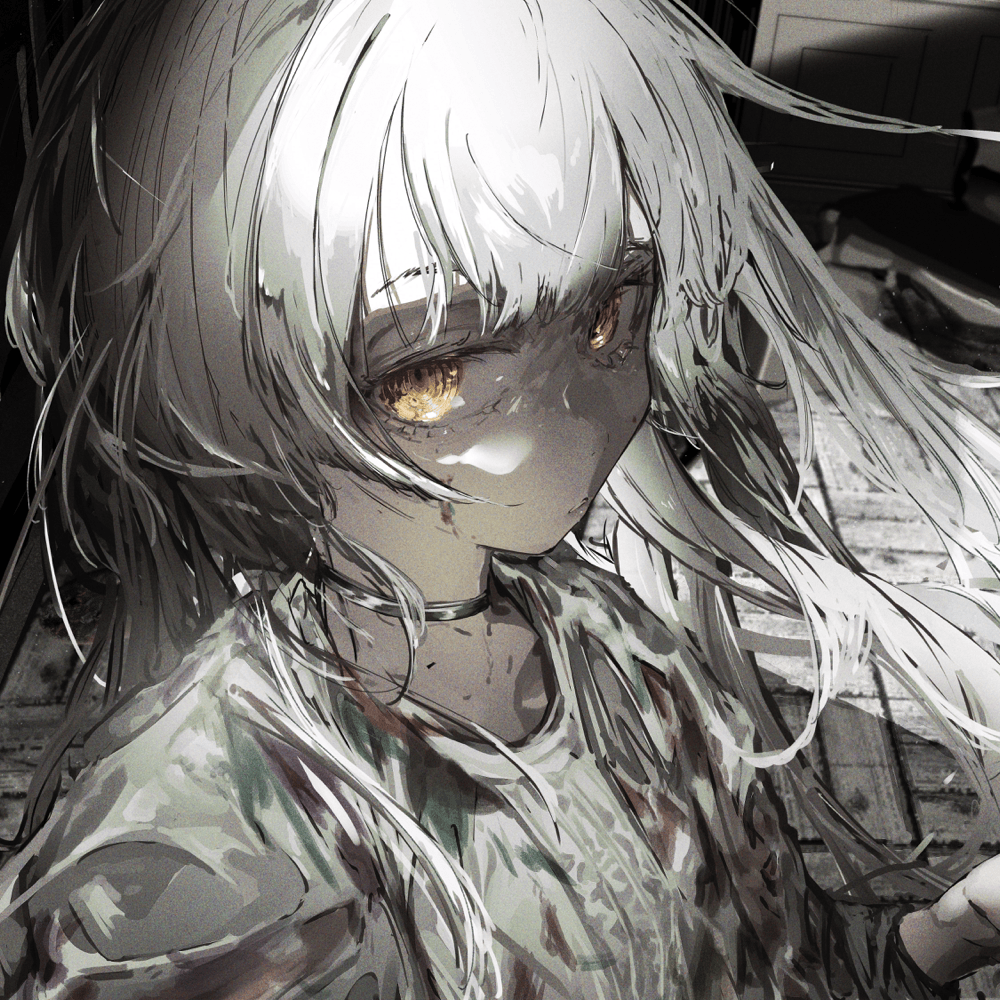
The lyrics' power lies in their unflinching honesty and the visceral portrayal of an artist grappling with their inner demons. The stark imagery, like seeing a "悪魔がいるよ" (devil) in their own frame, makes the self-identification with darkness palpable. By presenting creation as a painful, unavoidable process—a direct extension of the "僕の心だ" (my heart)—the text resonates deeply with anyone who has poured their struggles into their craft, making the emotional impact both raw and profoundly human.
 View Artist