Song Meaning
Aimee Mann, the patron saint of sophisticated melancholy, dissects inertia with surgical precision in "It's Not." The song meaning revolves around the frustrating gap between potential and reality, the agonizing awareness of being stuck. Mann paints a portrait of someone trapped in a loop, "going round and round on the same old circuit," a self-defeating pattern amplified by an unseen force that "shrinks the picture down to a tiny dot." There's a palpable sense of powerlessness, a feeling that even when things appear ideal from a distance, a fundamental flaw persists: "from behind the screen it can look so perfect, but it's not." This isn't just sadness; it's a clinical observation of one's own stagnation. The repeated refrain, “It’s not,” hangs like a Damoclean sword over any fleeting hope.
The second verse amplifies this paralysis. The image of sitting at a stoplight, endlessly cycling through red, green, and yellow, perfectly captures the feeling of being on the verge of change yet unable to initiate it. The simplicity of the action – "all I have to do is to press the pedal" – underscores the agonizing self-awareness of the speaker's inaction. Mann then introduces a cynical commentary on social performance in the bridge: the need to conceal anything vulnerable or unknown, lest it be rejected. This fear of exposure seems to be a contributing factor to the speaker's paralysis. The song suggests that the fear of judgment and the pressure to conform can stifle authentic expression and lead to a state of emotional stagnation.
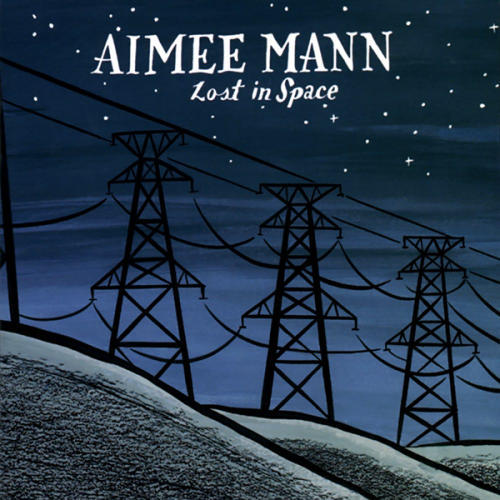
Ultimately, "It's Not" finds its desperate escape in a romanticized vision. The plea to "kiss me like a drug, like a respirator" is a yearning for oblivion, a desire to be swept away into a fantasy where problems cease to exist. The astronaut metaphor speaks to a desire to escape the confines of earthly limitations, to be lost in the vastness of space where all earthly concerns become mere "afterthoughts." Even within this escapist fantasy, however, the refrain "though it's not" persists. This suggests that even in the most idealized version of reality, the fundamental dissatisfaction, the core sense of something being fundamentally *off*, remains. Aimee Mann doesn't offer easy answers, but instead provides a brutally honest and emotionally resonant exploration of the human condition, particularly the struggle to reconcile our inner selves with the demands of the external world.
 View Artist