Song Meaning
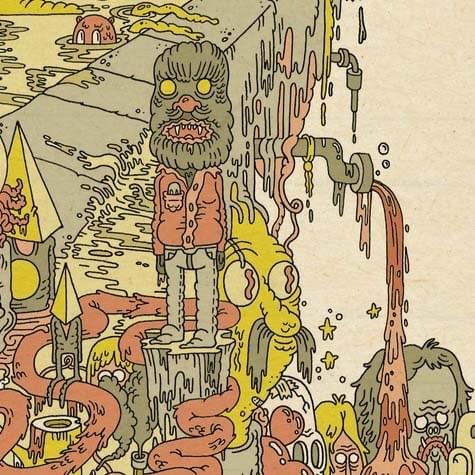
The lyrics paint a stark picture of impending doom, personified by a "weather of a killin' kind." The opening imagery of "rainin' wolves" immediately establishes a sense of primal threat and external forces bearing down. There's a palpable hesitation, a "stand and watch" mentality, suggesting a paralysis in the face of overwhelming, perhaps inevitable, danger. The narrator observes this not just as an event, but as something that will persist, "spread out there forevermore."
The central tension arises from the narrator's attempt to rationalize or find meaning in this destructive force. The idea that the "sun's behind the fallin'" and that creatures "heat their paws" suggests a cyclical, almost natural order to the destruction, but it's a twisted logic. This external force, these "creatures," are not just passive elements; they "lay their hands on my decisions," directly impacting the narrator's agency and leading to "sober loss." The repeated refrain, "Now there is somethin' in the wild / Here is a weather of a killin' kind," underscores the inescapable nature of this destructive influence.
The most striking craft element is the juxtaposition of passive observation and active, albeit desperate, defiance. While the "sleeping jaws" suggest a silent, predatory threat, the narrator "hold[s] cymbals." This isn't a call for a grand performance, but a raw, percussive act of self-preservation or perhaps a defiant noise against the encroaching silence of loss. The line "Don't need no score to play this piece, no / Don't need no violins to lose a man" highlights a rejection of conventional mourning or preparation, opting instead for a primal, unscripted response to devastation.
This lyrical landscape is effective because it grounds abstract dread in visceral, almost animalistic imagery. The narrator's personal connection to the destructive force is revealed in the final stanza: "I feed the clouds, they are my shadow / 'Cause I have raised the cubs my self alone." This suggests a self-inflicted or inherited burden, where the narrator has become complicit in or a source of the very "weather" they face. The personal ownership of this "weather of a killing kind" transforms the external threat into an internal, deeply personal struggle.
 View Artist