Song Meaning
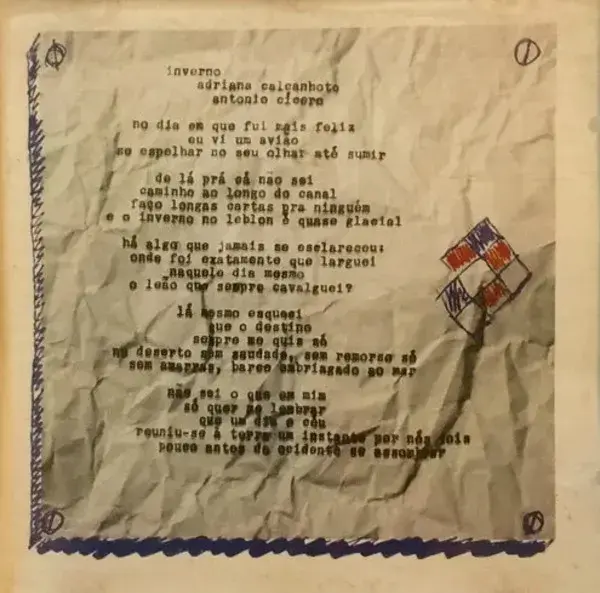
Adriana Calcanhotto's "Hospital Radio Jingle #2," or "Inverno" (Winter), isn't a jingle at all, but a haunting meditation on lost joy and the lingering chill of a love gone cold. The opening image – an airplane reflected in a lover's eye – serves as a potent, fleeting symbol of happiness observed and then vanished. The plane's disappearance mirrors the fading of that initial bliss, leaving the narrator directionless: "De lá pra cá não sei / Caminho ao longo do canal" (From there on, I don't know / The way along the canal). This sense of disorientation permeates the entire song.
The melancholic tone deepens as Calcanhotto explores themes of isolation and detachment. The act of writing "longas cartas pra ninguém" (long letters to no one) highlights a yearning for connection coupled with a profound sense of being unheard. Even the geographical setting of Leblon, a famously beautiful beach in Rio de Janeiro, is rendered "quase glacial" (almost glacial) by the emotional winter within the narrator. This juxtaposition of external beauty and internal coldness emphasizes the disconnect between appearance and reality, a common thread in Calcanhotto’s work.
Perhaps the most striking image is the loss of the "leão que sempre cavalguei" (lion I always rode). This lion could represent courage, passion, or a guiding principle, abandoned on that same pivotal day of lost happiness. The lines that follow suggest a reluctant acceptance of solitude as a preordained fate: "Lá mesmo esqueci que o destino / Sempre me quis só" (There I forgot that destiny / Always wanted me alone). The final lines hint at a transcendent moment, a brief union of heaven and earth before "o ocidente se assombrar" (the West is frightened), implying a societal or perhaps internal judgment that shattered an idyllic connection. The song, ultimately, is a poignant exploration of memory, loss, and the acceptance of a solitary path, rendered with Calcanhotto's signature poetic precision.
 View Artist