Song Meaning
The narrator casts themselves as elemental forces, a recurring motif that immediately establishes a sense of detached power. They declare, "Ich bin der Regen" (I am the rain), framing their actions as natural and inevitable, not driven by personal choice or emotional entanglement. This sets a tone of passive, almost indifferent giving, where their presence is a force of nature rather than a conscious act of affection. The lyrics suggest a desire to provide sustenance and happiness, even if it comes with a touch of coldness.
The core tension lies in the narrator's dual role as both giver and potential cause of hardship. While they offer "jedes Grün" (every green) and wish the recipient happiness, they also admit to letting things freeze and becoming "Hagel" (hail) and "Donnerblitz" (thunderbolt). This oscillation between nurturing and destructive elements creates a complex emotional landscape, hinting that their very nature, while beneficial, can also be harsh. It's a powerful, if unsettling, portrayal of a relationship where the narrator's impact is profound but not entirely controllable.
The most striking craft element is the consistent personification of natural phenomena as the narrator's identity. By claiming to be rain, snow, and hail, the narrator elevates their actions beyond human emotion, making their giving and withholding feel like unavoidable cycles. The repeated phrase "Ich bin der..." (I am the...) reinforces this unwavering self-definition. The final lines, "Schau' ich wie du / Den gleichen Himmel / Bei all dem Wetter an" (I watch how you / The same sky / Look at in all the weather), bring a subtle shift, suggesting a shared experience of enduring these elemental forces, perhaps hinting at a deeper, albeit distant, connection.
This lyrical approach is effective because it externalizes complex emotional dynamics into tangible, natural processes. The narrator isn't just saying they can be both good and bad; they *are* the forces that embody both. This makes their presence feel immense and inescapable, and the recipient's experience of them is framed as a matter of weathering the storm, or enjoying the bloom, dictated by the narrator's inherent nature. It's a stark, poetic way to articulate a relationship defined by powerful, uncontrollable influence.
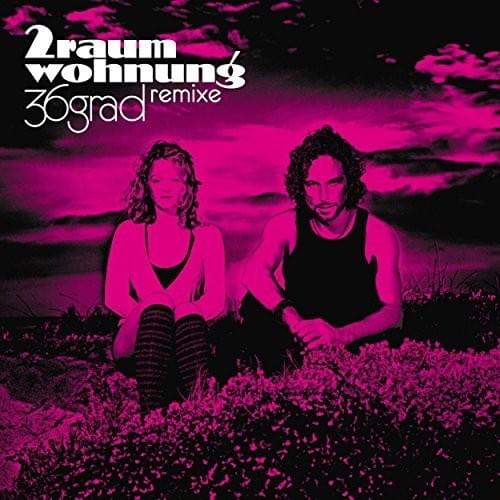
 View Artist