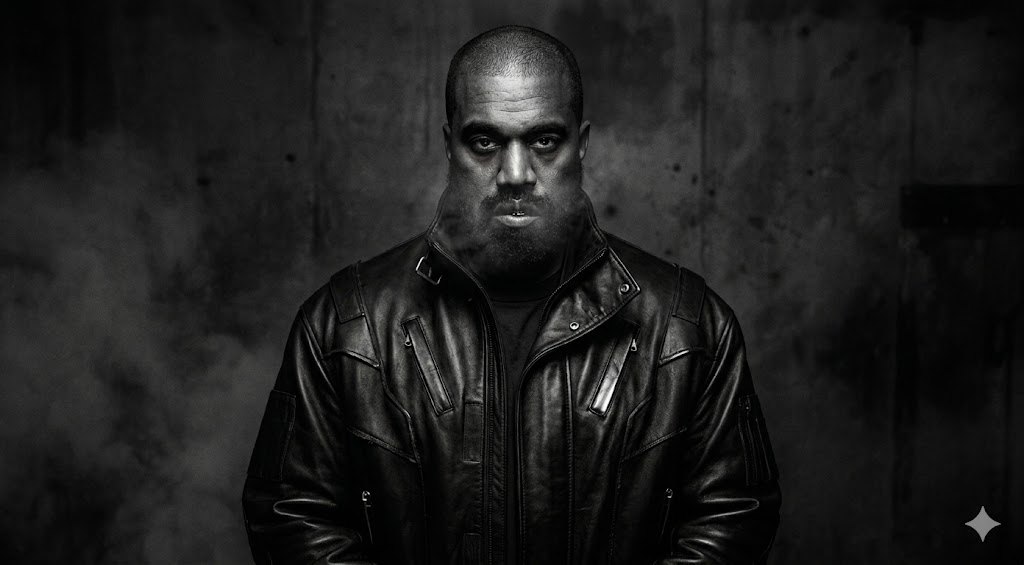
Ye Returns With “BULLY”: Chaos, Control, and the Sound of a Man at War With Himself
Latest News

Music Journalist
Ye has spent so many years turning every release into a public stress test that a normal album drop was never really on the table. So when BULLY landed on March 27, 2026, it did not feel like a clean comeback, a redemption arc, or some neat late-career reset. It felt like somebody kicked open a steel door and let the smoke pour out. This record is abrasive, funny in a low-key evil way, ugly on purpose, and weirdly locked in even when it sounds like it is about to come apart at the seams. That tension is the whole sauce. BULLY is not trying to charm you first. It wants to press you up against the wall, talk too close, and dare you to flinch.

The first thing this album gets right is tone. Not “tone” in the safe review-book sense, but tone as atmosphere, as pressure system, as a room with bad energy that you still do not want to leave. Even the track names on BULLY feel like fragments of threats, family arguments, confessionals, and voice notes saved at 4:12 a.m. “SISTERS AND BROTHERS”, “FATHER”, “ALL THE LOVE”, “THIS A MUST”, “HIGHS AND LOWS” — these are not titles that promise comfort. They sound like somebody sorting through power, guilt, ego, grief, and delusion with one eye open.
That is why the album works best when it is least interested in behaving. The cleanest way to misunderstand BULLY is to ask why it is not more polished. Bro, that is the point. The record keeps swerving away from polish because polish would kill the mood. Ye has made pristine albums before. He knows what “finished” sounds like. Here, he seems more interested in friction: clipped structures, blown-out textures, hooks that feel half-lit, ideas that arrive sharp and leave before they overexplain themselves. The songs do not line up like a luxury rollout. They lurch, twitch, and double back. It is sequencing with a little menace in it.
The title track, “BULLY”, is the clearest expression of that mentality. On paper, a 45-minute centerpiece looks almost absurd. In practice, it plays like an anti-streaming flex, a giant middle finger to the idea that songs should be neatly portioned for convenience, playlist placement, or passive consumption. It is bloated, hypnotic, excessive, self-mythologizing, and impossible to ignore. And honestly? That is the most Ye move imaginable. Not because it is tasteful. Because it is maximal in the exact places where most artists would get nervous and cut things down.
There is also a nasty little intelligence to the way BULLY handles beauty. Tracks like “ALL THE LOVE” and “CIRCLES” flirt with warmth, melody, even tenderness, but the album rarely lets those feelings land clean. Just when a track starts to feel open-hearted, something in the production roughs it up. A drum cracks at the wrong angle. A vocal feels too dry. A transition slices through the mood. Ye keeps snatching the silk away and replacing it with concrete. It is not that BULLY lacks emotion. It is that the emotion shows up bruised.
That bruise-colored atmosphere gets a huge boost from the credited cast around the album. Travis Scott, Ty Dolla $ign, James Blake, and CeeLo Green all make sense here because they can operate inside unstable spaces without draining the weirdness out of them. None of those names show up as cheap star power. They feel like colorists in a film that is already shot in shadows. Ty can add warmth without making the music soft. Travis can add scale without flattening the paranoia. James Blake can turn negative space into emotional weather. That combo is not random. It is architecture.
And the producers behind this thing deserve real attention too. Havoc, James Blake, 1SRAEL, Ty Dolla $ign, and Ye are attached to a credit sheet that reads less like a generic feature list and more like a blueprint for controlled damage. You can hear hands in these tracks that understand how to make ugliness feel expensive. That is a real skill. A lot of albums sound rough because they are unfinished. BULLY sounds rough because it wants the listener trapped inside the grain of it. The distortion is not just texture. It is part of the emotional language.
“PREACHER MAN (2026)” matters for another reason: it gives the album one of its clearest thematic signals. Religion, performance, authority, righteousness, spectacle — all of that sits close to Ye’s catalog already, but on BULLY it feels less like grand declaration and more like spiritual theater staged under flickering lights. There is always been a preacher in Ye’s music, but here the sermon sounds cracked at the edges, like the messenger knows the house is unstable and keeps talking anyway. That instability gives the song extra voltage. It does not feel holy. It feels haunted.
Then you get songs like “FATHER” and “MAMA’S FAVORITE”, which could have slid into obvious emotional territory if this were a more conventional release. Instead, Ye keeps a weird amount of emotional distance in the mix. He circles vulnerability without completely surrendering to it. That is part flex, part defense mechanism, part stylistic instinct. The result is more compelling than a straightforward confession would have been. On BULLY, sincerity is never delivered in a clean package. It leaks out through posture, subtext, and damaged surfaces.
That damaged-surface quality also explains why this album will split listeners hard. Some people are going to hear the rough edges and say it sounds unfinished. Some are going to hear the same edges and call them the only honest thing left in a genre that gets buffed to death before release day. Both reactions make sense. BULLY is not a consensus album. It is a reaction album. It invites arguments. It kind of thrives on them. In that sense, it may be the most on-brand Ye project possible: a record that sounds like it knows the discourse will become part of the listening experience.
The pacing helps with that. This album does not glide. It stomps, stalls, pivots, and occasionally just stares at itself in the mirror too long. That can be frustrating if you want a smooth arc, but it is also what keeps the project from fading into “solid late-career release” territory. Ye is way too volatile an artist for that. Even when BULLY misses, it misses loudly, which is still more interesting than the kind of tasteful, algorithm-friendly rap album that arrives polished and leaves zero residue on your brain. This record leaves residue. It leaves fingerprints. It leaves smoke in the room.
“WHITE LINES”, “THIS ONE HERE”, and “MISSION CONTROL” push the project deeper into that feeling of surveillance, velocity, and internal overload. There is a tech-noir mood hovering over parts of this album, like luxury collapse rendered in bass and static. It is stylish, but the style never feels carefree. Everything sounds expensive and damaged at the same time. That duality has always been one of Ye’s strongest tricks, and BULLY leans into it hard.
Even the guest ecosystem and credit sheet reinforce the sense that this album is trying to pull from multiple emotional zones at once. The presence of background vocals, co-producers, voice samples, and unexpected names creates the feeling of a crowded psychic room rather than a tidy studio session. That matters because BULLY does not present itself as a singular clean statement. It feels more like pressure from all sides: family, legacy, culture, headlines, faith, ego, audience, and the weight of still being Ye after all this time. That is a lot of material, and the album does not pretend otherwise.
There is also a low-key funny side to the record’s aggression. Not “ha-ha joke album” funny. More like Ye still knows how absurdity can intensify menace. The exaggerated scale, the self-seriousness pushed to almost comic levels, the refusal to edit down certain impulses — it creates moments where the album feels both intimidating and faintly surreal. That balance is part of why people stay locked into his work even when they are exhausted by the circus around it. He still understands spectacle. He still understands timing. He still understands how to turn excess into mood.
And that may be the real key to BULLY: it is less interested in being loved than in being impossible to ignore. That sounds simple, but most major releases do the exact opposite now. They smooth out the edges, chase broad approval, and try not to alienate anyone. BULLY absolutely does not care about that playbook. It postures, spirals, flexes, mourns, mutates, and occasionally sounds like it wants to throw its own hard drive through a window. That is exactly why it lands with force. Not because it is neat. Because it is alive.
If you came to BULLY looking for a stable, graceful, media-trained version of Ye, this is not that. If you came for spectacle, rupture, bruised beauty, and songs that feel like they were recorded while pacing holes in the floor, welcome home. This album is a mess in some of the best ways. Not a lazy mess. Not a thrown-together mess. A designed mess. A dramatic mess. A paranoid-luxury, burnt-wire, cathedral-in-the-smoke kind of mess. And when Ye is operating in that zone, he still makes rap feel dangerous in a way most of his peers gave up on years ago.
About the Author
Music Journalist
Jasmine Williams covers festival culture, indie music, and genre-crossing artists for LyricsWeb with a warm, culturally aware voice.