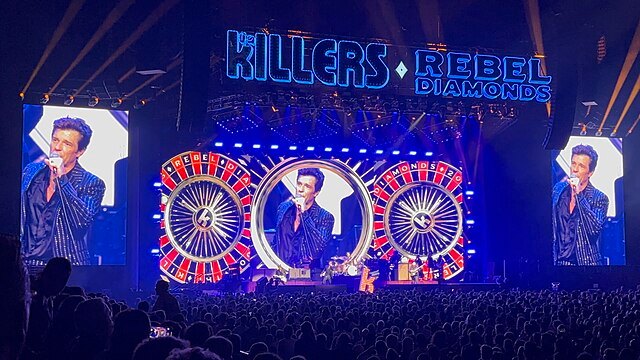
Why 2000s Songs Are Suddenly Dominating Again — The Nostalgia Wave Reshaping American Music Culture
Latest News

Senior Music Editor
Why 2000s Songs Are Suddenly Dominating Again — The Nostalgia Wave Reshaping American Music Culture
A strange pattern is emerging across streaming charts, TikTok loops, and late-night playlists: the 2000s are back — not as retro kitsch, but as emotional infrastructure. Songs from artists like The Killers, Rihanna, Avril Lavigne, and Linkin Park are being rediscovered, reinterpreted, and replayed at scale by audiences who weren’t even old enough to experience them the first time.
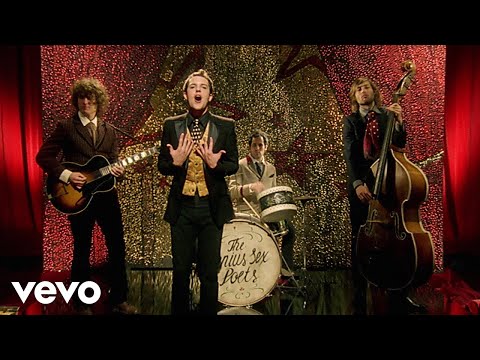
Take “Mr. Brightside” from the album Hot Fuss. The song never really disappeared, but its cultural meaning has shifted. It no longer feels like a nostalgic throwback. It feels current — emotionally immediate — as if it were written for the streaming generation.
This isn’t random. It’s a structural shift in how people consume music. Today’s listeners don’t separate “old” from “new.” They separate “emotionally useful” from “emotionally irrelevant.”
For Gen Z audiences, 2000s music represents authenticity. The production is less algorithmic, the emotions less filtered. Songs like “Complicated” and “In the End” feel raw in ways modern pop sometimes avoids. They carry tension. Imperfection. Friction.
For listeners aged 35–55, the resurgence operates differently. These songs are not discoveries. They’re memory triggers. They reconnect people to specific eras — first apartments, early relationships, late-night drives, uncertain career paths. The emotional recall is immediate.
That cross-generational reaction is rare. Most music either belongs to the young or the nostalgic. The 2000s revival belongs to both.
Streaming platforms accelerated this phenomenon, but they didn’t create it. The cultural engine is emotional repetition. People return to songs that stabilize identity — songs that remind them who they were and who they still are.
Early-2000s songwriting excelled at that. It captured vulnerability without irony. Artists didn’t mask emotional intensity behind hyper-self-awareness. They leaned into it.
Listen again to “Take a Bow” from Good Girl Gone Bad. The clarity of the emotional arc feels striking compared to modern pop’s layered ambiguity. The song isn’t trying to outsmart the listener. It’s trying to reach them.
That directness resonates in a media environment saturated with overstimulation. In a culture where every piece of content competes for attention, emotional clarity becomes valuable again.
TikTok played a catalytic role. When younger creators started using older songs in emotionally charged videos, they reframed them as contemporary experiences rather than historical artifacts. A breakup montage in 2026 using a 2004 track collapses time.
Suddenly, the song isn’t old. It’s relevant.
The resurgence also reflects a broader fatigue with hyper-polished production. Early-2000s tracks carry sonic textures that feel less engineered — less optimized for algorithmic virality. Listeners interpret that as honesty.
And honesty is becoming the most valuable currency in music culture.
This explains why emotionally heavy tracks are resurfacing faster than upbeat novelty hits. Songs that deal with heartbreak, confusion, identity, and longing age better than songs designed purely for excitement.
There’s also a psychological layer. People are navigating uncertain cultural terrain — economic pressure, digital overload, fragmented relationships. Nostalgia becomes a stabilizing force. Familiar songs create emotional continuity.
In that sense, the 2000s revival isn’t about retro aesthetics. It’s about emotional grounding.
Artists like The Killers unintentionally built music that functions like emotional architecture — structures listeners can return to when everything else feels unstable.
And younger artists are noticing. Modern pop increasingly borrows from early-2000s melodic structures, lyrical vulnerability, and alternative-leaning textures. The influence is everywhere — even when the audience doesn’t consciously recognize it.
This creates a feedback loop. Old songs inspire new ones. New songs send listeners back to old catalogs. Streaming ecosystems amplify both directions simultaneously.
The result is not nostalgia as escape. It’s nostalgia as integration — past and present collapsing into the same emotional space.
That’s why these songs don’t feel like memories. They feel like companions.
And for a generation raised on constant digital acceleration, companionship matters more than novelty.
The revival signals something deeper about modern music consumption: listeners are no longer chasing what’s new. They’re chasing what feels true.
And sometimes, truth is easier to recognize when it already survived one cultural cycle.
About the Author
Senior Music Editor
LyricsWeb Editorial Team delivers trusted, research-backed coverage of music news, artist updates, and industry trends. As the Senior Music Editorial Desk, the team combines editorial expertise with cultural insight to publish accurate, timely, and reader-focused stories across genres.