
The Songs Everyone Is Trying to Understand Right Now (2026)
Latest News
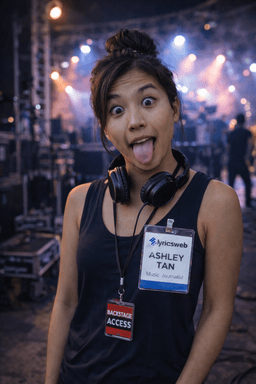
Music Journalist
The defining listening habit of early 2026 isn’t a new genre or a new platform. It’s a behavior: people don’t just stream songs — they interrogate them. They replay a line that stings, search for the lyric they couldn’t catch, and then stay for the interpretation because the words feel like a key to something personal. In a culture built for speed, the songs with the longest life are the ones that refuse to fully explain themselves.

That’s why tracks like “30 For 30” by SZA (with Kendrick Lamar) don’t behave like typical release-cycle content. They don’t peak and vanish. They keep resurfacing because the writing is engineered like an argument you can’t stop replaying — not for the punchline, but for the emotional math behind it. The track’s power lives in what it withholds: intention without a clean confession, confidence with a visible crack, and a sense that the narrator is saying the truth while still protecting it.
On LyricsWeb, this is the kind of song that produces the highest-quality “stay” behavior. The audience doesn’t land, scroll, and bounce. They read. They compare. They hunt for context. And the loop is predictable: the more a track feels emotionally coded, the more it generates meaning-driven replays — and the more time people spend trying to translate feeling into language.
The bigger point is that “lyrics” aren’t a side-feature anymore. They’re increasingly the main interface for music. In 2026, songs travel as fragments: a single line in a caption, a clipped chorus in a short video, a quote in a comment thread. That fragmentation sends listeners back to the full text to reconstruct what they only heard in pieces — and it’s why lyric pages can outlast the streaming moment.
You can see the same mechanics in “What Was I Made For?” by Billie Eilish. The song’s staying power isn’t about volume or spectacle. It’s about unresolved identity. The writing moves like a quiet internal monologue that never fully lands on an answer — which is exactly why listeners keep returning. The lyric experience becomes a mirror: the line feels different depending on the day you read it, and that variability is the fuel for repeat visits.
What makes these tracks perform is not just “sadness” or “vibes.” It’s narrative tension — the sense that something important is being said, but only partially. When the lyric refuses to close the loop, the listener becomes part of the storytelling. They supply the missing context. They project. They argue with other interpretations. And that is the highest-value engagement you can get: not passive consumption, but participation.
Pop’s biggest advantage in this era is that it understands how to weaponize specificity. That’s why songs like “Anti-Hero” by Taylor Swift remain meaning-magnets. Listeners don’t just hear the hook; they treat the writing like a diary entry with evidence. The audience reads for subtext: what’s self-awareness, what’s performance, what’s confession, what’s defense. It’s a lyric that invites two interpretations at once — sincerity and strategy — and the friction between those readings keeps the conversation alive.
A different kind of lyric-stickiness happens when a song feels like a confrontation. Not a loud one — a psychological one. That’s where “vampire” by Olivia Rodrigo continues to generate the kind of search behavior that lasts beyond a single chart week. The writing is sharp enough to be quotable, but ambiguous enough to be debated. People argue about the “who,” the “when,” the “how much is metaphor,” and whether the narrator is exposing a villain or exposing her own obsession. That debate lives inside the lyrics page.
The most important insight for 2026 is that the “meaning economy” is bigger than any one genre. Hip-hop, pop, alternative — the shared trait is interpretive density. And interpretive density comes from craft choices: pronouns that blur identities, details that feel specific but non-identifying, emotional claims that sound absolute but are actually defensive. Those are the lyric moves that produce rereads.
Even within the same artist catalog, the songs that dominate dwell time are the ones that are hardest to summarize. If a listener can reduce a track to “it’s about a breakup” in two seconds, they’ll leave. If the song feels like it’s about a breakup, a power struggle, self-image, and regret — all at once — they’ll stay, because the lyric experience becomes an attempt to name what they feel.
That’s why a lyrics-first editorial approach wins right now. You’re not competing with streaming platforms on audio. You’re competing on interpretation, context, and the feeling that a song is more than the sum of its parts. The longer people stay on a page, the more they click outward — to the artist, to the album, to related tracks, to other meanings. It’s not just reading time; it’s session depth.
The last step is the loop that turns a song into a long-term asset: quote culture. When a line from “30 For 30” circulates without context, it creates curiosity. Curiosity creates searches. Searches create page landings. Landings create interpretation. Interpretation creates shares. Shares create new landings. The song doesn’t need to “trend” forever — it needs to keep generating questions.
Early 2026 is shaping up to reward this kind of listening: slower, more intentional, more text-driven. The songs that last won’t necessarily be the loudest or the fastest. They’ll be the ones that leave something unfinished — a lyric that feels like it’s talking directly to the listener, but never fully tells them what to do with the feeling afterward.
About the Author
Music Journalist
Ashley Tan brings energetic, backstage-level coverage of live music and emerging artists to LyricsWeb readers.