The Situationship Hangover: Why 2026’s Charts Are Still Addicted to the Mess
Latest News

Editor-in-Chief & Market Analyst
It is February 10, 2026, and if you scroll through the "Love & Dating" section of any major streaming platform, you will notice a glaring omission: happiness. We are four days away from Valentine’s Day, a holiday that has historically served as the music industry’s annual excuse to flood the market with saccharine ballads and acoustic declarations of eternal devotion. Yet, looking at the Global Top 50, the romance is dead on arrival. In its place stands a monolithic monument to the "Situationship"—undefined, anxiety-inducing, and commercially invincible.
The sociologists of 2026 have coined a new term for what we’re supposed to be doing: "Clear-Coding." It’s the buzzy dating app trend of the year, advocating for radical transparency and upfront intentions. But let’s be honest with ourselves—nobody is streaming songs about healthy communication. We are streaming the chaos. We are addicted to the narrative arc of the "almost," the "maybe," and the "u up?" text sent at 3 AM. The soundtrack of 2026 isn't about finding the one; it’s about surviving the three people you’re currently "talking to."

The Architecture of Ambiguity
To understand why we are here, we have to look at the track that arguably codified this era: exes by Tate McRae. While released a couple of years ago, its cultural footprint has only deepened in 2026. McRae didn’t just write a breakup song; she wrote a manifesto for the emotionally unavailable. The brilliance of the track lies in its refusal to apologize for the mess. In an era of "Love-Loreing"—where we pursue relationships solely for the plot development and the group chat screenshots—McRae is the patron saint.
The lyrics of the mid-2020s have shifted from the "heartbreak" of the Adele era to the "annoyance" of the Sabrina Carpenter era. Heartbreak implies you lost something significant. The 2026 situationship anthem implies you lost time. Listen to the current rotation of Olivia Rodrigo; the anger hasn't dissipated, but it has mutated. It’s no longer "how could you do this to me?" It’s "why did I let you occupy this much RAM in my brain?"
"Love-Loreing" and the commodification of Drama
Why does this music resonate so deeply right now? Because in 2026, stability is boring content. We are living in the age of "Love-Loreing," a term that explains why your friend won't block that guy who ghosted her twice. She needs the "Lore." She needs the narrative arc. Music provides the screenplay for this behavior. When SZA croons about checking her ex’s location, she validates the surveillance state of modern dating. It tells the listener: You aren’t crazy; you’re just thorough.
This creates a feedback loop. Artists see that toxicity streams better than stability, so they write more toxic songs. Listeners use these songs to justify their own "situationships," creating more drama, which fuels the need for more sad songs. It is a perfect, profitable ecosystem of dysfunction. The "Anti-Valentine" playlist is no longer the counter-culture; it is the main stage.
The Sonic Shift: From Polish to Panic
Musically, this trend has altered the production landscape. The polished, high-gloss pop of the early 2010s feels foreign to the Gen Z ear of 2026. Today’s hits, heavily influenced by the "bedroom pop" evolution, sound intentionally claustrophobic. The vocals are often dry, right in your ear, mimicking the intimacy of a voice note. The beats are stuttered, reflecting the anxiety of waiting for a text bubble to appear.
Take a look at the enduring relevance of The Weeknd. His catalog remains the gold standard for "glamorous toxicity." In 2026, his influence is heard in every trap-infused R&B track that romanticizes numbness. It’s the sound of being at a party you don’t want to be at, with a person you don’t actually like, hoping to feel something real.
The Economic Reality of the "Situationship"
There is a cynical economic truth here as well. Happy couples don't buy tickets to the "Eras Tour" of their lives. Devastated, confused singles do. The "Situationship Industrial Complex" drives merchandise sales, tour bookings, and vinyl collections. A fan who is securely in love might stream a song once or twice. A fan who is trying to decode a mixed signal will stream a song 400 times on repeat, looking for a hidden message in the second verse.
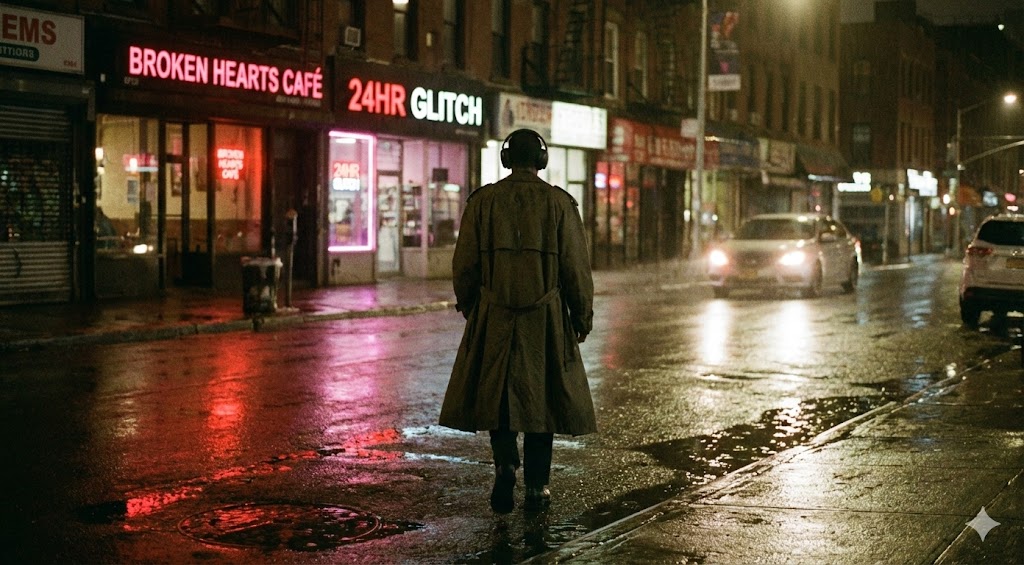
So, as we approach February 14th, 2026, do not expect the charts to offer you comfort. Expect them to offer you a mirror. A mirror that reflects the messy, undefined, "clear-coding" resistant reality of modern love. We might claim we want the fairytale, but the data proves we are addicted to the glitch. And honestly? The glitch sounds much better on a subwoofer.
If you find yourself alone this Valentine's, remember: you aren't isolated. You are part of the biggest demographic in music consumption history. Turn up the volume on Tate McRae, ignore that text from your ex, and enjoy the soundtrack of the decline.
About the Author