The Great Twang Shift: Why 2026 Is the Year Pop Finally Admitted It Wants to Be Country
Latest News

Senior Music Editorial Desk
Walk into a trendy bar in East London, a club in Los Angeles, or a coffee shop in Berlin right now, and listen. Really listen. Beneath the chatter, you won’t hear the heavy synthesizer loops that dominated the early 2020s. You won't hear the polished, robotic perfection of hyper-pop. Instead, you will hear something that would have been unthinkable five years ago: a banjo. A slide guitar. A voice that sounds like it’s been gargling whiskey and gravel.
Welcome to The Great Twang Shift. In 2026, the biggest pop stars on the planet aren't trying to sound like futuristic robots anymore. They are trying to sound like cowboys.
Three Chords and the Truth
Why is this happening now? Why has the aesthetic of the American South—the boots, the denim, the acoustic storytelling—hijacked the global charts? The answer lies in one word: Lyrics.
For a long time, pop music was about "vibes." The lyrics were vague enough to apply to everyone. "I love you," "Let's dance," "I'm sad." But a generation raised on the hyper-specific storytelling of Taylor Swift and the raw, bleeding confessions of Zach Bryan started demanding more. They didn't want vague emotions. They wanted specifics.
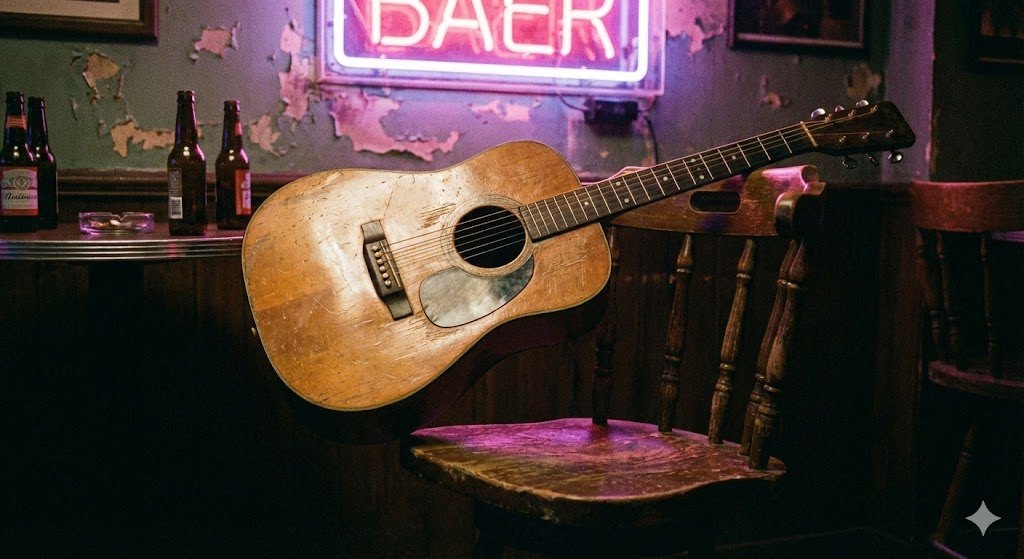
Country music has always lived by the maxim of "three chords and the truth." In country, you don't just say "we broke up." You say, "I left my keys in your truck on a Tuesday and now I’m crying in a CVS parking lot." That radical specificity is what 2026 audiences are craving. In a world of AI-generated content, specific details are the only proof that a human actually wrote the song.
The "Post-Malone" Effect
We saw the warning signs early. When Beyoncé dropped Cowboy Carter, it was a statement. When Post Malone traded his face tattoos for a Stetson, it was a hint. But now, the floodgates are open. Artists like Lana Del Rey (with her long-promised Lasso project finally dominating the airwaves) and Noah Kahan have bridged the gap between "Sad Girl Internet Culture" and "Stomp and Holler Folk."
It’s no longer about genre. The kids listening to these tracks don't identify as "Country Fans." They identify as fans of "Real Music." The genre walls have crumbled, leaving behind a dusty, melodic landscape where an acoustic guitar is the ultimate weapon of mass emotion.
Fashion Meets Folklore
You can see it in the fashion, too. The "Coastal Cowgirl" aesthetic wasn't a fleeting TikTok micro-trend; it was a premonition. Vintage leathers, turquoise jewelry, and worn-out boots are the uniform of 2026 nightlife. It’s a rejection of the sleek, plastic, metaverse-ready fashion of the past. People want to wear things that look like they’ve lived a life. They want music that sounds like it has lived a life.
The Return of the "Bridge"
From a musical theory standpoint, this shift has brought back one of the best parts of songwriting: The Bridge. Pop songs were getting shorter and shorter, ditching bridges for quick viral hooks. The new Country-Pop wave brings the bridge back with a vengeance. It allows for a narrative arc. It lets the song breathe.
So, if you find yourself humming along to a song about a dirt road, heartbreak, and a pickup truck, don't fight it. You aren't changing who you are. Pop music is just finally admitting that sometimes, the simple truth sounds better with a little bit of twang.
About the Author
Senior Music Editorial Desk
LyricsWeb Editorial Team delivers trusted, research-backed coverage of music news, artist updates, and industry trends. As the Senior Music Editorial Desk, the team combines editorial expertise with cultural insight to publish accurate, timely, and reader-focused stories across genres.