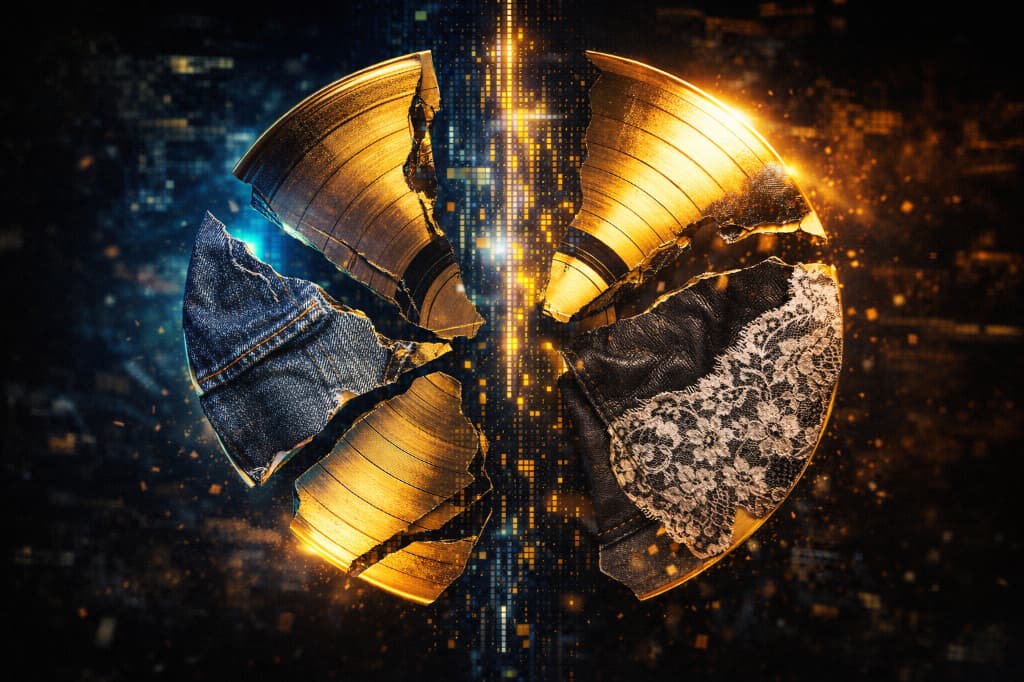
The Great Fragmentation: A Decade Since the Month That Broke Music
Latest News
7 min read

Latest News
Jules "The Hawk" V.
Senior Editor, Cultural Retrospectives
It is February 2, 2026. The air outside is different than it was ten years ago, but the echoes of the sonic boom that occurred in early 2016 are still ringing in our ears. History is often written in years—1967, 1977, 1991—but sometimes, revolutions happen in a matter of days. We are exactly one decade removed from the most chaotic, innovative, and exhausting month in modern pop history. It was the moment when the "album" ceased to be a plastic disc and became a fluid, living, and often messy digital event.
Beyoncé's "Formation" dropped unannounced, shifting the Super Bowl conversation and the entire trajectory of her career.
To understand the landscape of 2026, you have to revisit the wreckage of January and February 2016. Before this window, albums were products with release dates. After this window, they were "content drops." It started with Rihanna. By the time 2016 rolled around, the Navy had been starving for years. The rollout for Anti was a masterclass in chaotic brilliance—Samsung deals, leaked tracklists, and a sudden, jagged release that defied the polished pop sheen of her previous eras.
Anti wasn't just an album; it was a rejection of the hit-machine status quo. Ten years later, tracks like Kiss It Better and Needed Me still sound like they were recorded tomorrow. They possess a jagged, lo-fi texture that predicted the "bedroom pop" wave that would swallow the late 2010s. Rihanna taught the industry that imperfections were more valuable than polish, a lesson that artists in 2026 are still struggling to learn.
While Rihanna was deconstructing the pop star, Kanye West was deconstructing the very idea of a finished product. February 11, 2016. Madison Square Garden. The premiere of The Life of Pablo. It was half fashion show, half listening party, and entirely a mess. But it was a glorious mess.
Remember "I'ma fix Wolves"? That tweet became the ethos of the streaming era. The Life of Pablo was the first "living album," patched and updated like software. At the time, critics were baffled. Now, in 2026, where AI-generated remixes and real-time stem updates are the norm, Ye's chaotic process looks less like madness and more like prophecy. The gospel-infused production on Ultralight Beam remains a high-water mark for musical maximalism, a desperate plea for faith in a digital void.
And then, there was the Queen. If Rihanna brought the cool and Kanye West brought the chaos, Beyoncé brought the thunder. Dropping the video for Formation just days before her Super Bowl performance was a tactical nuclear strike on the culture. It wasn't just a song; it was a manifesto.
Looking back from 2026, it is impossible to overstate the risk Beyoncé took. She pivoted from being a universal pop deity to a specifically Black, politically charged artist, alienating conservative America while deepening her bond with her core audience. This paved the way for Lemonade, which arrived shortly after. The "visual album" concept had been tried before, but never with this level of narrative cohesion. When we listen to Freedom today, it still carries the weight of a protest anthem, timeless and urgent.
We cannot discuss the "Class of 2016" without mentioning the ghost in the machine. While the loud triumvirate of Ye, Bey, and Rih were dominating the headlines in February, Frank Ocean was silently building the staircase that would lead to Blonde later that year. The anticipation built during these winter months created a pressure cooker environment that proved fandom had changed. We weren't just fans anymore; we were hostages to the refresh button.
Why does February 2016 matter now, on February 2, 2026? Because it was the moment the music industry finally broke and reset. It was the height of the "Tidal Exclusive" wars—a frustrating era of fragmentation that, ironically, forced us to value the music more because we had to work to find it.
Today's algorithms feed us a steady diet of "mood music," frictionless and forgettable. But ten years ago, the giants of the industry demanded our full attention. They demanded we sign up for trials, refresh browsers, and decipher cryptic tweets. They made music feel like an event. As we look at the charts in 2026, dominated by fleeting viral moments and 15-second loops, one has to wonder: Do we have the patience for a The Life of Pablo anymore? Do we have the attention span for the cinematic density of Lemonade?
Perhaps not. But for those of us who lived through the "Bloody February" of 2016, we remember what it felt like when the titans walked the earth and shook the ground. The medium has changed, but the masterpieces remain.
0/5.0 - 0 Ratings
Loading comments...