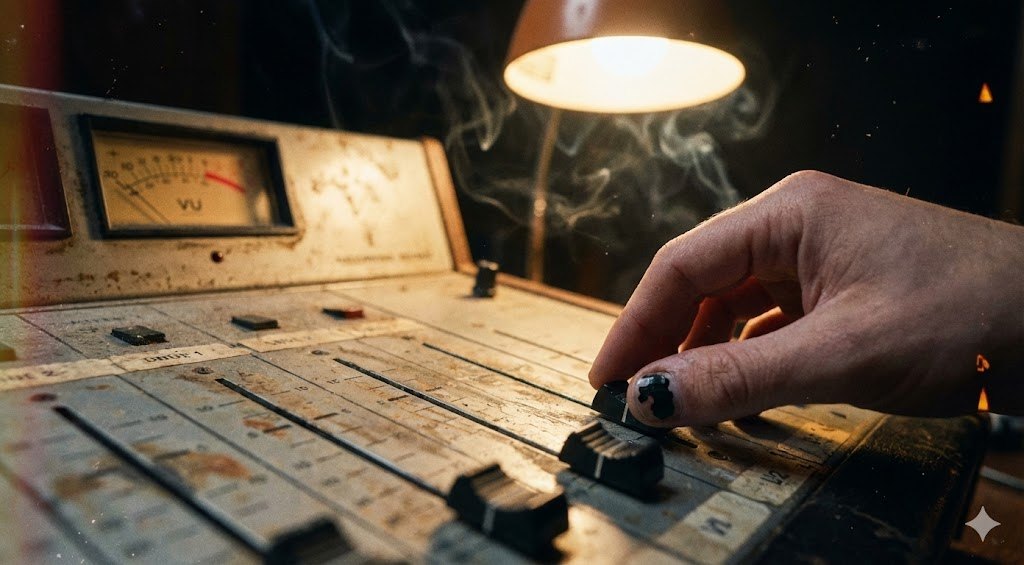
The 15-Second Curse is Broken: Why 2026 is the Year of the 10-Minute Epic
Latest News

Editor-in-Chief & Cultural Analyst
It is February 10, 2026, and if you listen closely to the Global Top 50, you will hear something that has been absent for nearly half a decade: silence. Space. Breath. For the better part of the early 2020s, the music industry was held hostage by a tyrannical algorithmic regime that demanded immediate gratification. Songs were engineered like dopamine injections—start with the chorus, keep it under two minutes, and ensure there is a 15-second "bridge" designed exclusively for lip-syncing teenagers in suburban bedrooms. This was the era of the "Content Song," where artistry was secondary to shareability.
But the pendulum of culture never swings in one direction forever. Just as the minimalists of the 90s killed the hair metal of the 80s, the "Slow Listening" movement of 2026 is dismantling the TikTok-ification of pop. The data is undeniable: the average song length on the charts has spiked to nearly four minutes, and the most streamed visual content isn't a 6-second loop, but a 10-minute cinematic universe. Leading this avant-garde charge is none other than the high priestess of American melancholy, Lana Del Rey.

The "Bridge to Nowhere": Anatomy of a Failed Trend
To understand the liberation we are feeling now, we must first autopsy the corpse of the trend we just survived. Between 2021 and 2024, songwriters were operating under a terrifying directive: "Don't bore them." This fear of the "Skip Button" led to the creation of musical Frankensteins. We saw verses that were barely four bars long. We saw intros that were non-existent. The goal was to hook the listener within the first 0.5 seconds.
This resulted in a generation of hits that felt hollow. They were sugary, caloric spikes with no nutritional value. Artists like Billie Eilish and Tyler, The Creator were among the first to smell the smoke. They realized that if you treat your audience like they have Attention Deficit Disorder, you will attract an audience that abandons you the moment the next shiny object appears. The "Viral Hit" was easy to get, but impossible to keep.
The Economic Shift: Why "Long" Pays More in 2026
While we would love to attribute this shift solely to artistic integrity, we must follow the money. The pivotal moment came in late 2025, when major streaming platforms finally adjusted their royalty models. For years, a 30-second play counted the same as a 10-minute play, incentivizing artists to release short tracks to spam the system. The new "Time-Weighted Royalty" model changed the game overnight.
Suddenly, a six-minute opus like A&W or a jazz-fusion experiment by Jon Batiste became not just artistic statements, but financial powerhouses. The industry realized that a listener who commits to a 10-minute track is a fan, not just a user. This economic incentive has emboldened producers to dust off their analog synthesizers and let the tape roll.
The Psychology of "Rotting" and Immersion
Culturally, Gen Z is leading a revolt against their own digital habits. The term "Doomscrolling" has been replaced by "Rotting"—a reclaiming of time where one does nothing but lie down and absorb a full album. In a world where every app is screaming for your attention, the ultimate act of rebellion is to give your attention to just one thing for 45 minutes straight.
This is why we are seeing a resurgence of "Concept Albums" reminiscent of Pink Floyd or Radiohead. The listeners of 2026 don't want a playlist of random bangers; they want a world to inhabit. They want the friction of a slow build-up. They want the delayed gratification of a climax that arrives after four minutes of tension, not four seconds of intro.
The Return of the "Album Artist"
Look at the trajectory of Harry Styles or the experimental turns of Lorde. These artists are no longer chasing the number one spot on the "Viral 50." They are chasing legacy. The "TikTok Bridge"—that catchy 15-second segment engineered for choreography—is now viewed as tacky, a relic of a desperate time.
The visual landscape has adapted as well. The music video above, Candy Necklace, is not a promotional tool; it is a short film. It demands that you put your phone down and watch. It utilizes silence, black and white cinematography, and pacing that would have been considered "commercial suicide" three years ago.
Conclusion: The Patience Dividend
As we move deeper into 2026, the message to aspiring artists is clear: Stop optimizing for the algorithm. The algorithm has changed. The audience is tired of being fed fast food. They are starving for a home-cooked meal. The 15-second curse is broken, and the future of music sounds a lot like the past—long, complex, human, and wonderfully, beautifully slow.
About the Author