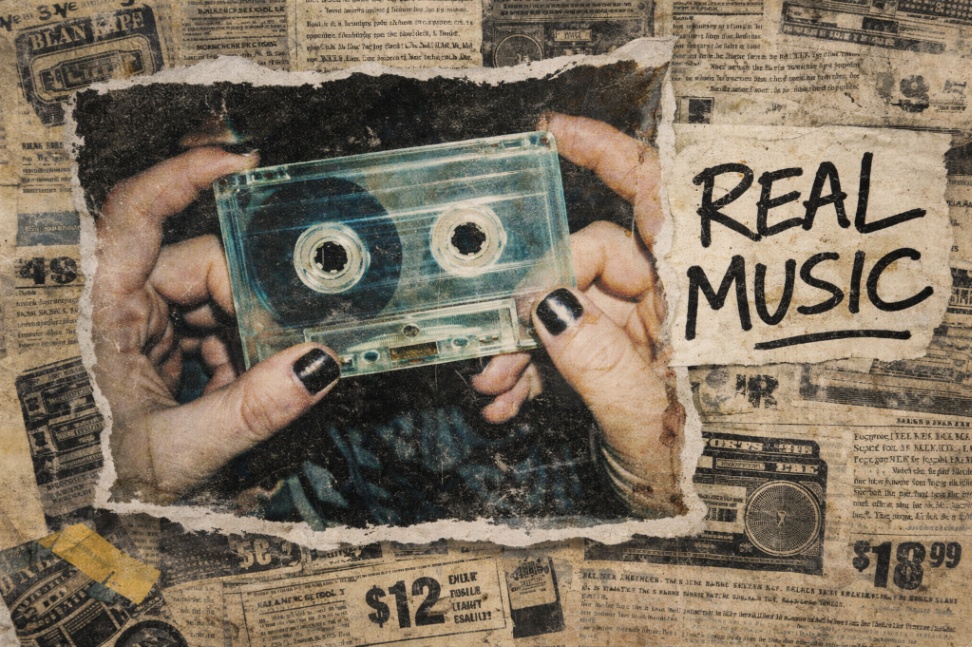
Tangible Noise: Why Gen Z is Trading Algorithms for the "Inconvenience" of Cassettes
Latest News

Senior Trends Analyst
It is February 2026, and the most radical thing a 20-year-old can do isn't discovering a niche AI-generated playlist. It’s walking into a crowded subway car, pulling out a bulky, plastic Sony Walkman, and physically flipping a cassette tape to Side B. In a world of infinite, frictionless streaming, "inconvenience" has become the new luxury.
For the first time since the mid-90s, cassette sales have hit a double-digit percentage of physical revenue. But this isn't just about nostalgia for an era Gen Z never lived through. It’s an aggressive, tactile rebellion against the "Ghost of the Algorithm." As streaming prices soar and libraries shift due to licensing wars, the youth are realizing a terrifying truth: You don’t own your music. You’re just renting it.
The Physics of Feeling
"I was tired of music feeling like data," says Maya, a 22-year-old artist from Brooklyn. "When I put a tape in, I have to listen to the whole thing. I can't skip. I can't let a machine decide what's next. It’s the difference between a microwave meal and a home-cooked dinner." This sentiment is fueling the rise of artists like Clairo and Tyler, The Creator, who have turned their physical releases into high-art collectibles.
The "Analog Resistance" is also a response to the AI-infestation of 2026. While platforms like Spotify are flooded with procedurally generated "healing frequencies" and "lo-fi study beats," a cassette tape offers something undeniably human: hiss, flutter, and the physical degradation of the magnetic strip. It is imperfect, and in 2026, imperfection is the only proof of life.
The Death of the "Skip"
The psychological impact is profound. The "Skip" button has shortened our collective attention spans to that of a goldfish, but a cassette forces Slow Listening. You have to commit. You have to experience the album in the order the artist intended. It’s an act of mindfulness in a hyper-distracted world.
Major labels, initially caught off guard, are now scrambling to meet the demand. Special editions of Billie Eilish albums are now appearing in "vintage" clear-plastic shells, sold at a premium that makes the 90s look cheap. But for the fans, the $25 price tag is a small price to pay for a piece of music that won't disappear when a subscription expires.
Beyond the Hype
Is this just another aesthetic trend that will die by summer? Unlikely. The infrastructure of the "New Analog" is hardening. Independent "Tape-Only" labels are popping up from Berlin to Tokyo, creating hyper-local scenes that exist entirely offline. By reclaiming the physical, Gen Z isn't just going back in time; they are building a future where music is a possession again, not just a notification.
About the Author
Senior Trends Analyst
LyricsWeb Editorial Team delivers trusted, research-backed coverage of music news, artist updates, and industry trends. As the Senior Music Editorial Desk, the team combines editorial expertise with cultural insight to publish accurate, timely, and reader-focused stories across genres.