March 2026 Didn’t Just Deliver Big Albums. It Exposed Where Music Is Headed Next.
Latest News
Music Journalist
March 2026 never played like a normal release month. It felt too crowded, too deliberate, too revealing for that. Week after week, major artists arrived with projects that were doing more than filling streaming slots. They were repositioning careers, testing audience loyalty, and trying to prove that the album still matters in an environment built to flatten everything into content. By the end of the month, what stood out wasn’t just the quantity of music. It was the pressure inside it. The biggest records of March sounded like they knew they were being judged in real time.

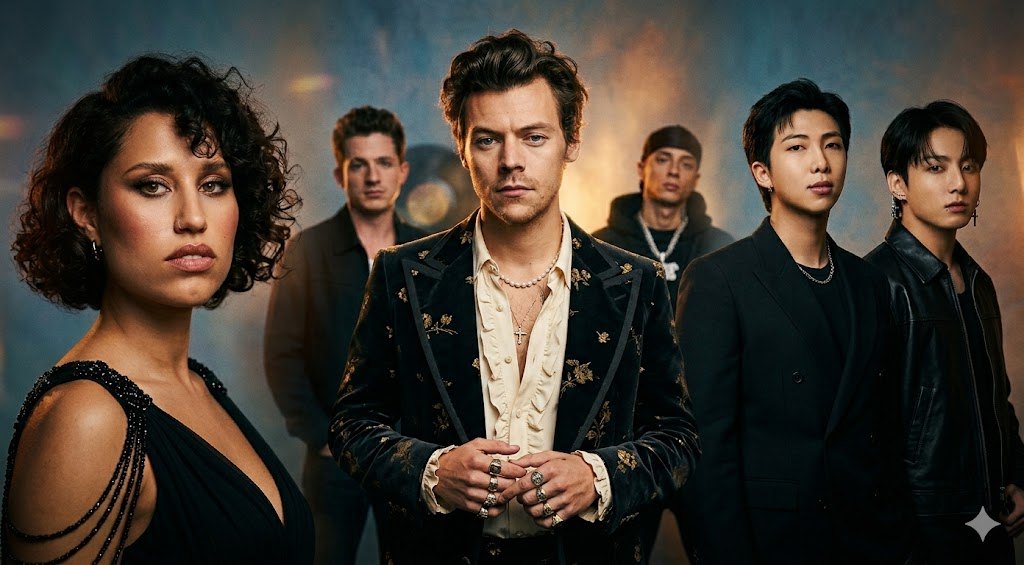
The clip above is a clean entry point into the month because Harry Styles helped set its tone. His March 6 album Kiss All The Time. Disco, Occasionally. arrived with the sleek confidence of a star who understands exactly how visible he is. And “American Girls” wasn’t just another single attached to a major release. It was part of a larger shift. Instead of leaning on softness or familiarity, Styles moved toward something shinier, tighter, and more intentionally stylized. He opened the month by reminding everyone that mainstream pop still knows how to arrive like an event.
That opening week mattered because it framed March as a month of scale. Alongside Harry’s album, the first Friday also brought records from Morrissey, Shabaka, Hunter Hayes, and a War Child benefit release, which meant the month was never going to belong to one lane alone. Even on day one, March was already arguing with itself: legacy voices, prestige names, roots music, jazz-adjacent experimentation, polished pop. The release calendar looked less like a trend report and more like a map of a fragmented industry trying to decide what still counts as major.
Styles sat right at the center of that argument. The real story of Kiss All The Time. Disco, Occasionally. is not simply that it arrived big. It’s that it arrived with a clearer sense of image architecture than many pop albums manage anymore. The record plays like someone tightening a brand and loosening a silhouette at the same time. It is glamorous, but not loose. Danceable, but not reckless. Emotional, but rarely messy. That matters because March quickly became a month where messiness turned into a competitive advantage. Harry Styles went in the opposite direction. He chose control.
Then the second week complicated everything. March 13 brought one of the deepest release clusters of the month, and it widened the conversation fast. Jack Harlow dropped Monica. James Blake returned with Trying Times. Kim Gordon delivered PLAY ME. Lamb of God came back with Into Oblivion. The Fray re-entered the room with A Light That Waits. The stylistic spread was the point. These weren’t artists following a single center of gravity. They were artists testing whether a center of gravity even exists anymore.
Monica was especially revealing in that context. Harlow has often been treated as a figure of charisma first and depth second, but this album landed in a month where image alone was no longer enough. The interesting thing about his March release is not whether it will be remembered as his best record. It is whether it shows him absorbing the pressure of a culture that has become more suspicious of irony, more impatient with posture, and more eager to reward artists who sound like they mean what they are saying. On a month full of grand releases, Harlow’s most valuable move may have been dialing his persona down.
The same week also gave March one of its clearest subplots: the comeback no longer looks nostalgic. It looks strategic. The Fray weren’t revisiting a simpler era with A Light That Waits. Lamb of God weren’t merely serving their core base with Into Oblivion. These records arrived in a climate where artists disappear, rebuild, and return with more autonomy than before. That shift says a lot about 2026. The old narrative used to be that time away reduced an artist’s leverage. Now, absence can sharpen it.
By March 20, the month had fully turned global. BTS released ARIRANG, and suddenly the center of gravity moved again. Their return had the scale of a comeback, but the cultural force of a reset. This was not a reunion designed to trigger nostalgia and cash out goodwill. It felt bigger than that. The title itself signaled identity, memory, and national texture. The project arrived like a reminder that global pop no longer needs to pass through an American filter to feel dominant. It can enter the conversation fully formed and still tower over it.
That is what makes ARIRANG one of the month’s defining releases. Not simply its commercial impact, though that was immediate. Not just the comeback story, though that was obviously powerful. The real significance is that BTS returned without shrinking their identity to broaden their reach. If anything, they leaned harder into it. In a month obsessed with competition, they did not sound like they were chasing the West. They sounded like they had already moved past the need to ask permission.
That same date also brought Central Cee’s ALL ROADS LEAD HOME and Luke Combs’ The Way I Am, which made the contrast even sharper. Here were two entirely different models of reach operating at once. Central Cee carried the sharpness and portability of UK rap culture. Luke Combs doubled down on the emotional reliability that keeps country commercially powerful even when pop dominates headlines. Neither record needed to imitate the other, because March was proving that the market has fractured into parallel superhighways. Multiple genres can feel central at the same time now. That changes how “mainstream” works.
And then came March 27, the week that made the whole month feel almost excessive. Charlie Puth released Whatever’s Clever!. RAYE released THIS MUSIC MAY CONTAIN HOPE. Robyn dropped Sexistential. Melanie Martinez arrived with HADES. Snail Mail brought Ricochet. José González released Against the Dying of the Light. There were so many credible records landing at once that the final Friday practically became its own ecosystem.
Puth and RAYE are the two artists who best explain why that last week mattered. Whatever’s Clever! arrived framed as a more personal, more self-aware Charlie Puth record. That shift has been building for a while, but here it finally felt like the concept and the persona aligned. The album plays like someone trying to convert technical fluency into emotional credibility. That is a difficult move for any pop musician, because virtuosity and intimacy do not automatically trust each other. But in March 2026, audiences seemed unusually ready to reward artists who sound less polished in spirit, even when the production stays immaculate.
RAYE took the opposite route. If Puth moved toward tighter self-definition, THIS MUSIC MAY CONTAIN HOPE blew the walls out. The album is long, structurally ambitious, emotionally exposed, and almost confrontational in the way it refuses to behave like optimized streaming product. That alone makes it a major March release. But the deeper reason it mattered is that it challenged one of the laziest assumptions of the streaming era: that attention spans have collapsed so far that a sprawling, demanding album can no longer become part of the center of the conversation. RAYE made that assumption look weak.
There is a larger industry signal in that. For years, the accepted wisdom has been that short-form culture shrinks the room for album-making. Yet the defining records of March 2026 keep suggesting something more complicated. The album is not dead. It just can’t survive on autopilot. It has to justify itself more aggressively than before. Harry Styles did that through image control and elegant scale. BTS did it through cultural force and return-event gravity. Charlie Puth did it through self-reframing. RAYE did it through sheer ambition. Different routes, same pressure.
That pressure also helps explain why some of the month’s secondary releases felt important even without dominating the loudest headlines. Robyn, Melanie Martinez, Courtney Barnett, and The New Pornographers all entered a month where audiences had more options than time. That makes tone, world-building, and identity sharper weapons than ever. You can hear that everywhere in late March. The records that cut through are the ones that don’t merely sound good. They project a worldview. They sound inhabitable.
What made March 2026 special, then, was not that every album was great. It was that the month forced a more interesting question: what does a major album need to be in 2026? A pile of streams? A personal statement? A fan-service event? A career reset? A world? March offered all five possibilities, sometimes in the same week. That kind of density is rare. It turns a release calendar into a cultural snapshot.
And the snapshot is clear. Music is not moving toward one unified sound. It is moving toward sharper identity. Pop stars are under pressure to become more specific. Legacy artists are learning how to come back without looking trapped in amber. Global acts are proving they do not need American validation to dominate the month. Ambitious album-makers are discovering that there is still real power in scale, structure, and risk. If March 2026 exposed anything, it is that attention has become brutally competitive, but not creatively narrow. The field is crowded. The expectations are higher. The rewards are bigger for artists who actually know who they are.
That is why this month matters beyond charts and opening weekends. March 2026 gave the industry one of those rare stretches when the release schedule stops feeling procedural and starts feeling diagnostic. It showed who can still command the room, who is trying to rebuild inside it, and who understands that an album in 2026 has to do more than arrive. It has to argue for its own existence. The artists who understood that gave this month its shape. The rest just added noise.
About the Author
Music Journalist
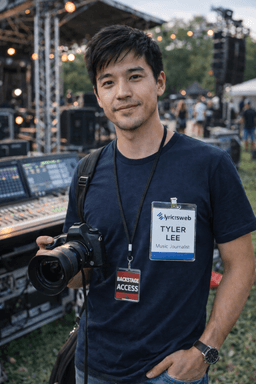
Tyler Lee is a multimedia journalist at LyricsWeb, covering live music photography and editorial features.