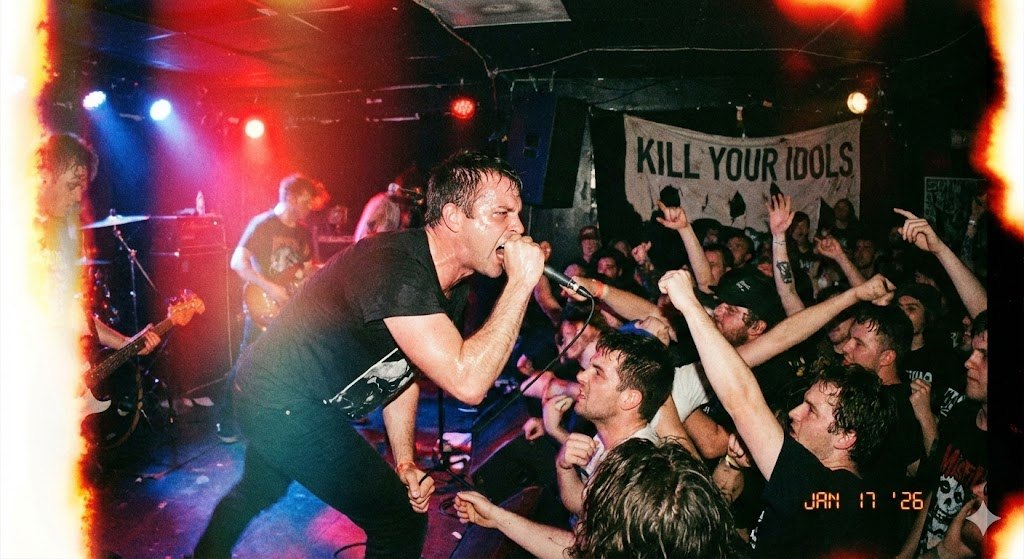
Kill Your Idols (Again): Why the 2026 Festival Season is Betting on Ugly, Messy, Guitar Music
Latest News

Senior Music Editorial Desk
It started with a whisper in the dive bars of East London and the basements of Brooklyn, but as of this morning—with the release of the massive 2026 festival posters—it is officially a scream. Look at the top line of Coachella. Look at who is headlining Primavera Sound. Notice anything missing? The pristine, choreographed, auto-tuned perfection that has dominated our summers for the last decade is gone. In its place? Bands. Actual, sweaty, loud, possibly drunk bands.
For the first time in years, the "Guitar is Dead" narrative looks not just wrong, but laughable. The music industry, always desperate to predict the next pivot of the Gen Z attention span, has realized that the kids are bored of perfection. They are tired of "Eras Tours" that run with military precision. They want danger. They want feedback loops. They want to see someone trip over an amp cable.
The Fatigue of the "Viral Moment"
To understand why 2026 is shaping up to be the "Summer of Noise," you have to look at what we are leaving behind. For the last five years, live music was held hostage by the 15-second viral clip. Concerts became content farms. Artists were designing their stages not for the people in the back row, but for the vertical screens of the people in the front row.
But a strange thing happens when you optimize art for an algorithm: it loses its soul. It becomes predictable. And if there is one thing rock and roll hates, it’s predictability. The new wave of headliners—bands like Fontaines D.C., Idles, and the meteoric rise of The Dare—don't care about your TikTok feed. They care about tearing the roof off. There is a hunger now for the visceral, for the unpolished, for the kind of show where you leave with ringing ears and a bruise you don’t remember getting.
Ugliness is the New Beauty
This isn't just about sound; it's about aesthetics. Walk through Silver Lake or Dalston today, and the "Clean Girl" aesthetic is dead. In its place is a revival of "Indie Sleaze"—smudged eyeliner, ripped tights, cheap cigarettes, and flash photography. It’s a visual rejection of the AI-generated perfection that floods our screens.
The music reflects this. The breakout albums of January 2026 sound like they were recorded in a garage, not a multi-million dollar studio. There is room tone. There are mistakes. Voices crack. Drums drag. It feels human. In an era where AI can generate a perfect pop song in seconds, human error has become a premium commodity.
The "Oasis Effect"
We can’t talk about this shift without mentioning the elephant in the room. The massive Oasis reunion tour, which is currently tearing through stadiums, proved something vital to promoters: toxicity sells. People didn't buy tickets just to hear "Wonderwall." They bought tickets to see if Liam and Noel would get through a set without fighting.
That tension—the possibility that it could all fall apart at any second—is electric. Modern pop stars are media-trained to within an inch of their lives; they are brands first, humans second. Rock bands, historically, are disasters waiting to happen. And 2026 is the year we decided we want to watch the disaster.
The Pit is For Everyone
Perhaps the most beautiful part of this revival is who is in the crowd. This isn't the "Boys Club" of the 2000s rock scene. The mosh pits of 2026 are diverse, queer, and inclusive. It’s aggressive music, sure, but the ethos is about community release. It’s about screaming at the top of your lungs because the world is scary and expensive and on fire, and for 90 minutes, you are part of a collective exorcism.
So, as you plan your summer, maybe skip the VIP section. Don't worry about getting the perfect video. Go find the smallest tent with the loudest band, grab a warm beer, and get in the pit. Rock isn't back because it never left—we just finally remembered how to listen to it.
About the Author
Senior Music Editorial Desk
LyricsWeb Editorial Team delivers trusted, research-backed coverage of music news, artist updates, and industry trends. As the Senior Music Editorial Desk, the team combines editorial expertise with cultural insight to publish accurate, timely, and reader-focused stories across genres.