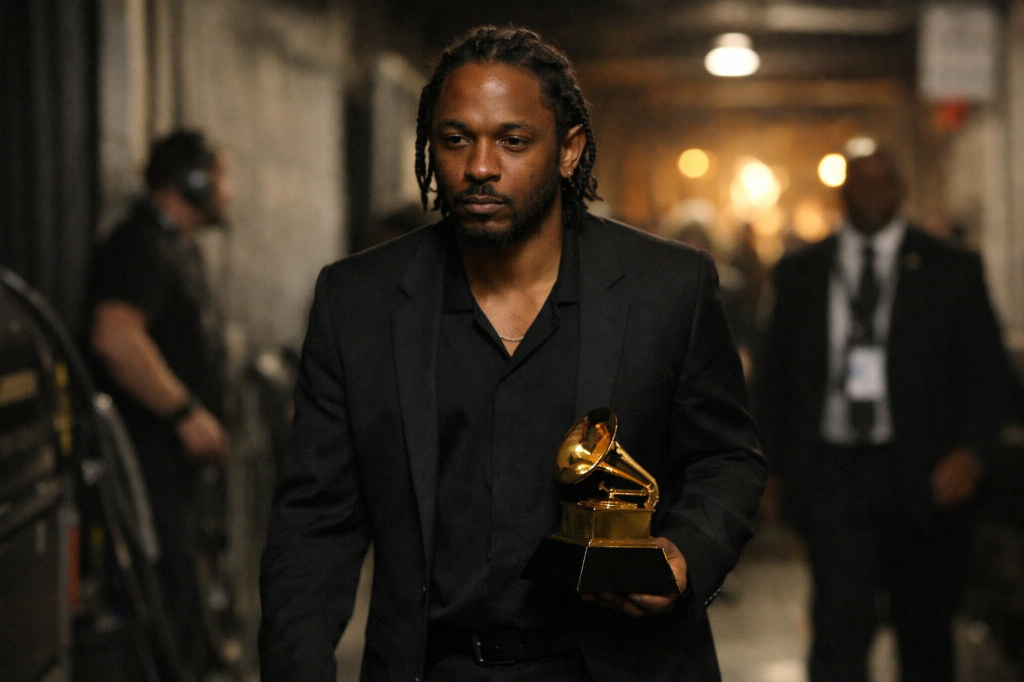
Kendrick Lamar Dethrones Jay-Z as the Most-Awarded Rapper in Grammy History
Latest News

Senior Music Journalist
At the 68th Annual Grammy Awards in Los Angeles, Kendrick Lamar secured his 27th golden gramophone, officially surpassing Jay-Z to become the most-awarded rapper in the history of the Recording Academy. The Compton native swept the rap categories once again, anchored by the massive cultural footprint of his recent releases and an unyielding, aggressive industry momentum that the establishment could no longer sideline.
Jay-Z held the previous record at 24 wins for several years, a ceiling long viewed as untouchable for a hip-hop artist given the Academy's historic reluctance to heavily award rap outside of genre-specific silos. Kendrick Lamar engineered a rapid acceleration over the past two eligibility periods. Fueled by the inescapable dominance of Not Like Us and the subsequent drop of GNX, he forced the voting block to recognize his output not just as top-tier rap, but as the undeniable center of American popular music.

Tracing the trajectory of Kendrick Lamar through the Grammy ecosystem requires looking back at the institution's deeply flawed relationship with hip-hop. In 2014, Kendrick Lamar famously lost Best Rap Album. The Academy chose The Heist by Macklemore over Good Kid, M.A.A.D City, sparking a severe industry reckoning regarding how out of touch the voting body had become. That specific loss acted as a catalyst. When Kendrick Lamar returned two years later with To Pimp a Butterfly, he walked away with five awards. He repeated the critical sweep with his Pulitzer-winning project DAMN., signaling that the Academy could no longer ignore his conceptual weight.
The 2026 milestone arrives as the culmination of an unprecedented commercial and critical run. Following his highly publicized and decisive battle with Drake, Kendrick Lamar did not retreat into isolation. Instead, he capitalized on the momentum. Winning Record of the Year back-to-back—first with the West Coast anthem Not Like Us and then sharing the honor with SZA for Luther—proves that his work is resonating across all demographics of the voting academy, penetrating the General Field in a way few rappers ever have.
To understand the industry impact of these 27 wins, one must look at the internal mechanics of the Recording Academy. Following years of sustained boycotts and public criticism from heavyweights like The Weeknd and Kanye West, the Academy actively overhauled its membership. They invited thousands of younger, genre-fluent professionals into the voting pool to dilute the influence of older, traditionalist members who historically favored legacy pop and rock acts. Kendrick Lamar is the direct beneficiary of this newly diversified voting block, but he is also the artist who justified the structural change. His music bridges the gap perfectly for the Academy's varied tastes.
The jazz, funk, and soul interpolations embedded within the production of Kendrick Lamar naturally attract older, musically conservative voters who value traditional instrumentation. Simultaneously, his aggressive delivery, dense lyricism, and immediate cultural relevance capture the younger demographic. He provides a safe yet entirely credible consensus vote for an organization desperate to maintain cultural authority in an era of fractured listening habits.
When Kendrick Lamar released Euphoria and Meet the Grahams targeting Drake, the consensus was that he was operating at a lethal, hyper-focused level of competitive rap. However, it was the drop of Not Like Us that fundamentally altered the trajectory of the year. The track functioned as a Trojan horse. On the surface, it was a brutal, targeted takedown. Underneath, it was an immaculately produced Mustard beat that hijacked club rotations, radio frequencies, and sporting events globally. The Academy rarely rewards diss tracks, viewing them as ephemeral internet fodder. The sheer undeniable ubiquity of Not Like Us left the voters with no choice. To ignore it would be to admit complete detachment from the reality of the music business.
Following up the summer of dominance, the release of GNX acted as the final blow to any remaining traditionalist holdouts. The album did not feature sweeping pop crossovers. Instead, it leaned heavily into heavy West Coast synthesis and aggressive, localized storytelling. Yet, it secured Best Rap Album seamlessly. The industry was forced to acknowledge that the specific brand of regionalism perfected by Kendrick Lamar has become the universal standard.
The contrast between Kendrick Lamar and Jay-Z in their respective Grammy journeys highlights a generational shift in how hip-hop operates at the highest institutional levels. Jay-Z amassed his 24 awards over a sprawling timeline. Many of those trophies came from high-profile collaborations with pop stars, such as Empire State of Mind with Alicia Keys, or features on tracks by Beyoncé and Rihanna. Jay-Z frequently served as the bridge between street-level rap and mainstream pop radio.
During the 2024 ceremony, Jay-Z openly criticized the Grammy system from their own stage while accepting the Dr. Dre Global Impact Award. He pointed out the glaring inconsistencies in their voting patterns, specifically noting that his wife, Beyoncé, held the record for the most Grammys overall but had never won Album of the Year. He exposed the Academy's habit of rewarding Black artists in the peripheral, genre-specific categories while locking them out of the big four general field awards.
The ascent of Kendrick Lamar to 27 awards directly challenges that historical barrier. He achieved this volume in roughly a decade of mainstream visibility, and crucially, he is dominating the core text of the General Field. His wins are not primarily features on pop records; they are dense, uncompromising rap albums and fiercely regional singles taking home Song and Record of the Year. The establishment is bending to his sonic demands, rather than him smoothing his edges for pop accessibility.
It is also worth analyzing the business philosophies separating the two artists. Jay-Z leveraged his musical success into a massive corporate portfolio, and his Grammy narrative is tied to his evolution into a global board member. Kendrick Lamar, conversely, has centralized his influence strictly around the art and his enigmatic public persona. Through his creative agency pgLang, he maintains a strict, carefully curated output. He rarely grants interviews, avoids social media engagement, and lets the music dictate the narrative entirely. This scarcity model creates an event-level aura around his releases. The Academy rewards this level of artistic mystique because it elevates the perceived prestige of their own broadcast.
Looking forward, a 27-Grammy reality for Kendrick Lamar sets a daunting precedent for the incoming class of artists. Rising stars like Doechii, who recently took home Best Rap Album for Alligator Bites Never Heal, and GloRilla are entering a critical environment that Kendrick Lamar effectively broke down and rebuilt. The benchmark for critical acclaim in rap is no longer just selling out arenas or dominating streaming charts.
The standard now requires conceptual depth, cultural urgency, and the ability to command institutional respect without compromising regional authenticity. Kendrick Lamar did not just break a number previously held by Jay-Z. He rewrote the rules of engagement between hip-hop and the Recording Academy, proving that a rapper can operate entirely on their own terms and still force the industry's most conservative institution to hand over the crown.
About the Author
Senior Music Journalist
Jasmine Williams covers festival culture, indie music, and genre-crossing artists for LyricsWeb with a warm, culturally aware voice.