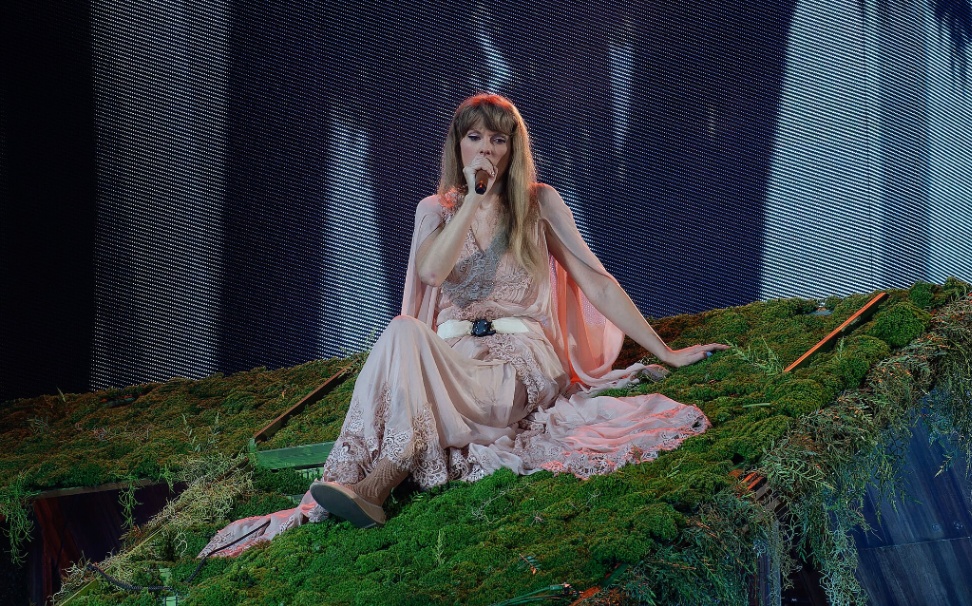
Inside Taylor Swift’s “Fortnight”: The Song That Sets the Emotional Blueprint for The Tortured Poets Department
Latest News

Senior Music Editor
When Taylor Swift opened The Tortured Poets Department with Fortnight, it didn’t feel like just another album intro. It felt like a thesis statement. The track establishes a muted emotional tone that threads through the entire project—detached, reflective, and quietly devastating.

Featuring Post Malone, the song operates in restrained territory. The production leans into airy synth textures and minimal percussion, allowing Swift’s vocal performance to carry the emotional narrative. Instead of dramatics, the arrangement favors distance and subtlety, mirroring the lyrical themes of emotional disconnection and time-bound relationships.
Lyrically, Fortnight is structured around fleeting intimacy—connections that feel profound but exist in limited windows. Swift writes with cinematic pacing, letting small details imply a larger emotional collapse. The storytelling echoes earlier moments from Midnights and folklore, but with a colder emotional palette.
The duet dynamic adds another layer. Post Malone doesn’t dominate the record; he shadows it. His vocal tone functions as a counterweight to Swift’s introspection, reinforcing the sense that the relationship described exists in fragments rather than full emotional clarity. The interplay is subtle and intentional—more atmosphere than dialogue.
From a production standpoint, the track signals a continued collaboration style reminiscent of Swift’s work with atmospheric pop textures across 1989 and evermore. However, here the sonic design is stripped of bright pop momentum. Everything feels suspended, as if time itself is slowed inside the narrative.
Culturally, Fortnight positions itself as a mood piece rather than a single-first hit. Its role is foundational: establishing emotional stakes, aesthetic tone, and narrative tension that ripple across The Tortured Poets Department. It frames the album less as a breakup diary and more as a meditation on memory, timing, and emotional residue.
What stands out most is restraint. Where earlier eras leaned into explosive hooks and maximalist bridges, this track embraces understatement. The silence between phrases, the controlled vocal delivery, and the minimal arrangement all reinforce a sense of emotional aftermath rather than immediate heartbreak.
In Swift’s discography, openers often define eras. State of Grace signaled stadium ambition. the 1 established reflective storytelling. Lavender Haze framed romantic escapism. Fortnight instead embraces emotional ambiguity—less declaration, more atmosphere.
That ambiguity is precisely what makes the track linger. It doesn’t resolve its tension; it leaves it suspended, inviting interpretation and replay. The song becomes less about a specific relationship and more about the experience of emotional proximity that never fully stabilizes
About the Author
Senior Music Editor
LyricsWeb Editorial Team delivers trusted, research-backed coverage of music news, artist updates, and industry trends. As the Senior Music Editorial Desk, the team combines editorial expertise with cultural insight to publish accurate, timely, and reader-focused stories across genres.