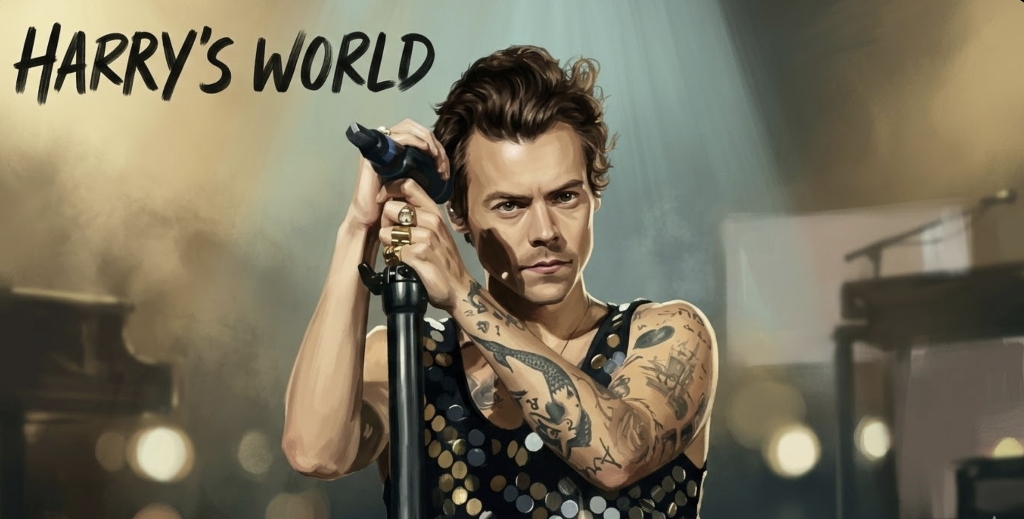
Harry Styles’ Kiss All The Time. Disco, Occasionally. Turns Flirtation Into Pop Theater
Latest News

Music Journalist
Harry Styles has never been especially interested in making the loudest possible pop record when he can make the slyer one instead, and that instinct drives Kiss All The Time. Disco, Occasionally.. The title sounds like a wink, half slogan and half dare, and the music follows that same logic. This is not a glitter-bomb disco album built for cheap nostalgia. It is a cleaner, cooler, more controlled record, one that borrows the physical language of the dancefloor without surrendering to it completely. The pulse is there. The shimmer is there. But the real hook is in the way Styles keeps undercutting romance with distance, humor, and a faint sense that he is watching his own myth from across the room.

That tension shows up immediately in the record’s framing. Aperture, the early doorway into this era, suggested a bigger visual and emotional canvas. But once the album opens up in full, the sharper story is not scale. It is behavior. These songs are full of people circling each other, people returning at the wrong moment, people trying to sound casual while revealing far too much. The production, guided by Kid Harpoon’s steady hand, keeps everything polished enough to glide and strange enough to resist flattening into background music. Even when the grooves are friendly, the emotional atmosphere is not.
The clearest example is American Girls, one of the album’s most deceptively simple songs. On paper, the lyric reads almost absurdly direct. “My friends are in love with American girls” lands again and again, the kind of repeated line that can feel throwaway if the singer does not know how to shade it. Styles does. He turns repetition into a social observation. The song is not really about one person; it is about a type of fascination, a recurring fantasy, a cultural image that keeps traveling. When he sings “I’ve seen it in stages all over the world,” the line widens the lens. This is not merely flirtation. It is exportable desire, romance as lifestyle branding, a pop-star glance at how certain archetypes circulate internationally until they start to feel bigger than the people inside them.
What makes American Girls work is that Styles refuses to over-explain it. He lets the chorus do the social mapping. The writing is lean, almost skeletal, but that minimalism becomes the point. The song feels like a postcard from a party that looked incredible in photographs and slightly lonelier in real time. For an artist who has spent years being projected onto by fans, press, and the fashion-industrial complex, that kind of writing feels deliberate. He is sketching attraction as performance, and performance as a system that keeps reproducing itself.
If American Girls is the album’s public-face provocation, Taste Back is its late-night message thread. It is one of the more emotionally legible songs here, though even that legibility comes with barbs attached. “Must be lonely out in Paris if you talk like that” is a terrific line because it sounds elegant and petty at the same time. The song understands the theater of reconnection: the ex who reappears, the familiar habits dressed up as maturity, the false sophistication of distance. Paris is not just a city in this song. It is a prop, an attitude, a place-name deployed to make emotional regression sound cosmopolitan.
The central question in Taste Back — “Did you get your taste back?” — is funny, cruel, and weirdly tender all at once. That is the sweet spot this album keeps chasing. Styles is not writing breakup songs in the old confessional mode here. He is writing social scenes with emotional aftershocks. He is interested in how people speak when they want to reclaim power without admitting they lost it in the first place. The repeated answer, “You just need a little love,” lands less like comfort than diagnosis.
Across the album, that push-pull gives Kiss All The Time. Disco, Occasionally. its identity. Titles like Ready, Steady, Go!, The Waiting Game, Coming Up Roses, Pop, Dance No More, Paint By Numbers, and Carla’s Song suggest an artist playing with surfaces on purpose. He is naming genre, naming artifice, naming motion, then asking what still counts as sincerity once everybody in the room knows the performance is happening. That makes the album less immediate than Harry’s House in places, but also more pointed.
The credits deepen that impression. Kid Harpoon’s presence is all over the record, not just as producer and writer, but as the sonic organizer who understands how to keep Styles’ instincts elegant without sanding them into blandness. The supporting names matter too: the gospel textures, additional engineering detail, and clean upper-tier pop finishing work all suggest a record built with precision rather than chaos. Nothing here feels accidental. Even when a song aims for looseness, the architecture underneath it is strict.
That may also explain why the album’s disco framing is more interesting than its loudest reactions might suggest. This is not a revivalist project and it is not really a camp one either. It is a pop record about image, appetite, repetition, and social temperature, using disco as a grammar rather than a costume. Some listeners will want bigger choruses, messier ecstasy, or more obvious emotional bloodletting. That is fair. But the album’s strongest moments come from its refusal to behave that way. It prefers side-eye to catharsis. It prefers the perfect line to the huge scream.
On release day, Kiss All The Time. Disco, Occasionally. already feels designed to split opinion in a productive way. Some fans will hear restraint where they wanted release. Others will hear an artist getting sharper about the difference between intimacy and spectacle. Either way, Harry Styles sounds fully aware of the version of himself the world expects by now, and much more interested in teasing that image than feeding it straight.
About the Author