Gorillaz's 'The Mountain': The Sound of Climbing Away From Your Fans
Latest News

Music Journalist
Artistic Purity at an Altitude Sickness-Inducing Price
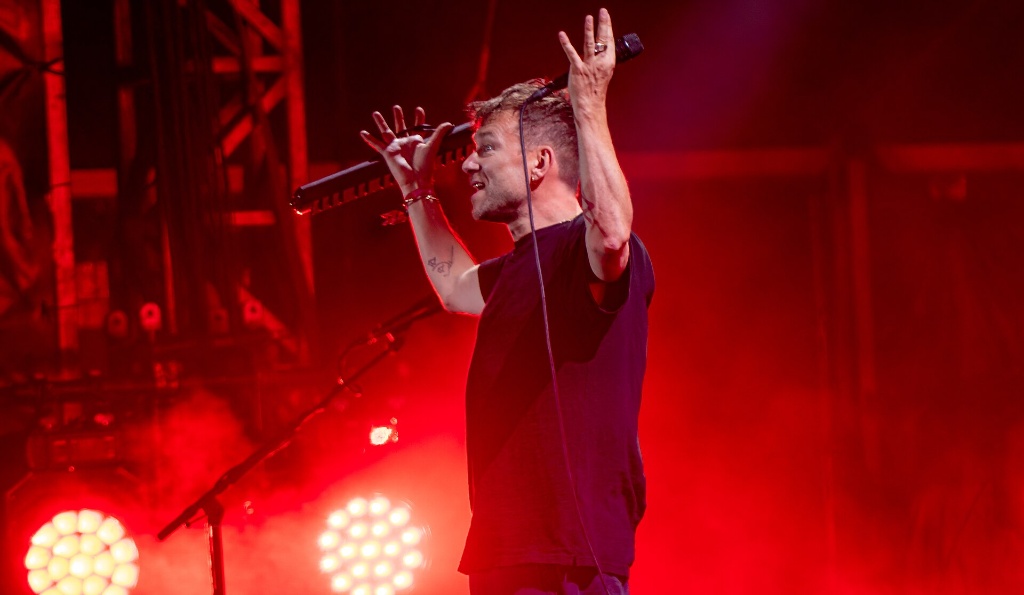
There are two kinds of Gorillaz fans: those who came for the cartoon apocalypse party, and those who stayed for Damon Albarn’s relentless, genre-agnostic curiosity. For two decades, these factions have coexisted in relative harmony, sustained by a steady diet of festival-ready singles and deeper cuts that scratched the creator’s experimental itch. With The Mountain, the band’s ninth studio album, Albarn and Jamie Hewlett have seemingly decided to pick a side. This is not a party record. It’s a hermetic, unforgiving, and often brilliant piece of work that feels less like an invitation and more like a challenge.
It’s a whiplash-inducing pivot. Remember the context: their last full-length, 2023’s Cracker Island, was a tight, 37-minute collection of pop-funk earworms that, with the help of producer Greg Kurstin, gave the band their first-ever UK number-one album. It was a commercial and critical success, a validation of the project's enduring cultural resonance. It was also, in retrospect, a feint. The Mountain feels like a direct reaction to that accessibility, a deliberate retreat from the sunlight of the mainstream into a blizzard of artistic introspection.
This is the sound of a band climbing away from its audience.
The Thin Air of an Insular Sound
From the opening notes of the instrumental track “Base Camp,” it’s clear the guest list has been culled. Where Humanz felt like a rolodex spinning out of control, The Mountain is starkly minimalist in its collaborations. The album is dominated by Albarn’s own melancholic croon, layered over intricate, krautrock-indebted soundscapes. The production, reportedly handled almost exclusively by Albarn and long-time collaborator and voice of Russel Hobbs, Remi Kabaka Jr., is dense and suffocating. It’s a far cry from the breezy, open-air funk of “19-2000” or the world-conquering bassline of “Feel Good Inc.”
Tracks like the nine-minute centerpiece “Oxygen Debt” are exercises in tension and release, built on looping synth arpeggios and skittering drum machines that refuse to resolve into a satisfying chorus. The lead single, “Avalanche Logic,” buries its hook under layers of distorted vocals and a disorienting time signature. It’s an act of commercial defiance. In an era where a song’s viability is judged in its first 15 seconds, Gorillaz have delivered a record that demands patience most listeners, conditioned by algorithmic efficiency, simply may not have. It’s a rejection of pop comfort, a philosophy that has its own brave adherents, as seen in projects like Willow's recent work.
Parlophone Records, the label that has housed the band for years, must be sweating. After the chart-topping success of Cracker Island, the logical move was to double down. Instead, Albarn delivered an art-rock opus that feels more spiritually aligned with late-era Talk Talk or Radiohead’s Kid A than anything in the Gorillaz discography. This isn’t just a new chapter; it’s a different book entirely, written in a language many fans might not be willing to learn.
Reinvention or Alienation?
Is this a betrayal? Or is it the most Gorillaz thing the band could have possibly done? The project was, from its inception, a commentary on manufactured pop. What happens when the commentary becomes more successful than the pop it was critiquing? You retreat. You make something difficult. You remind everyone that behind the beloved animated avatars of 2-D, Murdoc, Noodle, and Russel, there is the restless, often contrary mind of Damon Albarn.
Albarn has spent his entire career resisting categorization. When Blur became the face of Britpop, he pivoted to the mournful Americana of 13. He’s consistently maintained that his various projects are just different facets of his musical identity, once famously saying of his work, “Everything I do is part of the same story.” The Mountain is the chapter where the protagonist isolates himself to figure out what the story is even about anymore. It’s a risky, self-indulgent, and deeply personal move played out on a blockbuster scale. This is the core friction of the album: the tension between the global brand of Gorillaz and the fiercely individualistic artist at its core.
The album’s most accessible moment, “Summit Fever,” featuring the sole guest vocal from FKA twigs, is a mirage. It offers a fleeting glimpse of the melodic genius that powered multi-platinum records like Demon Days before retreating back into the atmospheric fog. It proves the pop instincts are still there; they’ve just been deliberately suppressed. It's a creative choice that feels both admirable in its purity and frustrating in its obstinance.
The Mountain asks a fundamental question of its audience: did you fall in love with the characters and the hits, or with the spirit of perpetual change that defines them? The album offers no easy answers, no radio-friendly singles, no dopamine hits for your playlist. It is a monument to its own creation, stark and imposing. Many will arrive at the base, look up at the sheer cliff face of its ambition, and simply turn back. But for those who attempt the climb, the view might be singular. Has Gorillaz, the ultimate pop collective, finally become a band just for themselves?
About the Author
Music Journalist
Ashley Tan brings energetic, backstage-level coverage of live music and emerging artists to LyricsWeb readers.