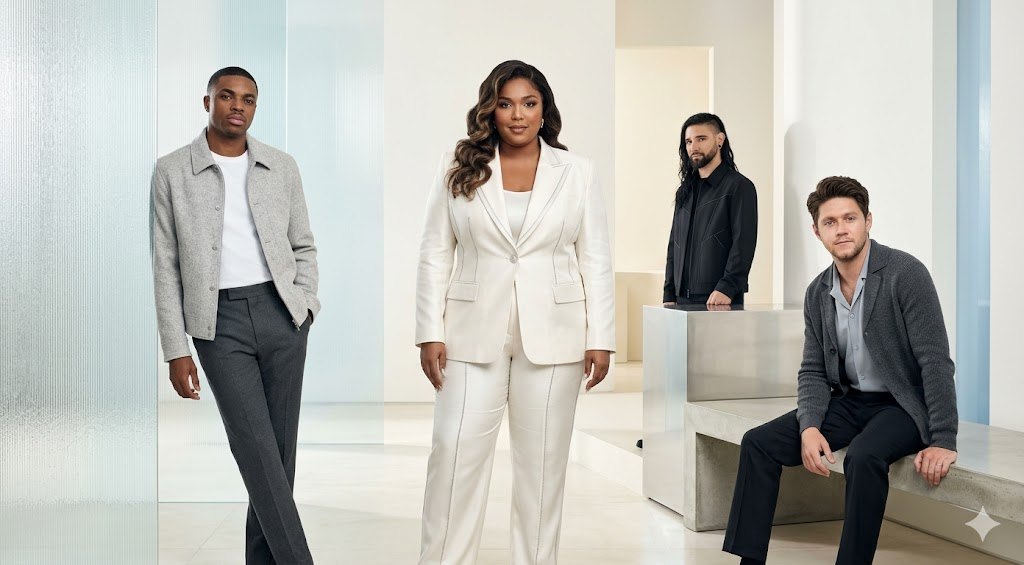
Four Major Artists, Four Different Visions: The Albums Defining June 2026's Biggest Release Day
Latest News

Music Journalist
Some Fridays pass through the release calendar quietly. Others arrive with enough weight to change the conversation for the entire weekend. June 5, 2026 belongs to the second group.
This is not a release day built around one dominant superstar or one obvious genre lane. It is more interesting than that. Lizzo, Vince Staples, Niall Horan and Skrillex all arrive with new albums on the same day, each carrying a different kind of expectation. Pop, hip-hop, singer-songwriter music and electronic production are all represented, but the real story is not simply genre variety. The real story is timing.
Each artist enters this moment from a different place. Lizzo returns with BITCH, a project that puts her back at the center of pop conversation after a complicated and closely watched period. Vince Staples follows one of the strongest creative runs in modern rap with Cry Baby. Niall Horan continues shaping his post-One Direction identity with Dinner Party. Skrillex drops SOMA, another reminder that his career has never been about staying inside one electronic lane.
For LyricsWeb readers, this release day matters because these albums are not just headlines. They are new catalog moments. They create new searches, new fan debates, new lyric pages, new album conversations and new reasons to revisit each artist's older work. A release like this is not just about what dropped today. It is about how the new music connects to everything that came before it.
That is why June 5 feels unusually strong. It gives pop fans a major return, rap listeners a serious album to unpack, singer-songwriter fans a polished new chapter, and electronic music fans a surprise project with global reach. Four albums. Four audiences. Four different reasons to pay attention.
Lizzo Returns to the Center of Pop With BITCH

A new Lizzo album is never only a music release. It is a cultural event, a conversation starter and a test of how much room modern pop still has for personality. With BITCH, she returns with a title that immediately refuses softness. It is direct, sharp and impossible to ignore.
That matters because Lizzo's public image has always been tied to presence. She does not disappear into songs. She pushes through them. Her best records feel animated by confidence, humor and theatrical force. That combination helped turn her into one of the most recognizable pop artists of the past decade, and it is also what makes every new project feel like a referendum on where she stands now.
The road to this album has been anything but quiet. Fans followed the rollout closely, watching as the project shifted through different phases before finally arriving as BITCH. That kind of build-up can weigh heavily on an artist. It creates expectations before a listener even presses play. But it can also sharpen the stakes. A long rollout means people are already invested. They want to know not only what the album sounds like, but what it says about the artist's next era.
The answer appears to be confidence rather than retreat. BITCH leans into the qualities that made Lizzo a star: big hooks, bold framing and a willingness to turn personal energy into public performance. It does not read like an artist trying to shrink herself to fit a quieter moment. It reads like an artist choosing volume.
That choice is important. Pop music in 2026 is crowded with artists trying to balance intimacy and spectacle. Lizzo has always understood that the two do not need to be opposites. Her most effective work often turns vulnerability into performance and performance into something personal. That is why her music can move between celebration and confrontation without feeling like a costume change.
For listeners arriving through LyricsWeb, the new album also invites a return to earlier parts of her catalog. Songs and albums such as Cuz I Love You (Super Deluxe), Special (Apple Music Edition), Rumors, Coconut Oil, MY FACE STILL HURTS FROM SMILING and Big GRRRL Small World now sit in conversation with this new chapter.
That broader catalog context is what makes BITCH more than a simple comeback. It gives listeners a chance to trace how Lizzo's sound, image and songwriting have developed across different moments. The early material shows the foundation. The breakthrough albums show the rise. The new release shows an artist trying to define what comes next.
The album also arrives at a moment when pop stars are being asked to do more than release catchy songs. They are expected to explain themselves, perform authenticity, maintain visibility and survive constant public reading. Lizzo has always been unusually good at turning that pressure into part of the performance. BITCH seems built for that exact space: public, self-aware and unwilling to apologize for taking up room.
Whether the album becomes the dominant pop story of the summer will depend on how listeners respond over the next few weeks. But as a release-day statement, it already has the qualities a major pop album needs: a clear identity, a recognizable artist, and enough personality to keep people talking after the first listen.
Vince Staples Makes Another Case for Album-Level Rap on Cry Baby

The easiest way to misunderstand Vince Staples is to treat him like a rapper chasing moments. His career has never worked that way. Staples is not built around spectacle. He is built around perspective. His albums tend to reward patience, repeat listening and attention to detail.
That is what makes Cry Baby such an important release this week. In a crowded hip-hop environment where songs often move faster than albums, Staples continues to operate like an album artist. He builds worlds. He narrows the frame. He lets small details carry heavy meaning.
The new album follows a catalog that has already earned him one of the most respected positions in modern rap. From Summertime ’06 to Big Fish Theory, FM!, RAMONA PARK BROKE MY HEART and Dark Times, his work has often been defined by restraint. He does not need to over-explain. He trusts the listener to sit with the image.
That restraint is rare. Many rappers use volume to create urgency. Staples often does the opposite. He can sound calm while describing chaos, detached while writing about pain, funny while pointing toward something darker. That tension has become central to his appeal.
On Cry Baby, the early attention around Blackberry Marmalade, White Flag and Cotton gives listeners several clear entry points, but the larger story is the project itself. This is an album positioned for close listening, not casual background use.
That distinction matters for hip-hop in 2026. The genre is still the center of popular music in many ways, but it is also fragmented. Viral rap, regional scenes, melodic rap, underground movements and legacy artists all compete for attention at the same time. Vince Staples does not need to dominate all of those spaces. His value comes from consistency.
He has become the kind of artist whose releases feel trustworthy. That does not mean predictable. It means listeners know there will be a point of view. They know the writing will matter. They know the album will have shape.
For LyricsWeb, Cry Baby is exactly the kind of rap release that deserves long-term attention. It is not just a headline for one Friday. It is the type of project fans will revisit through lyrics, credits, comments, questions and album discussion as the songs settle into the year.
That is why Staples stands out among this week's major releases. While others arrive with bigger mainstream visibility, Vince Staples brings one of the clearest artistic identities. Cry Baby strengthens that identity rather than trying to replace it.
Niall Horan's Dinner Party Shows the Strength of Playing the Long Game

When people discuss artists who successfully transitioned from globally successful groups into sustainable solo careers, Niall Horan sometimes receives less attention than he deserves. Part of that is because his path has been quieter than many expected. There have been no dramatic reinventions, no attempts to completely reject his past and no desperate chase for headlines.
Instead, Horan has spent years building something that often proves more valuable: consistency.
His solo catalog has developed gradually, album by album, creating an identity that feels increasingly independent from the massive legacy of One Direction. That journey continues with Dinner Party, an album that arrives not as a reinvention but as the next stage of a carefully constructed career.
That approach matters because the modern music industry rewards extremes. Artists are often encouraged to become louder, more controversial or more dramatic in order to remain visible. Horan has largely resisted that pressure. Instead, he has focused on songwriting, melody and emotional clarity.
The result is a catalog that ages well.
Looking back across releases such as Flicker, Heartbreak Weather 5 and The Show: The Encore, a pattern becomes clear. Each project expands the same core strengths rather than abandoning them. Horan understands the audience he has built, but he rarely sounds trapped by it.
That is one reason Dinner Party feels important. It arrives at a point where the artist no longer needs to prove he can succeed on his own. That question was answered years ago. Now the focus shifts toward artistic growth and longevity.
The title itself suggests something intimate. Dinner parties are built around conversation, storytelling and connection. They are less about spectacle and more about atmosphere. That idea seems to fit the direction of Horan's recent work, which often prioritizes emotional detail over dramatic statements.
In an era where many pop releases are designed for immediate impact, there is something refreshing about an artist who remains committed to building albums rather than chasing moments. That philosophy has helped Horan maintain a loyal audience while continuing to attract new listeners.
Commercially, the album enters the market with significant advantages. Horan remains one of the most recognizable solo artists to emerge from the One Direction era, and his audience spans multiple age groups. Longtime fans continue to follow his career closely, while newer listeners increasingly discover his catalog through streaming platforms and social media.
That broad appeal gives Dinner Party the potential to become one of the season's most durable releases. It may not dominate every headline, but it feels positioned to remain in listeners' rotations long after the initial excitement of release week fades.
For LyricsWeb readers, it is also the kind of album that encourages deeper exploration. New listeners discovering Niall Horan through this project are likely to move backward through his catalog, revisiting earlier albums and songs to understand how this stage of his career came together.
That is often the mark of a successful release. It does not simply add another title to a discography. It increases interest in everything around it.
Skrillex Continues to Ignore Boundaries on SOMA

Few artists have changed public perceptions of electronic music as dramatically as Skrillex.
For more than a decade, he has occupied a unique position within the industry. To some listeners, he remains the producer who helped redefine mainstream dubstep. To others, he is a collaborator capable of moving effortlessly between genres, scenes and cultures. Both interpretations are correct, but neither fully captures why his releases continue to attract attention.
The real answer is unpredictability.
Skrillex has spent years refusing to stay in one creative lane. Every time audiences think they understand where his music is heading next, another project appears and changes the conversation. SOMA continues that tradition.
The surprise release immediately became one of the biggest stories of the day, partly because surprise albums still create excitement and partly because Skrillex has earned a reputation for making every release feel like an event.
What separates him from many electronic artists is his willingness to treat genres as tools rather than rules. House, bass music, Latin influences, experimental production and club culture all exist within his creative universe. Rather than choosing one direction, he often allows multiple influences to coexist.
That mindset has shaped his entire career.
Albums and projects such as Recess, Bangarang EP, Don't Get Too Close, Quest For Fire, Scary Monsters and Nice Sprites and More Monsters and Sprites show a career built around movement rather than stability.
That willingness to evolve has allowed Skrillex to remain relevant across multiple generations of electronic music fans. Many producers become associated with a single era. Skrillex has repeatedly avoided that trap by embracing change rather than resisting it.
The timing of SOMA is particularly interesting because electronic music itself is becoming increasingly global. Regional scenes influence one another faster than ever before. Sounds that once belonged to specific cities or countries now travel instantly through streaming platforms, social media and international collaborations.
Few artists are better positioned to operate within that environment. Skrillex has spent years building connections across scenes, genres and communities. His work often feels less interested in preserving boundaries than in discovering what happens when those boundaries disappear.
That philosophy makes SOMA one of the most fascinating releases of the week. It is not simply another electronic album arriving on a crowded release schedule. It is another chapter in one of modern electronic music's most unpredictable careers.
Whether listeners approach the project as longtime fans or complete newcomers, the album reinforces a simple idea: Skrillex remains one of the few producers capable of turning experimentation into mainstream conversation.
Why June 5, 2026 Matters
Looking at these four albums together reveals something bigger than any individual release.
Music in 2026 is increasingly defined by variety. Audiences move freely between genres. Playlist culture encourages exploration. Listeners who begin their day with pop can easily end it listening to rap, singer-songwriter music or electronic production.
The artists featured this week reflect that reality perfectly.
Lizzo brings a major pop statement with BITCH. Vince Staples strengthens one of hip-hop's most respected catalogs through Cry Baby. Niall Horan continues refining his solo identity on Dinner Party. Skrillex once again expands the possibilities of electronic music with SOMA.
None of these albums are trying to accomplish the same thing. That is exactly what makes this release day so compelling.
Together they represent four different approaches to modern music-making, four different audiences and four different artistic philosophies. Yet all four belong to the same conversation.
That conversation is likely to continue throughout the summer.
Related Albums
- Cuz I Love You (Super Deluxe)
- Special (Apple Music Edition)
- Big GRRRL Small World
- Dark Times
- RAMONA PARK BROKE MY HEART
- Big Fish Theory
- Flicker
- Heartbreak Weather 5
- The Show: The Encore
- Quest For Fire
- Recess
- Scary Monsters and Nice Sprites
Frequently Asked Questions
What are the biggest albums released on June 5, 2026?
Among the most notable releases are BITCH by Lizzo, Cry Baby by Vince Staples, Dinner Party by Niall Horan and SOMA by Skrillex.
Which album is generating the most discussion?
Lizzo's BITCH and Skrillex's surprise release SOMA entered release day with significant public attention, while Vince Staples and Niall Horan continue to generate strong engagement among dedicated fan communities.
Why is this release day significant?
June 5, 2026 brings together major releases from four artists representing completely different genres, creating one of the most diverse and high-profile New Music Fridays of the year.
About the Author
Music Journalist
Ethan Caldwell is a music industry analyst and journalist at LyricsWeb, specializing in market trends and artist strategy.