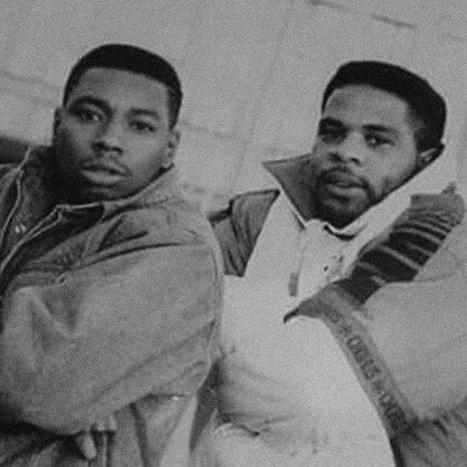
The Showboys
82 Listeners
Artist Bio
Introduction & Current Status
Let's get one thing straight: when we talk about foundational hip-hop, especially the kind that makes your head nod and your speakers tremble, The Showboys are low-key iconic. Even if you don't recognize the name immediately, you've definitely felt their impact. Their track, famously known as "Triggerman," isn't just a song; it's a cultural blueprint, an auditory cheat code woven into the very fabric of rap.
Today, decades after its initial drop, the legacy of The Showboys continues to resonate louder than ever. In an era where viral sounds and TikTok trends dictate the charts, their signature beat remains a constant, a bedrock rhythm for new generations of producers. It's an undeniable force, perpetually sampled, remixed, and re-envisioned, proving that some sounds are simply timeless.
From underground battle circuits to mainstream trap anthems, the ghost of The Showboys' genius still haunts the airwaves, making them perennial, if often unsung, architects of modern music. They're proof that sometimes, all it takes is one absolutely perfect moment to achieve immortality in the sonic landscape.
Early Life & Background
The story of The Showboys, particularly the masterminds Ali Dee (Arthur Hagler) and Willie Gee (William Washington), is deeply rooted in the gritty, innovative energy of 1980s New York City. This was an era when hip-hop was less about polished pop and more about raw, experimental beats echoing from Bronx block parties and Queens basements. The city itself was a melting pot of sounds, from disco and funk to burgeoning electronic music.
Against this vibrant backdrop, Dee and Gee absorbed the sonic landscape, drawing inspiration from legendary DJs who were stitching together new narratives with turntables and drum machines. They weren't just listening; they were dissecting, understanding the pulse of the streets and how to translate that into a groove. Their early exposure to electro-funk's synth wizardry and the raw power of early drum machine rhythms laid the groundwork for their distinctive sound, a sound that would soon reshape entire subgenres.
Their formative years instilled a keen ear for what made people move, a blend of infectious rhythm and memorable melodic snippets. This innate understanding of the dancefloor and the burgeoning hip-hop scene would prove crucial in crafting a track that transcended its origins to become a global phenomenon.
Career Beginnings
The Showboys officially burst onto the scene in the mid-1980s, an exciting yet challenging time for independent artists. The music industry was still figuring out how to market this new phenomenon called hip-hop, leaving much of the innovation and distribution to smaller, often regional, labels. It was in this fertile, DIY environment that Ali Dee and Willie Gee honed their craft, aiming to create something truly original.
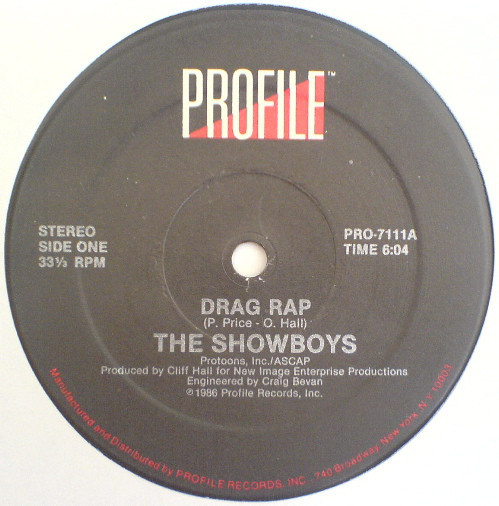
Their breakthrough moment, without a doubt, arrived with the creation of Drag Rap. Released on the independent Profile Records, the track initially bubbled up in specific regional scenes rather than exploding onto national charts. It wasn't an overnight sensation, but a slow-burn classic that built its reputation organically, propelled by DJs and word-of-mouth.
Key figures in the burgeoning hip-hop ecosystem, particularly those in the Southern U.S., quickly recognized the undeniable power of its instrumental. This organic spread, fueled by underground radio and club play, transformed Drag Rap from a New York electro-hip-hop cut into a foundational beat for entirely new subgenres across the country.
Major Albums & Discography
While The Showboys' discography might not be vast in terms of traditional studio albums, their impact is undeniably concentrated in one monumental release: the Drag Rap album. More accurately described as a single with immense cultural weight, this 1986 release by Profile Records solidified their place in music history, even if it primarily showcased one masterwork and its variations.
The Drag Rap album, led by its iconic title track, wasn't just another record; it was a sonic statement that inadvertently laid the groundwork for future hip-hop movements. Critical reception at the time was perhaps more regional and grassroots than mainstream, but its commercial performance was robust in the areas where its sound resonated most deeply, particularly the South.
Its significance lies not in a lengthy tracklist, but in the sheer density of innovation packed into its core offering. The album, through its singular focus, demonstrated how a perfectly crafted beat could become a genre unto itself, evolving beyond its initial electro-funk leanings into something far more expansive. It showcased a meticulous approach to production, where every drum hit and synth stab served a purpose, creating a rhythm that was both intricate and universally appealing.
Hit Songs & Signature Tracks
When it comes to The Showboys, there's one track that stands head and shoulders above the rest, a true titan that has earned its place in the pantheon of hip-hop's most influential sounds: Drag Rap. Often referred to as "Triggerman" due to its distinctive siren-like synth line and driving beat, this 1986 classic is a masterclass in minimalist perfection and maximalist impact.
What made Drag Rap so special was its relentless, almost hypnotic rhythm. Built around a sparse yet powerful 808 drum machine pattern and that instantly recognizable, almost menacing synth riff, it possessed an undeniable energy. It didn't chase trends; it set them, becoming a go-to for DJs who wanted to ignite a dancefloor and producers seeking a raw, potent canvas for their own creations.
While traditional chart performance might not fully capture its seismic influence, the track achieved a different kind of platinum status – street legend. It became a staple in New Orleans bounce, Miami bass, and Memphis rap, its instrumental version, Drag Rap (Instrumental), proving particularly crucial. This instrumental allowed countless MCs to freestyle over it, DJs to mix it seamlessly, and producers to sample it endlessly, cementing its cultural footprint far beyond its initial release.
Collaborations & Features
While The Showboys themselves weren't known for a long list of traditional vocal collaborations or guest features in the same vein as modern artists, their true collaborative spirit manifested in a far more profound and widespread manner: through sampling. Drag Rap, particularly its iconic beat, became one of the most sampled tracks in hip-hop history, turning The Showboys into unwitting, yet omnipresent, collaborators across genres and decades.
Think of it as the ultimate ghost feature. Artists from across the hip-hop spectrum, especially in the South, essentially built their own tracks on the foundation that The Showboys laid. From the raw energy of New Orleans bounce to the gritty sound of Memphis rap and eventually the mainstream dominance of trap music, the "Triggerman" beat has been endlessly reinterpreted.
Artists like Juvenile, UGK, Three 6 Mafia, Birdman, and countless others have incorporated elements of Drag Rap into their own hits. This cross-pollination of sound demonstrates a unique form of collaboration, where the original creators provide the immutable backbone, allowing new voices to shine. It's a testament to the timelessness of their production that it continues to fuel new creative endeavors, making The Showboys an essential, albeit indirect, collaborator for generations of musicians.
Awards & Achievements
In an industry often obsessed with shiny trophies and red-carpet moments, The Showboys' most significant "awards" aren't found in a display case but etched into the very fabric of music history. While they might not have racked up a shelf full of Grammys or Billboard Music Awards, their achievements are far more profound and enduring, reflecting a different kind of success.
Their primary achievement is having created arguably one of the most sampled and influential beats in hip-hop: Drag Rap. This track's ubiquity and foundational role in multiple subgenres – from Miami bass to New Orleans bounce and the entire trap movement – is an achievement that transcends mere sales figures. It's a testament to their innovative sound design and an unparalleled cultural impact.
This isn't just about breaking records; it's about *shaping* genres. The Showboys established a sonic blueprint that inspired countless artists and producers, effectively earning them an honorary "Lifetime Achievement Award" from the streets and studios worldwide. Their legacy is a constant presence, a reminder that true influence often comes from groundbreaking innovation rather than mainstream accolades.
Personal Life
Arthur "Ali Dee" Hagler and William "Willie Gee" Washington, the creative forces behind The Showboys, have largely maintained a relatively private profile compared to many of their hip-hop contemporaries. While their music made a colossal impact, their public persona remained focused on the craft rather than tabloid headlines.
Their dedication was clearly to the music itself, allowing the groundbreaking sound of Drag Rap to speak for itself. This understated approach underscores a commitment to artistic integrity, letting their undeniable sonic contribution be their loudest statement. Like many innovators of their era, they laid crucial groundwork that others would build upon, often without seeking the spotlight themselves.
Musical Style & Influence
The musical style of The Showboys is a vibrant snapshot of mid-80s urban innovation, masterfully blending electro-funk's synth-driven melodies with the raw, percussive power of early hip-hop. At its core, their sound, particularly in Drag Rap, is characterized by the distinctive thud of the Roland TR-808 drum machine, laying down sparse yet incredibly potent rhythms that became instantly recognizable.
Their use of a siren-like synth line, often referred to as the "Triggerman" sound, wasn't just catchy; it was groundbreaking. It injected a sense of urgency and grit that resonated deeply with the burgeoning street culture. This fusion of electronic precision and raw energy positioned them as pioneers, crafting a sound that felt both futuristic and deeply rooted in the urban landscape.
The influence of The Showboys is nothing short of monumental. They didn't just contribute to a genre; they fundamentally shaped it. Drag Rap became a cornerstone for Southern hip-hop, inspiring the frenetic energy of New Orleans bounce, the bass-heavy swagger of Miami bass, and laying crucial rhythmic and melodic foundations for the entire trap music movement. Their sonic blueprint influenced countless producers and artists, proving that sometimes, a single, perfectly crafted track can shift the entire trajectory of music.
Recent Work & What's Next
For The Showboys, "recent work" isn't necessarily about new releases hitting the streaming charts, but rather the continuous, vibrant life of their most iconic creation. The beat from Drag Rap is a living, breathing entity, perpetually sampled, remixed, and reinterpreted by successive generations of artists. It's a testament to its enduring power that it frequently resurfaces in new tracks, viral moments, and DJ sets worldwide.
Their future direction, in essence, is its own legacy. The Showboys remain a pivotal reference point for anyone delving into the history of hip-hop production and the evolution of Southern rap. While new material might not be on the horizon, their foundational contribution ensures their sound will continue to define and inspire, ensuring that the "Triggerman" beat keeps running the game for decades to come.
Popular Albums
Popular Songs
| Track Number | Song | Release Date | Album |
|---|---|---|---|
| 01 | Drag Rap | Jan 1, 1986 | Drag Rap |
| 02 |  That’s What I Want For Christmas That’s What I Want For Christmas | Jan 1, 1987 | Christmas Rap |
| 03 |  Drag Rap (Instrumental) Drag Rap (Instrumental) | N/A | Drag Rap |
Reviews
Comments
Questions & Answers
Music Awards
0 Total
No Music Awards Found