Introduction & Current Status
Modest Mussorgsky might've been rocking powdered wigs back in the 1800s, but his music still hits different. Though he shuffled off this mortal coil way back in 1881, his compositions continue to resonate. Think of him as the OG remix artist whose work keeps getting sampled and reinterpreted by everyone from classical orchestras to modern electronic producers.
His opera "Boris Godunov" remains a staple in opera houses worldwide, and "Pictures at an Exhibition" is basically the "Bohemian Rhapsody" of orchestral showpieces. So yeah, even though he's been gone for over a century, Mussorgsky's still got main character energy in the classical music scene.
While you won't find him charting on Billboard today, his influence echoes through countless scores and soundtracks. He's the composer your favorite composer probably studied. He's low-key iconic, even if your TikTok feed isn't flooded with his greatest hits (yet).
Early Life & Background
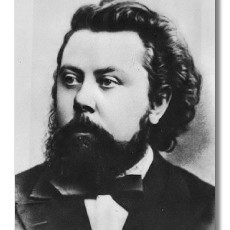
Born in 1839 in Karevo, Russia, Modest Petrovich Mussorgsky came from landed gentry – think old money but with serfs instead of stocks. His family had a musical bent; his mother gave him piano lessons early on. So from a young age, he was soaking up the sounds, laying the foundation for his future sonic masterpieces.
Growing up in the Russian countryside wasn't all balalaikas and borscht, though. Mussorgsky's upbringing exposed him to the raw, unfiltered folk music of the Russian peasantry. This early exposure would later become a defining feature of his uniquely Russian sound, setting him apart from his more Western-leaning contemporaries.
Instead of diving straight into music school, young Modest was shipped off to military academies in St. Petersburg. Turns out, epaulettes and parade drills weren't exactly his vibe. He eventually ditched the military life to fully embrace his musical destiny. Talk about a glow-up.
Career Beginnings
Mussorgsky's escape from military service marked the true beginning of his musical journey. He quickly immersed himself in St. Petersburg's vibrant artistic scene, falling in with a crew of like-minded composers known as "The Mighty Handful" or "The Five." These weren't your average classical musicians; they were musical rebels determined to create a distinctly Russian sound, free from Western European influence.
The Five – which included Mily Balakirev, César Cui, Alexander Borodin, and Nikolai Rimsky-Korsakov – became Mussorgsky's artistic family. They pushed each other, debated musical theories, and basically formed a 19th-century composer collective. Think Wu-Tang Clan, but with more minor chords.
Early on, Mussorgsky faced his fair share of struggles. He bounced between government jobs to make ends meet, composing in his spare time. It wasn't exactly a glamorous rockstar lifestyle, but it fueled his artistic fire. These experiences gave him a deep understanding of Russian society, which he poured into his music with unflinching honesty.
Major Albums & Discography
While Mussorgsky didn't drop albums in the way that, say, Taylor Swift does, his major works function as his discography. "Boris Godunov," his historical opera about a troubled Tsar, is arguably his magnum opus. It's a dark, dramatic, and deeply Russian work that broke all sorts of operatic conventions. He went through several revisions of this opera, showing his dedication to the craft.
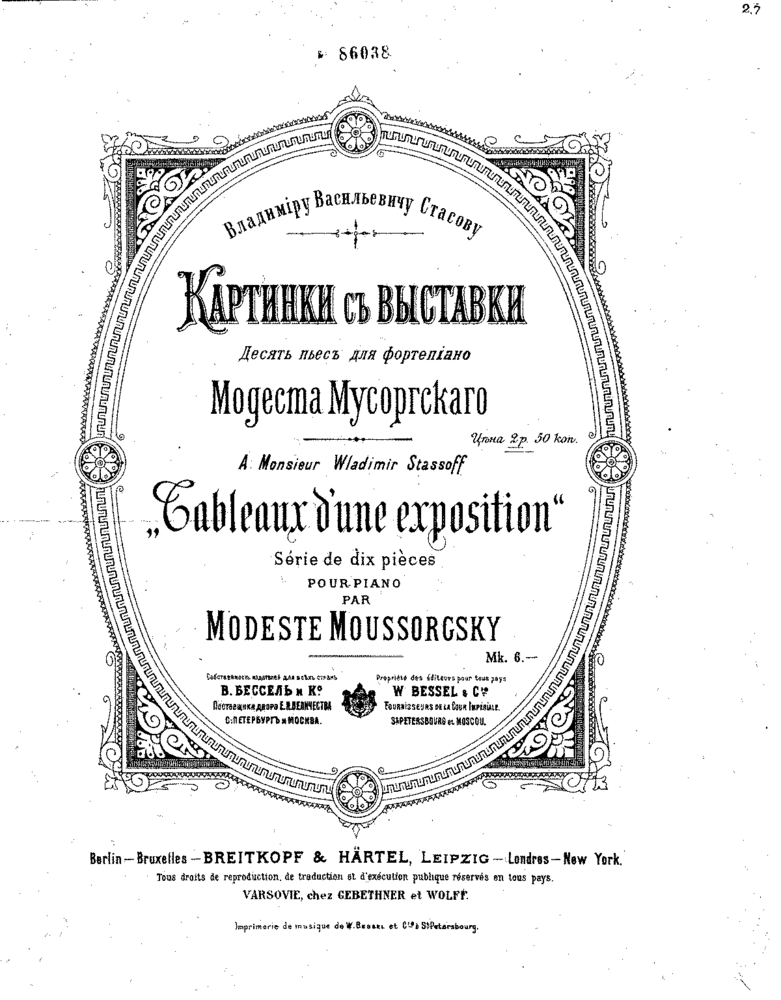
"Pictures at an Exhibition," originally a piano suite inspired by the artwork of his friend Viktor Hartmann, is another cornerstone of Mussorgsky's output. It's been orchestrated by countless composers, most famously by Maurice Ravel. Each movement paints a vivid musical picture, from the lumbering "Gnomus" to the grand "Great Gate of Kiev."
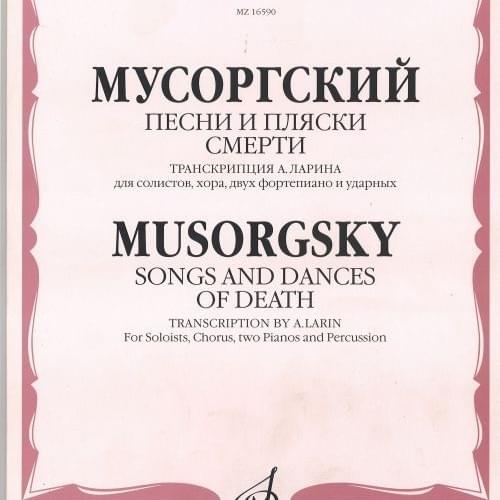
Mussorgsky also composed a number of song cycles, including "Songs and Dances of Death" and "The Nursery." These works showcase his gift for capturing the nuances of the human voice and his ability to tell compelling stories through song. He explored themes of death, childhood, and peasant life with raw emotion and unflinching realism.
His evolution as a composer is evident across his works. He moved away from traditional Western harmonies and forms, embracing a more dissonant and fragmented style. This bold experimentation made him a controversial figure in his time, but it also paved the way for future generations of composers.
Hit Songs & Signature Tracks
Mussorgsky wasn't exactly dropping singles on Spotify, but certain excerpts from his larger works have achieved signature track status. The "Great Gate of Kiev" from "Pictures at an Exhibition" is basically the classical equivalent of a power ballad. It's epic, triumphant, and guaranteed to give you goosebumps.
"The Hut on Hen's Legs (Baba-Yaga)" from the same suite is another banger. It's a creepy, fantastical piece that perfectly captures the image of the witch Baba-Yaga flying through the forest on her mortar. Perfect for spooky season playlists.
From "Boris Godunov," the Coronation Scene is a certified banger. The raw emotion and power of the chorus is truly something to behold. If opera had a Top 40, this would definitely be on it.
While Mussorgsky didn't rack up platinum certifications in the traditional sense, his music has achieved a different kind of immortality. It's been featured in countless films, TV shows, and video games, ensuring that his melodies continue to reach new audiences.
Collaborations & Features
Mussorgsky's collaborations were mostly within the circle of "The Mighty Handful." They constantly critiqued and influenced each other's work, creating a shared artistic vision. While he didn't do any official features with other artists in the modern sense, his music has been reinterpreted and sampled by countless musicians across genres.
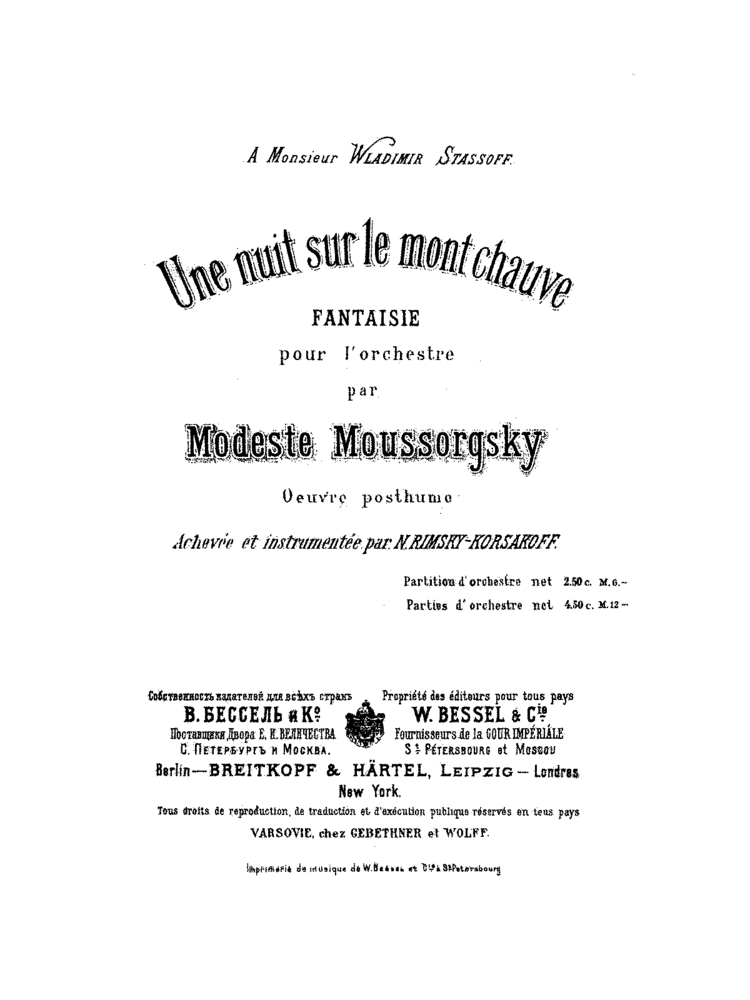
Rimsky-Korsakov, for example, famously "edited" and "improved" Mussorgsky's works after his death. Some purists argue that these revisions sanitized Mussorgsky's original vision, while others claim that they made his music more accessible to a wider audience. Either way, it's a testament to the enduring power of his compositions.
Modern artists have also embraced Mussorgsky's music, incorporating elements of his work into their own creations. From classical crossover artists to electronic musicians, his influence can be heard in unexpected places. He's the ultimate sample source for composers looking to add a touch of Russian soul to their sound.
Awards & Achievements
Mussorgsky didn't exactly win a Grammy (they weren't around back then), but his achievements are measured in his lasting impact on music history. He pushed the boundaries of classical music, forging a uniquely Russian style that continues to inspire composers today.
His operas, particularly "Boris Godunov," are considered masterpieces of the Russian operatic tradition. They're performed in opera houses around the world, attracting audiences who appreciate his raw emotion and dramatic storytelling.
"Pictures at an Exhibition" has become a staple of the orchestral repertoire. It's a crowd-pleaser that showcases the virtuosity of the orchestra and the imaginative power of Mussorgsky's music. Not bad for a guy who started out as a military cadet.
Personal Life
Mussorgsky's personal life was, shall we say, complicated. He struggled with alcoholism throughout his adult life, which eventually contributed to his early death at the age of 42. Despite his personal demons, he remained dedicated to his art, pouring his experiences and emotions into his music.
He never married or had children, dedicating his life to his music and his friends. He was known for his sharp wit and his loyalty to his artistic ideals. He was a true original, even if he didn't always fit in with polite society.
Musical Style & Influence
Mussorgsky's musical style is characterized by its raw emotion, its use of Russian folk melodies, and its rejection of traditional Western harmonies. He embraced dissonance and unexpected chord progressions, creating a sound that was both unsettling and deeply moving.
He drew inspiration from Russian folk music, peasant life, and Russian history. He wanted to create music that reflected the true spirit of the Russian people, not just the tastes of the aristocracy. He wasn't afraid to challenge conventions and experiment with new sounds, pushing the boundaries of classical music.
Mussorgsky's influence can be heard in the works of countless composers, from Dmitri Shostakovich to Claude Debussy. His emphasis on realism and his use of Russian folk melodies paved the way for a new generation of Russian composers. He's the OG rebel who proved that classical music didn't have to be stuffy and predictable.
Recent Work & What's Next
Mussorgsky isn't exactly dropping new tracks these days, but his music continues to be reinterpreted and reimagined by contemporary artists. You can find his music in film scores, video game soundtracks, and even electronic remixes. His legacy lives on through these new interpretations, ensuring that his music continues to resonate with new audiences.
While there won't be a new Mussorgsky album anytime soon, his existing works will continue to inspire and challenge listeners for generations to come. He's a timeless artist whose music transcends genres and eras. He's the composer who proves that true art never dies.
 Clock Scene
 The Great Gate of Kiev
 Lullaby
 Gnomus