Introduction & Current Status
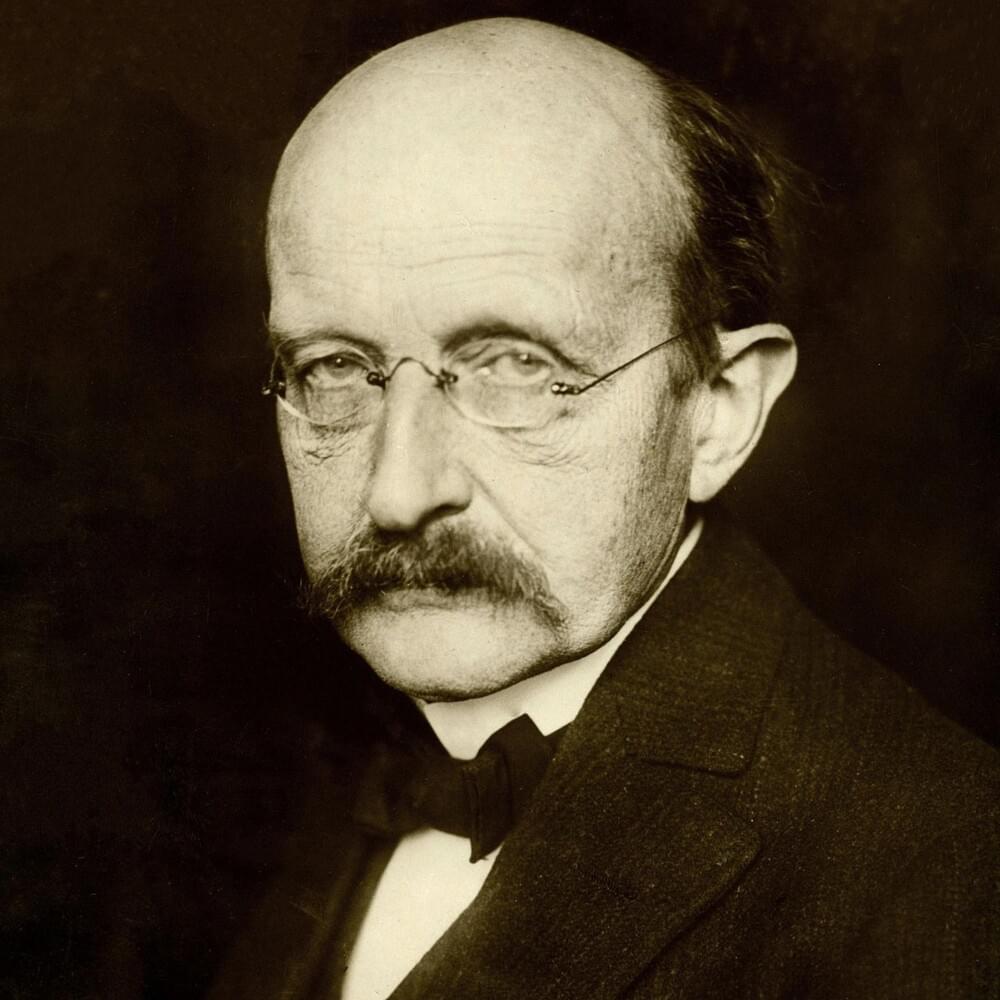
While Max Planck isn't dropping new tracks on Spotify, his impact on modern physics still absolutely slaps. He laid the groundwork for quantum theory, which, let's be real, is the backbone of everything from your phone to medical imaging. So, even though he's not trending on TikTok, his influence is eternal.
Planck's constant (h) is a fundamental constant of nature. Without it, we wouldn't understand the behavior of atoms or the nature of light. Think of him as the ultimate behind-the-scenes influencer shaping the very fabric of reality. No biggie.
His work continues to be cited and built upon by scientists globally. Planck's legacy thrives in every technological advancement rooted in quantum mechanics, proving his ideas are more relevant than ever. Consider him the ultimate remix artist – constantly sampled, never replicated.
Early Life & Background
Born in Kiel, Germany, in 1858, Max Karl Ernst Ludwig Planck came from a family steeped in tradition. His dad was a law professor, and his upbringing emphasized intellectual rigor and a deep appreciation for the classics. Not exactly the typical rockstar origin story, but stay with me.
Young Max was a total prodigy – excelling in music (he played the piano and organ) and academics. He initially considered a career in music but ultimately chose physics, believing that nearly everything in physics was already understood... which, ironically, he was about to completely revolutionize.
He studied at the Universities of Munich and Berlin, soaking up all the classical physics knowledge he could. Little did the world know, he was about to drop the mic on classical physics and usher in the quantum era.
Career Beginnings
Planck earned his doctorate from the University of Munich in 1879. Early on, he focused on thermodynamics, a field dealing with heat and energy. He spent years grappling with the problem of black-body radiation – the electromagnetic radiation emitted by a heated object.
Classical physics couldn't explain the observed spectrum of black-body radiation. It predicted that as frequency increased, the energy emitted would increase infinitely, leading to the "ultraviolet catastrophe." Major facepalm moment for the old guard.
In 1900, Planck dropped his quantum bombshell. To solve the black-body problem, he proposed that energy wasn't emitted continuously but in discrete packets, which he called "quanta." This revolutionary idea laid the foundation for quantum theory and earned him the Nobel Prize in Physics in 1918. Talk about a breakthrough moment.
Major Albums & Discography
(Since Planck didn't release albums in the traditional sense, this section will focus on his major scientific publications and their impact.)
Planck's most influential "album" is arguably his 1901 paper, "On the Law of Distribution of Energy in the Normal Spectrum." This is where he introduced the concept of quantization of energy. This paper was a total game-changer and sent shockwaves through the physics community. It's basically the "Bohemian Rhapsody" of physics papers.
His subsequent work further developed and refined quantum theory. He tackled topics like entropy and thermodynamics from a quantum perspective, solidifying his status as a scientific visionary. Each paper built upon the last, creating a cohesive and groundbreaking body of work.
While Planck wasn't trying to top the Billboard charts, his publications have topped citation indexes for over a century. He may not have gone platinum, but his work has been cited more times than most pop stars have had hot dinners. A true intellectual icon.
Hit Songs & Signature Tracks
(Again, adapting this to Planck's scientific context)
Planck's "signature track" is undoubtedly his formulation of Planck's constant (h). This constant relates the energy of a photon to its frequency and is a fundamental constant of nature. It's the bassline in the symphony of quantum mechanics.
Another hit single would be his explanation of black-body radiation. This was the problem that led him to develop quantum theory in the first place. It’s the song that launched a thousand ships (or, in this case, scientific careers).
These weren't just catchy tunes; they were paradigm-shifting revelations that reshaped our understanding of the universe. Planck's work didn't just chart; it redefined the map. It’s safe to say that these theories continue to inspire countless artists and scientists to this day.
Collaborations & Features
While Planck didn't do many direct collaborations in the modern sense, his work deeply influenced and was influenced by contemporaries like Albert Einstein and Niels Bohr. These intellectual giants engaged in intense debates and discussions, pushing the boundaries of physics.
Einstein famously used Planck's quantum hypothesis to explain the photoelectric effect, earning him his own Nobel Prize. Bohr, in turn, applied quantum theory to develop the Bohr model of the atom. Talk about a supergroup of scientific minds.
These interactions weren't formal collaborations, but rather a vibrant exchange of ideas that propelled the development of quantum mechanics. It was like a jam session of the greatest scientific minds of the 20th century.
Awards & Achievements
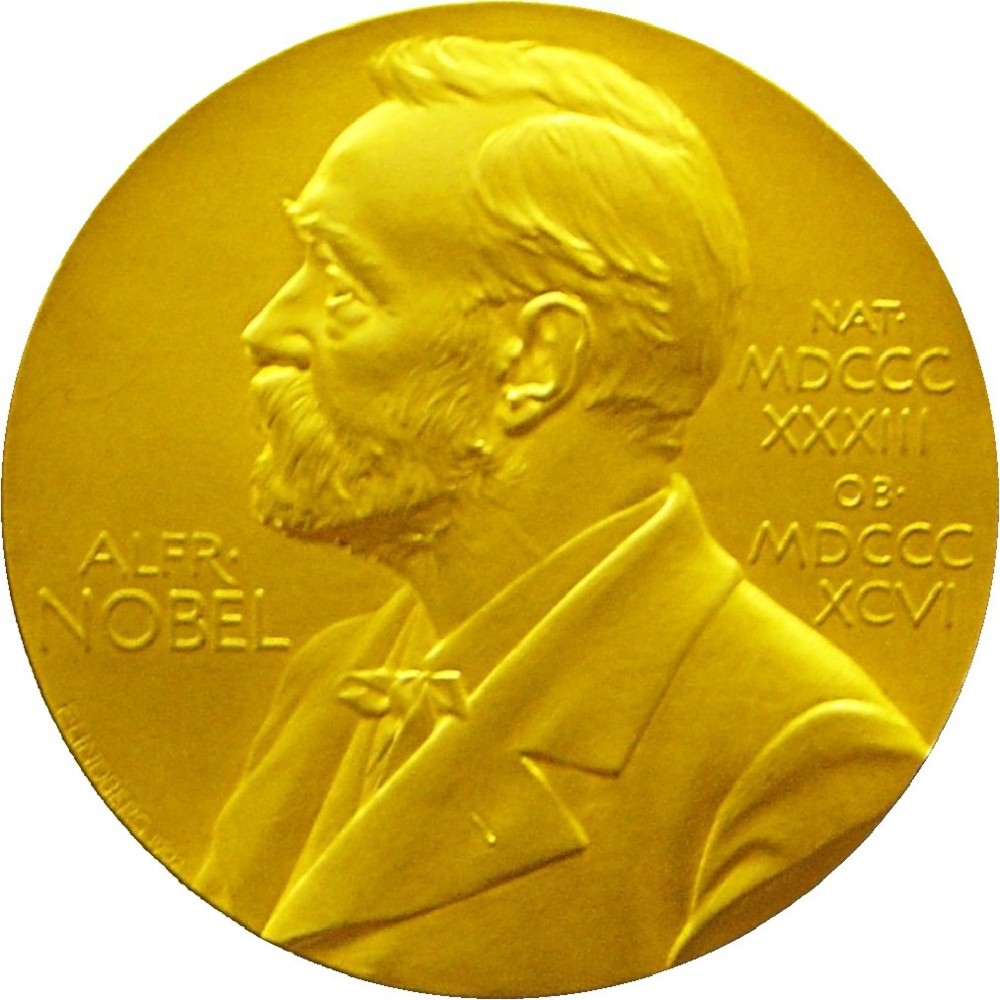
Planck received the Nobel Prize in Physics in 1918 for his discovery of energy quanta. This was the ultimate validation of his revolutionary ideas.
He also received numerous other honors and awards throughout his career, including the Helmholtz Medal and the Pour le Mérite for Sciences and Arts. He was a member of several prestigious scientific societies, including the Prussian Academy of Sciences.
Beyond the formal accolades, Planck's greatest achievement was his profound impact on our understanding of the universe. He laid the foundation for an entirely new field of physics that continues to shape our world today. He's basically the GOAT of quantum mechanics.
Personal Life
Planck's personal life was marked by both joy and tragedy. He married Marie Merck in 1887, and they had four children. Sadly, Marie died in 1917. He later remarried Marga von Hoesslin in 1919.
He faced immense personal hardship during both World Wars. One of his sons was killed in action in World War I, and two of his daughters died young. His other son, Erwin, was involved in the plot to assassinate Hitler and was executed in 1945. Despite these tragedies, Planck remained committed to his scientific work.
Musical Style & Influence
While Planck wasn't a musician in his professional life, his work has a certain elegance and harmony. Quantum mechanics, though complex, reveals a deep order and structure in the universe. You could say his physics had main character energy.
His influence is undeniable. Every scientist working in quantum physics, quantum chemistry, or related fields stands on the shoulders of Planck. He paved the way for technologies like lasers, transistors, and medical imaging.
Planck's legacy extends beyond the scientific realm. His story is a testament to the power of human curiosity and the pursuit of knowledge, even in the face of adversity. He’s proof that real genius isn’t about being flashy; it’s about changing the way we see everything.
Recent Work & What's Next
Okay, Planck isn't exactly dropping new papers, considering he passed away in 1947. However, his work continues to inspire new research and discoveries in quantum physics. Scientists are still exploring the implications of his theories and pushing the boundaries of quantum technology.
His concept of quantization is now being applied in cutting-edge fields like quantum computing and quantum cryptography. Planck's legacy lives on in every qubit and every secure quantum communication channel. His work is a gift that keeps on giving.
So, while you won't see him headlining Coachella anytime soon, Max Planck's influence on the world is undeniable.