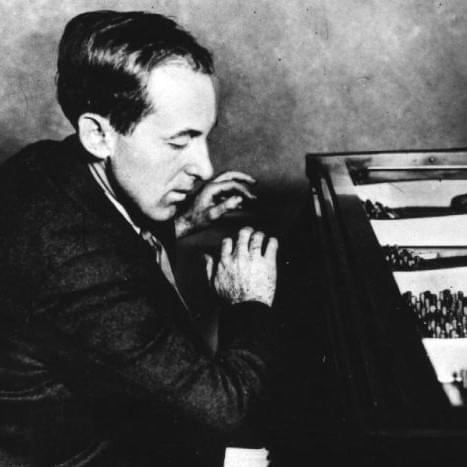
Photo of Henry Cowell

Henry Cowell

706 Listeners

Artist Bio

Henry Cowell: The Original Maverick Who Made Pianos Scream (in a Good Way) Introduction & Current Status If you're scrolling through TikTok and stumble upon a sound that feels utterly avant-garde, chances are some artist, somewhere, is channeling the ghost of Henry Cowell. This guy was the OG disruptor of classical music, a true visionary who dared to ask, "What if we played the piano with our forearms?" Decades before 'experimental' became a buzzword, Cowell was pushing boundaries, inventing sounds, and basically giving the classical world a much-needed jolt. His influence isn't just a dusty footnote in music history; it’s a living, breathing current that runs through everything from modern classical to electronic soundscapes. Contemporary artists, whether they realize it or not, are still tapping into the wellspring of his radical ideas, from extended instrumental techniques to complex rhythmic structures. He’s the composer's composer, the one who made it cool to break all the rules. While he might not be topping today's streaming charts (he was more about challenging ears than generating algorithm hits), his legacy remains undeniable. Academics, performers, and adventurous listeners continue to explore his vast catalog, unearthing pieces that still sound shockingly fresh. He’s the ultimate 'if you know, you know' artist, whose innovative spirit continues to inspire new generations to rethink what music can be. Early Life & Background Born in Menlo Park, California, in 1897, Henry Cowell's early life was anything but conventional. His parents, both free-thinking bohemians, encouraged an environment of intellectual curiosity and artistic freedom, setting the stage for a mind that would refuse to be boxed in. He grew up surrounded by diverse cultures and ideas, an experience that profoundly shaped his adventurous musical palate. Cowell was largely self-taught in his early years, which might explain why he never felt constrained by traditional musical pedagogy. He spent time in rural Oklahoma and Iowa, absorbing folk traditions and American vernacular music, alongside his deep dive into more formal theory. This eclectic upbringing meant he wasn't just learning music; he was experiencing it as a fluid, ever-evolving language. His family’s move to California exposed him to a rich tapestry of cultural influences, including Asian music, which would later become a significant part of his compositional language. This early exposure to non-Western scales and rhythmic patterns was a game-changer, fostering a global perspective that was truly ahead of its time and fueled his lifelong quest for new sonic territories. Career Beginnings Cowell's journey into the music world wasn't a slow burn; it was a fiery explosion of innovation. He began composing seriously in his teens, quickly developing a reputation for his audacious piano experiments. His early performances, where he would play tone clusters with his forearms and fists or pluck and strum the piano strings directly, were nothing short of scandalous for the staid classical audiences of the day. His breakthrough moment arrived when he gained the mentorship of Charles Seeger, a fellow American composer and musicologist, who recognized Cowell's genius rather than dismissing him as a provocateur. Seeger encouraged Cowell to systematize his radical ideas, helping him articulate the theoretical underpinnings of his groundbreaking techniques. This partnership gave Cowell the intellectual framework to solidify his experimental approach. Cowell wasn't just creating music; he was building an entire ecosystem for new sounds. He founded the New Music Society and the *New Music Quarterly* in the 1920s, providing a platform for himself and other avant-garde composers like Charles Ives to publish and perform works that traditional institutions wouldn't touch. This move solidified his role as a central figure in the American experimental music scene, giving a voice to a generation of musical rebels. Major Albums & Discography Henry Cowell's discography, while not a collection of pop albums, represents a monumental body of work that pushed the boundaries of what was considered music. His compositions span over 50 years, showcasing an incredible evolution of sound from his early piano experiments to his later, more refined orchestral works. Each collection of his recordings offers a glimpse into a mind constantly searching for the next sonic frontier. One significant example of his vocal works can be found in a collection like Three Songs on Poems of Langston Hughes. This album, or similar compilations of his vocal pieces, highlights his masterful ability to blend his innovative harmonic language with poignant poetic texts, creating a deeply expressive and uniquely American sound. It’s a testament to his versatility, proving he wasn't just about percussive piano theatrics but also profound lyrical expression. Throughout his career, Cowell explored a dizzying array of styles and techniques, often years, if not decades, ahead of his peers. His orchestral pieces, chamber music, and solo works demonstrate an incredible commitment to exploring new rhythmic complexities, microtonal harmonies, and the integration of global musical traditions. Critics, initially baffled, eventually recognized his profound impact, though commercial success often came second to artistic integrity. His albums, often compilations released posthumously or by specialized labels, are essential listening for anyone wanting to understand the roots of modern experimental music. They offer a deep dive into the evolution of a composer who wasn't afraid to innovate, whether through intricate contrapuntal textures or the raw power of tone clusters. Each recording is a time capsule of an artist fearlessly charting new musical territories. Hit Songs & Signature Tracks While "hit songs" for Henry Cowell don't mean chart-toppers, they refer to compositions that significantly impacted the musical landscape and became emblematic of his radical approach. Tracks like "The Tides of Manaunaun" (1917) and "The Banshee" (1925) are arguably his most famous, showcasing his revolutionary tone clusters and direct manipulation of the piano strings, respectively. These pieces were like viral sensations in the avant-garde world, sparking both outrage and awe. His adventurous spirit also shines through in lesser-known but equally significant compositions. Take, for instance, Demand. This track, while not a mainstream radio hit, encapsulates Cowell's ability to imbue even concise musical statements with immense expressive power and formal ingenuity. It’s the kind of piece that demands your full attention, revealing layers of complexity with each listen, a true masterclass in conciseness and impact. Then there’s the evocative Moonlight Night: Carmel, a composition that showcases a different facet of Cowell's genius – his ability to craft atmospheric and deeply personal soundscapes. It might not have gone platinum, but its enduring beauty and unique harmonic language have cemented its place as a low-key iconic work within his catalog, often cited by scholars and performers alike as a standout. And let's not forget the emotional resonance of Fulfillment. This piece, like many of his works, demonstrates his incredible range, moving beyond pure experimentation to deliver music that connects on a deeply human level. These are the tracks that define Cowell’s legacy: not by their sales figures, but by their sheer audacity, innovation, and lasting influence on how we perceive music itself. Collaborations & Features Henry Cowell was a central figure in a vibrant network of early 20th-century innovators, and his collaborative spirit was as pioneering as his compositions. While not in the modern sense of a "feature" on a track, his work with other artists and technologists was foundational. A key collaborator and mentor was Charles Seeger, who helped Cowell formalize his groundbreaking theories and provided crucial intellectual support for his radical musical language. Perhaps one of his most fascinating 'collaborations' was with the inventor Leon Theremin. Cowell was one of the first composers to write for the Rhythmicon, an early electronic rhythm machine invented by Theremin. This partnership showcased Cowell's insatiable curiosity for new sounds and instruments, positioning him as a trailblazer in electronic music decades before synthesizers became commonplace. He was literally building the future of sound. Beyond direct musical partnerships, Cowell's role as an editor and publisher through the *New Music Quarterly* made him an indirect collaborator with countless avant-garde composers. He provided the platform for figures like Charles Ives and Carl Ruggles, whose works might otherwise have remained unheard. This editorial work was crucial in fostering a community of experimental artists and cross-pollinating ideas, cementing his status as a pivotal figure in American music. Awards & Achievements Henry Cowell's shelves might not have been overflowing with Grammys, but his achievements were arguably more profound, shaping the very trajectory of 20th-century music. He was recognized by prestigious institutions, receiving two Guggenheim Fellowships, which affirmed his scholarly and artistic contributions and allowed him to continue his groundbreaking research and composition without commercial pressures. He was also elected to the American Academy of Arts and Letters, one of the highest honors for American artists, recognizing his significant and lasting impact on the nation's cultural landscape. This wasn't just a pat on the back; it was a formal acknowledgment that his once-controversial ideas had indeed become canonical, even revolutionary, in the eyes of the establishment. Beyond formal awards, Cowell's most significant achievements lie in his sheer inventiveness. He invented the concepts of tone clusters and coined the term "string piano," radically expanding the sonic possibilities of the instrument. His work with the Rhythmicon and his pioneering efforts in ethnomusicology — studying and incorporating non-Western music into his compositions — broke down barriers and set precedents for future generations of global-minded composers. He was, in essence, collecting achievements in innovation before innovation was even a thing. Personal Life Henry Cowell's personal life was as unconventional and complex as his music. Raised in a bohemian household, he carried that independent spirit throughout his life, often prioritizing artistic exploration over societal norms. His experiences abroad, particularly his deep dive into various world music traditions, were not just academic pursuits but integral to his personal and creative identity, broadening his worldview in profound ways. However, his life also faced significant challenges, including a period of unjust imprisonment in the 1930s. This dark chapter, though tragic, did not extinguish his creative fire; he continued to compose prolifically even while incarcerated, demonstrating incredible resilience. After his release and eventual exoneration, he married Sidney Robertson, a folklorist, and their partnership further deepened his engagement with diverse musical cultures and American folk traditions, leading to some of his most mature and celebrated works. Musical Style & Influence Henry Cowell’s musical style is best described as a genre unto itself: fiercely individualistic, endlessly inventive, and utterly fearless. He famously experimented with tone clusters, playing the piano with fists, forearms, and even entire planks of wood, creating dense, percussive textures that were revolutionary. He also pioneered extended piano techniques, plucking, strumming, and scraping the piano strings directly, giving birth to what he called the "string piano" – an idea that would later inspire avant-garde giants like John Cage. His influences were incredibly diverse, ranging from Irish folk music and early American hymnody to the intricate rhythmic structures of Indian and Indonesian music. Cowell was a true musical omnivore, synthesizing these disparate elements into a uniquely American sound that was both primal and sophisticated. He influenced a whole generation of experimental composers, most notably John Cage and Lou Harrison, who both studied with him and carried his torch of innovation into the latter half of the 20th century. Cowell's legacy is immense, positioning him as one of the most important figures in American music. He wasn't just a composer; he was a philosophical pioneer who challenged the very definition of music, sound, and performance. His ideas about rhythm, harmony, and instrumental timbre continue to resonate, proving that his impact wasn't just a fleeting moment of controversy, but a foundational shift that paved the way for modern music's endless possibilities. He truly gave classical music main character energy for the 20th century. Recent Work & What's Next While Henry Cowell passed in 1965, his "recent work" takes on a different meaning: the ongoing rediscovery, performance, and academic study of his extensive catalog. Contemporary ensembles and intrepid pianists regularly unearth his lesser-known pieces, bringing them to new audiences and ensuring his innovative spirit remains vibrantly alive. His compositions frequently appear on concert programs dedicated to American modernism and experimental music, proving their enduring relevance. Looking ahead, the future for Cowell's legacy involves continued scholarship, new recordings, and digital archiving projects that make his vast body of work more accessible than ever. As music technology evolves, there's always a fresh perspective on how his pioneering ideas, particularly in rhythm and timbre, connect with current trends in electronic and algorithmic composition.

Popular Albums

Popular Songs

Reviews

Comments

Questions & Answers

Music Awards

0 Total

No Music Awards Found